Finding Your Way Home

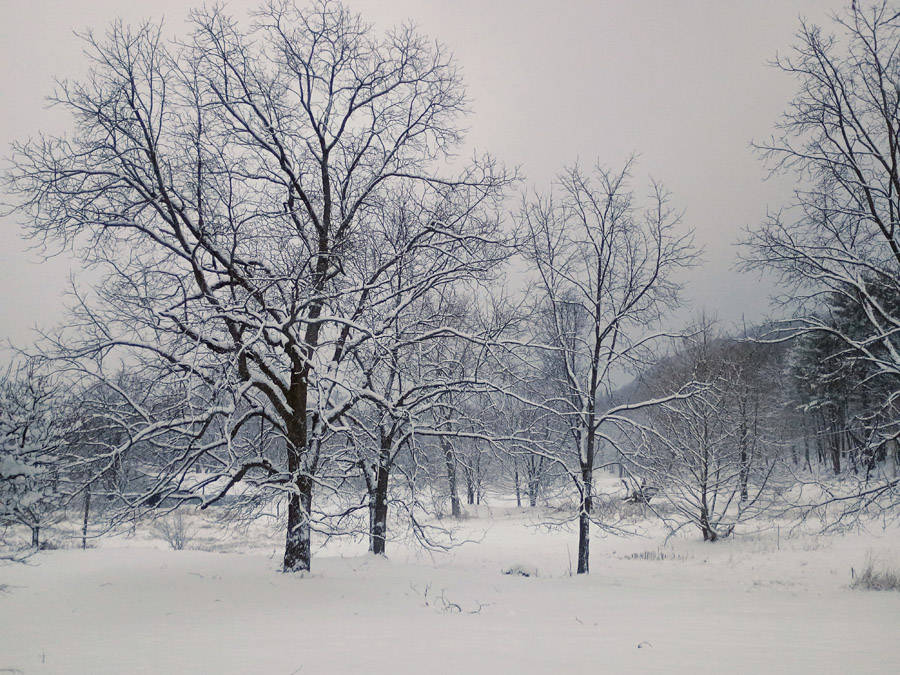
Naples, New York, January 2026. (No, it is not a black and white photo, just a very monochromatic day.)

As this harsh winter drags on, my thoughts turn to those, especially some on Native American reservations who live in Third World conditions and don’t have a cozy home with electric, gas or propane heat. Some are lucky to have enough wood to stay warm with others not, incidents of people freezing to death too common. Such conditions are hard to imagine. I avoid going outside, especially the trek to my mailbox which lies up a slight grade about fifty yards away. Going any further is incomprehensible.
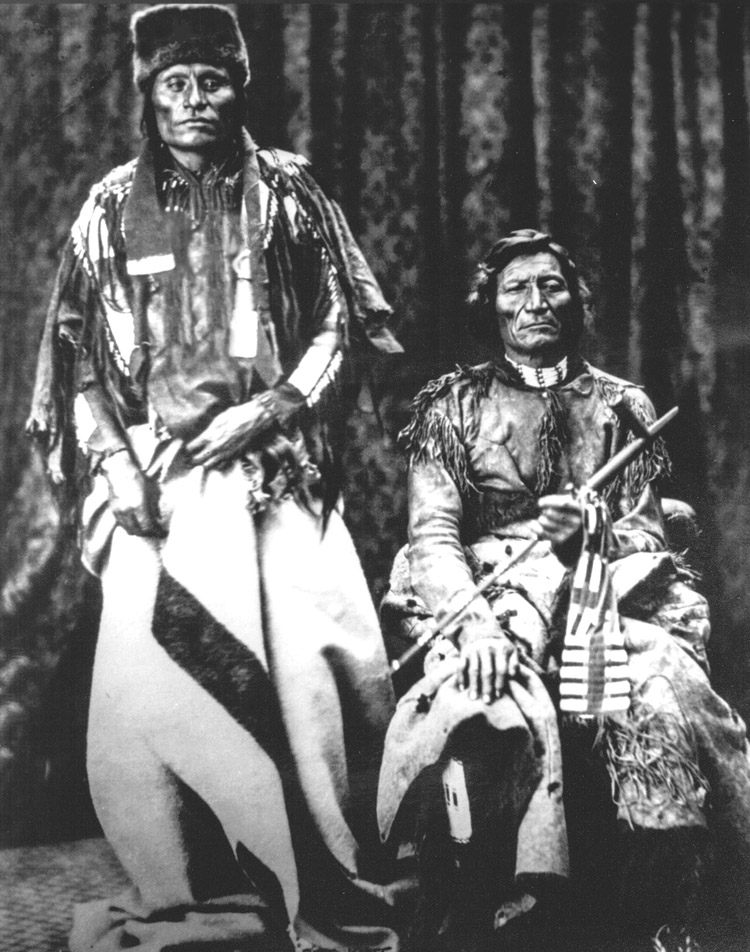
Picture of Little Wolf and Morning Star
Little Wolf and Morning Star.

Then I think of the thousand mile journey known as the Northern Cheyenne Exodus. After two years of captivity in Oklahoma’s “Indian Territory” following the Little Bighorn battle on June 25, 1876,  353 Cheyenne escaped under cover of darkness in September 1878 and attempted to return to their Montana homeland. They split into two bands, one led by Little Wolf and the other by Morning Star (often called Dull Knife).  Morning Star’s group surrendered at Fort Robinson, Nebraska, but refused to return to Oklahoma.

Subsequently, the 149 men, women, and children broke out of their barracks on January 9, 1879 into a freezing winter storm, resulting in a massacre. Little Wolf’s band made it to Montana, where they stayed until the government finally granted land to the Cheyenne for their current Reservation.
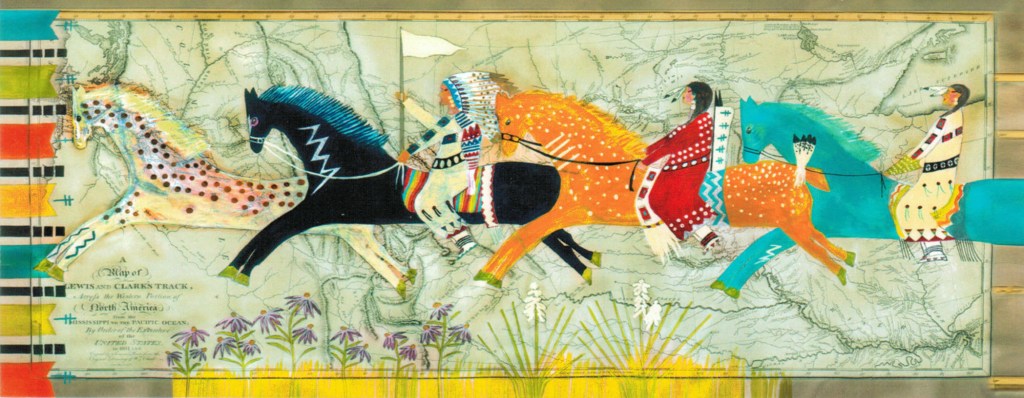
Ledger painting by Alaina Buffalo Spirit representing the tragic journey back to their homeland.
“Tell them We Are Going Home” ledger painting by Northern Cheyenne artist Alaina Buffalo Spirit, depicting the Cheyenne’s tragic journey back to their homeland.

Conditions in Oklahoma were horrible, motivating them to take the risk of leaving. But other than that, what drives people to go to such extremes, to return to their homeland?

Another factor that comes to mind involves the prevailing Cheyenne belief that the Creator, whom they know as Maheo, gave them that land. This became even more viable when my coauthor, Pete Risingsun, and I were researching, “The Revenge of Dead Horse Canyon: Sweet Medicine Spirits – Novavose.” It was then we learned about their ancient sacred ceremony known as the Massaum, also known as the Earth Giving Ceremony, taught to them by their cultural hero and prophet, Sweet Medicine.

Cover of "The Wolves of Heaven" by Karl H. Schlesier
This book provided much of the research represented in “The Revenge of Dead Horse Canyon.”

More and more frequently those beliefs previously considered myths are being shown to be historical fact. “The Wolves of Heaven” by German anthropologist, Karl H. Schlesier, addresses the Massaum ceremony, its complexity, and meaning. He dates it as going back as far as 10,000 years. That’s a long, long time before Columbus, folks.

Is it possible that the reason the government relented and gave that land in Montana back to the Northern Cheyenne was related to that ancient covenant?

As an astrologer, another thought that comes to mind is the imprint we each receive at birth that’s reflected on your birth chart or horoscope. Its calculated based on the date, time, and location you were born and functions as a roadmap for your life. It includes your personality, strengths, and weaknesses and numerous other things about you to numerous to include here. If you leave your place of birth, the chart moves with you, though the original impression remains.

I was born in New York State, but lived in California, Utah, and Texas before winding up back in New York. Only when I studied astrology did I understand why I felt like a slightly different person in each of those other states. When I moved back it felt oddly comfortable, as if this is where I belonged, even after being gone for over sixty years.  The astrological study of locational effects is known as astrocartography, which provides information on how different locales affect you.

Does that astrological imprint combined with genetic coding help migrating birds and other animals, even Monarch butterflies?

How do you feel about your homeland? Do you still live there? Did you return after a long absence? Since I have moved around quite a bit, I’ve noticed that people native to an area often look  upon move-ins with suspicion, sometimes even outward hostility.  This is true, even if you’re from the same country. I lived in a small town in Utah for 15 years and was always considered a “move-in” by those who’d resided there for several generations. It was the same in small-town Texas and likewise here in New York, even though I was born in the state.

Thus, it’s no surprise, that immigrants from foreign lands with entirely different cultures and languages are often looked upon with suspicion.

Hmmmm…..

Which brings me to the thought, how did Native Americans react to the invasion by Europeans? I think we all know how that turned out. Prophecy has promised them some day they’ll get their land back. If you’d like to read a fictitious version of how that might play out, be sure to read “The Curse of Dead Horse Canyon” trilogy to the end. Available in paperback, hard cover, and ebook formats on Amazon and most online retailers.
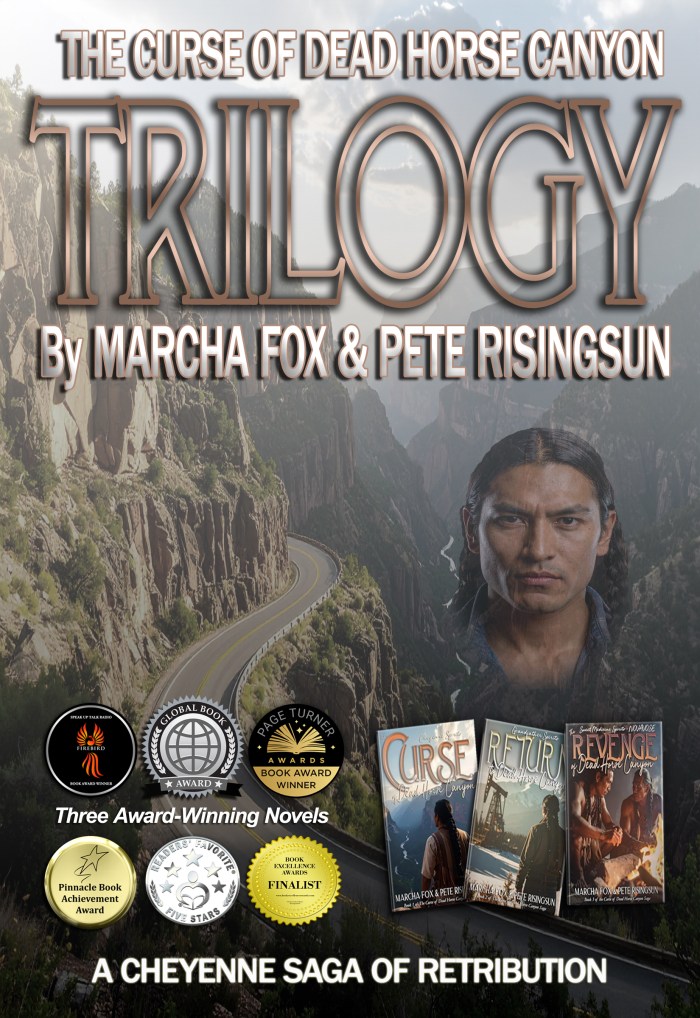
Cover of The Curse of Dead Horse Canyon Trilogy ebook.

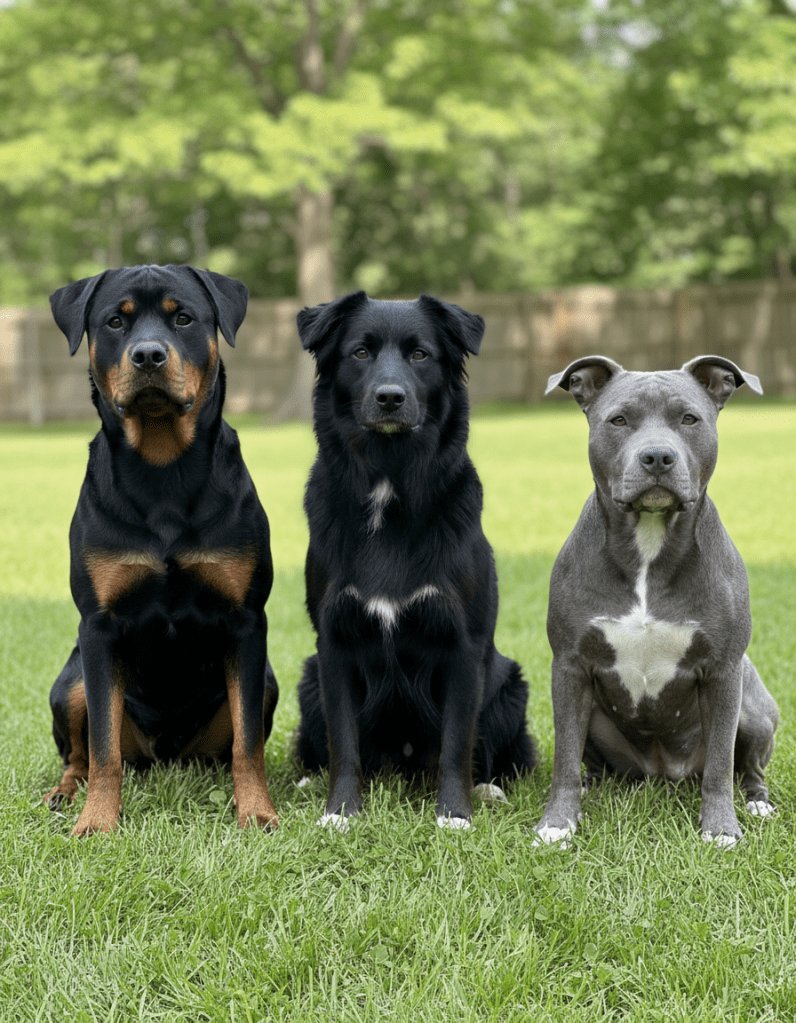
The Dogs of Dead Horse Canyon

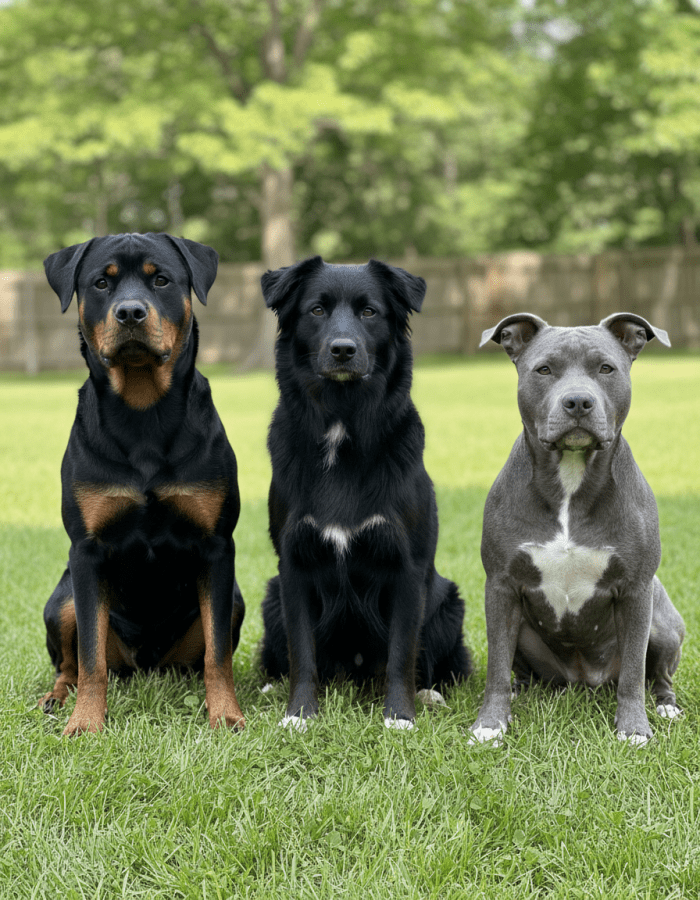
The dogs featured in The Curse of Dead Horse Canyon Saga. A Rottweiler, an Australian Shepherd mix, and a pit bull.
Terminator, Nahkohe, and Blossom, the canine stars of “The Curse of Dead Horse Canyon.” Terminator and Blossom are service dogs, Nahkohe a family ranch dog.

According to the American Pet Products Association 2025 State of the Industry Report, overall about 66% of households own some type of pet. Pet-owning households are around 94 million with 68 million dog owners and 49 million cats owners. And then there’s my family that has three dogs and two cats and heaven knows what else my grandson has in his room.

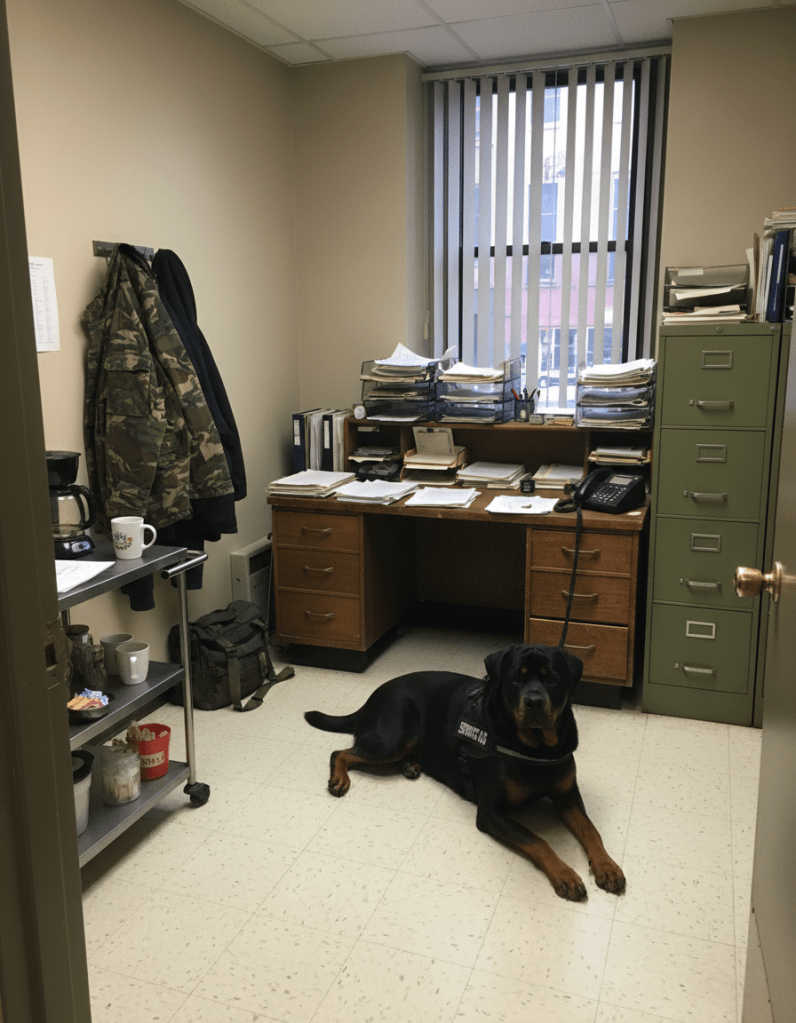
Picture of a rottweiler on the floor of a small office.

With this in mind, I included a dog in each of the three Dead Horse Canyon stories. In “The Curse of Dead Horse Canyon” it made sense that Bernie Keller had a service dog. As a disabled vet with PTSD and an opiate problem, it made sense.

Bernie’s dog, Terminator, is a Rottweiler. He hangs out below his desk and is quick to reassure his master by placing his chin on his good leg when he appears upset, which a lot, having to deal with the likes of Eddie Johannsen.

He loves to run after jack rabbits in the field outside his makeshift office outside the Albuquerque airport or go for walks.

In “Return to Dead Horse Canyon,” when Charlie returned to the reservation to stay with his uncle Joe Whitewolf and his family, he met their family dog, Náhkȯhe, which means bear in Cheyenne.

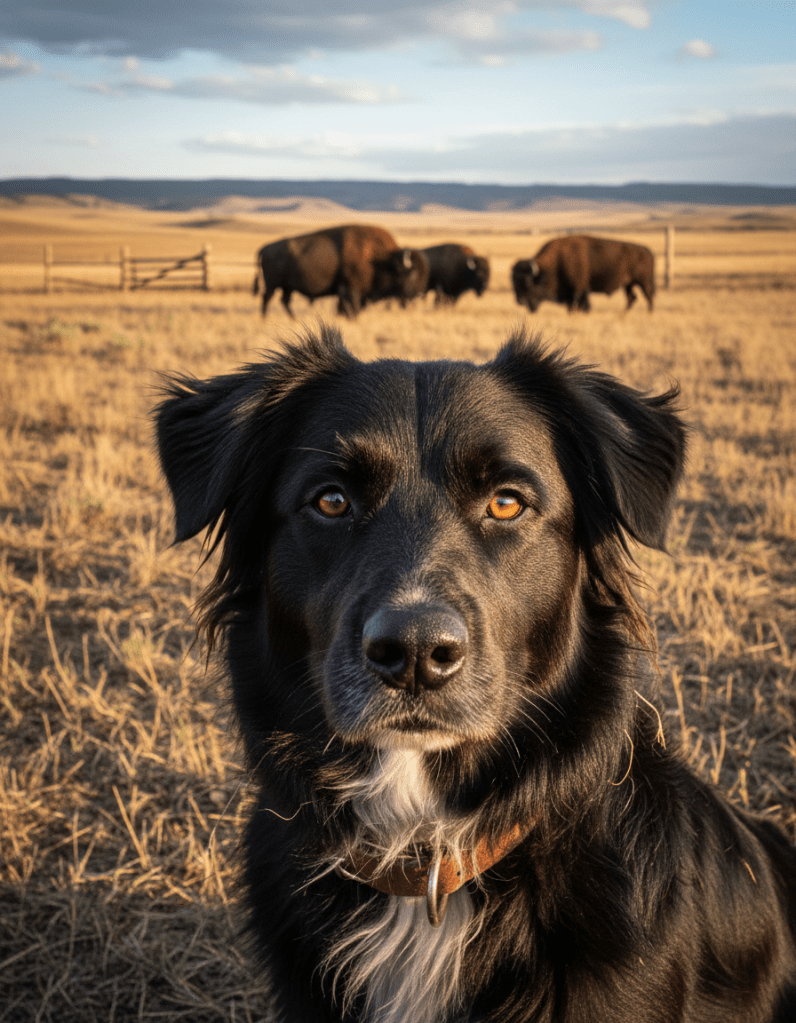
Picture of black dog with buffalo in the background

Náhkȯhe is the typical family dog who loves hanging out with his family. He’s a mixed breed, probably part Australian shepherd, black with longish hair, and floppy ears.

As a working dog he loves living on a ranch and he really enjoyed going for walks with Charlie as he recovered from his injuries incurred while drilling for oil and especially when Charlie and Winter Hawk went for the trail ride to Eaglefeathers Butte.

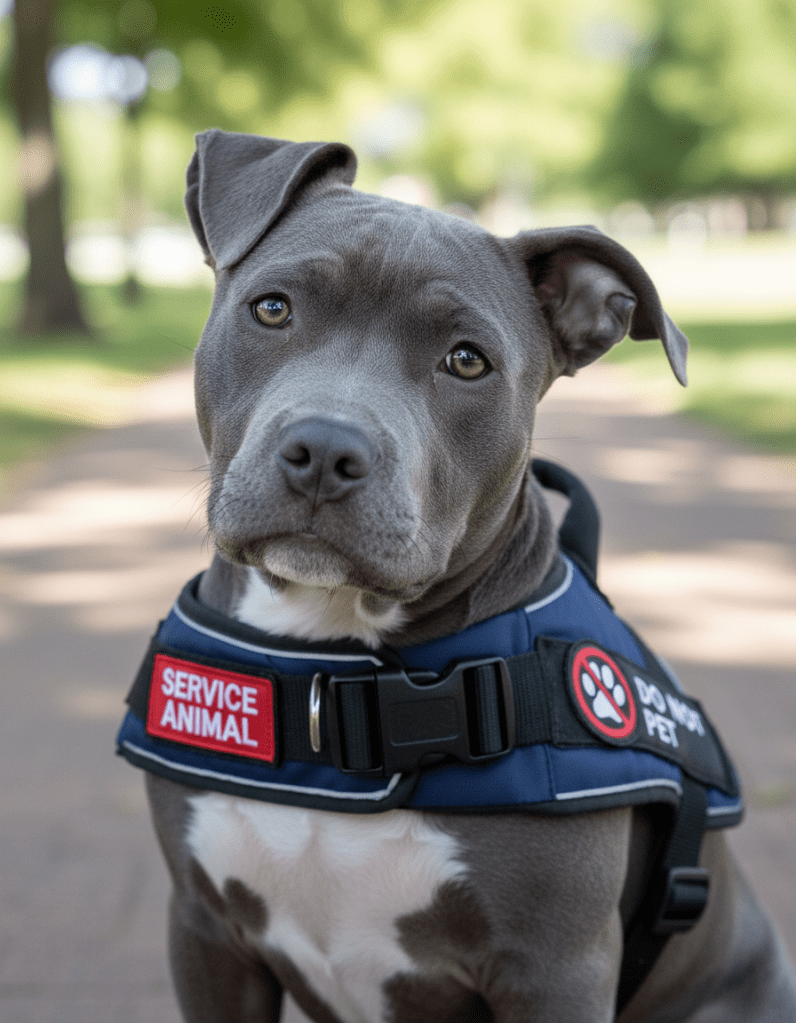
The final canine character in “The Revenge of Dead Horse Canyon,” is Blossom, Sara’s service dog. Blossom is a pit bull terrier who could help her while she was confined to a wheelchair. She helped put away groceries, make the bed, and could even answer the phone or call 9-1-1 if required. At one point in that story she and Náhkȯhe actually met, but Blossom wasn’t impressed.

A pit bull terrier in a service animal vest.

She went on numerous adventures with Sara and especially enjoyed riding in the four-wheeler RV they bought for up at the cabin. Blossom did a great job of character assessment, snarling at the bad guys and wagging her tail for the good ones, and in one case, doing both when the individuals were a mix, though Sara didn’t catch it at the time. When you read that story, be sure to pay attention to the time that Blossom snarls while her tail waves slowly back and forth. Spoiler Alert: It will make sense a bit later.

Like my other characters, these canines appeared on the scenes as part of the story. I didn’t think about adding them, they just showed up. They added warmth and realism and hopefully brought some smiles to pet lovers. Pets are clearly a part of life as the statistics demonstrate.

There were a few cats in the second book, but only in one scene. Now that I think about it, I really should have given Will and Connie a cat. Or Patrice, who surely would have had a big, furry Maine Coon or Ragdoll hanging around in Cosmic Portals.

What do you think of pets in novels? Needless to say, I like them. In all the books you’ve read, which was your most memorable? Leave your answer in the comments below.

Blue Star Symbolism in Indigenous Cultures

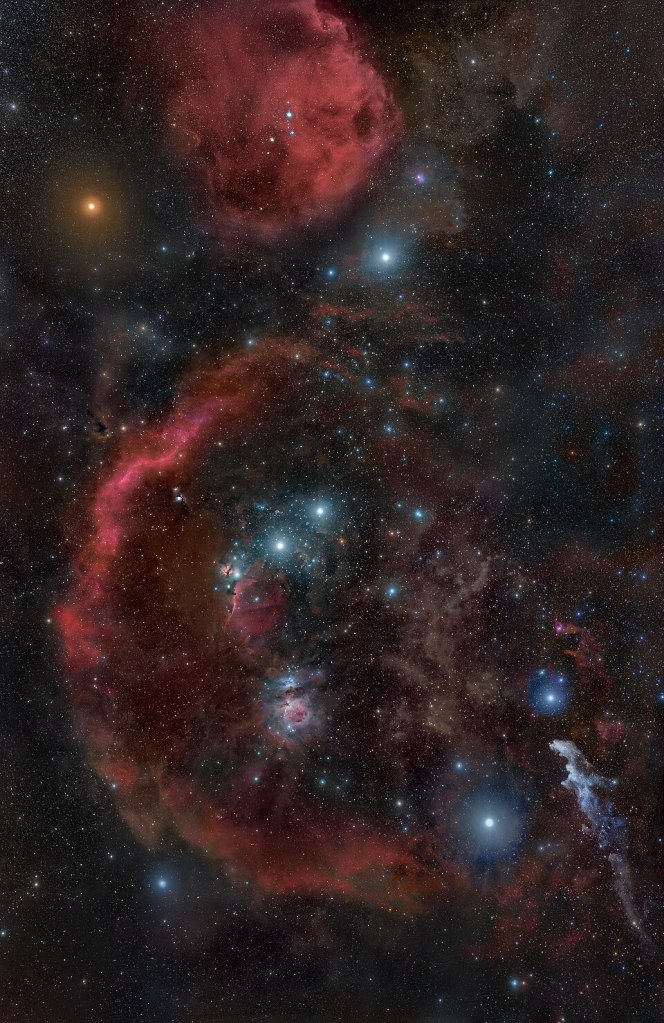
Astronomical photo of Orion
Orion, with Rigel at bottom right, at optical wavelengths plus the Hα (hydrogen-alpha) spectral line to emphasize gas clouds. [Attribution: Photo by Rogelio Bernal Andreo – http://deepskycolors.com/astro/JPEG/RBA_Orion_HeadToToes.jpg, CC BY-SA 3.0, https://commons.wikimedia.org/w/index.php?curid=207932%5D

Cheyenne Blue Star

The importance of the Blue Star is not unique to the Hopi. It is also a symbol the Cheyenne revere and paint on their faces for sacred rituals such as their Massaum ceremony as well as ceremonial fasts. Originally, it comprised four triangles joined at the apex, similar to a Maltese cross. [Learn more about the Massaum and its significance as the Earth Giving Ceremony in “The Revenge of Dead Horse Canyon: Sweet Medicine Spirits – Novavose.”]

The Blue Star is currently represented by a blue diamond shape that comprises four lines, two from the hairline above the bridge of the nose to the base of each ear, then lines drawn  to the base of the chin.

Rigel, a star in the constellation Orion, is what the Cheyenne consider the blue star, its rising when the Massaum ceremony public performance began.

Attribution: IAU and Sky & Telescope magazine (Roger Sinnott & Rick Fienberg) – [1], CC BY 3.0, https://commons.wikimedia.org/w/index.php?curid=15407823

Navajo (Dine)

The Navajo (Dine) call Orion Atse Ets’Ozi, the First Slender One, a young, strong warrior responsible to provide protection to his family and people. Whether they attribute special meaning to Rigel is known only to their medicine men and elders because most of their star lore is considered sacred. They only talk about their constellations as part of their winter stories or to a limited extent during the summer solstice.

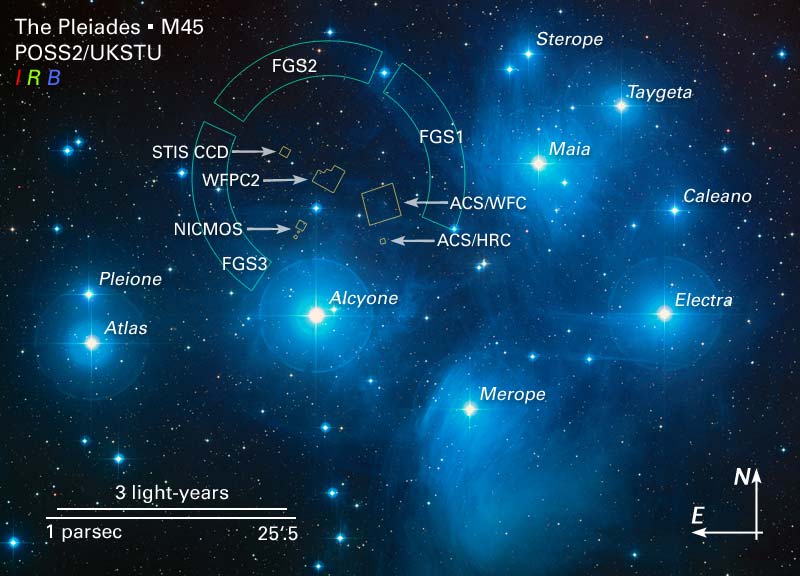
The Cheyenne also view the Pleiades as significant and paint it on their lodges. The Cherokee believe that is where they originally came from. This well-known grouping of seven stars is also revered by the Mayan, who return to it figuratively via sacred ritual.

Attribution: By NASA, ESA and AURA/Caltech – Hubble Refines Distance to Pleiades Star Cluster (STScI-2004-20), Public Domain, https://commons.wikimedia.org/w/index.php?curid=17899258

Mayan Tradition

Star Ancestors book cover

Paul Werner Duarte, a German/Mayan descendant of the Olmec culture from Vera Cruz, Mexico, has a lengthy and informative section in Nancy Red Star’s book, “Star Ancestors.” In it he states, “The Red man has had a covenant with the beings from space since the beginning. The Red man is the Atlantean. Edgar Cayce once said, ‘Take an Aztec, take a Maya, take a Hopi, take a Cherokee, take a Cheyenne, and you’re looking at an Atlantean.’ Earth is not the original home for any human…. The Red man descended to Earth from the Pleiades; indienous people have a long history of space exploration and extraterrestrial contact.”

The Navajo (Dine) call the Pleiades Dilyehe, which translates “seed-like sparkles. Its rising and setting have been used for centuries and probably millennia to time when to begin as well as when to cease planting crops to assure they don’t freeze when planted too early or too late.

Dakota Blue Star

In the following video by Wanbdi Wakita, a Dakota elder, he explains how they came from the Blue Star . Their women had dreams about it and made it into their star quilts. He does not specify which star in the sky it might be. You cannot listen to this man without feeling his strong spirit.

Hopi Prophecy

The Hopi Blue Star prophecy is currently receiving a lot of attention with the appearance of 3I/Atlas. As far back as 1972 their holy man, Thomas Manyacya, attempted to warn the world. The video’s description on YouTube states:

The Blue Star – Thomas Banyacya: Thomas Banyacya: The Hopi Prophecy was first produced as a video letter to the United Nations Environmental Programme, at the request of the Hopi elders of Hotevilla. Thomas Banyacya, a Hopi leader and spokesman for the Hopi high religious leaders was in his 80s in 1989 when this important meeting took place and was recorded on film. In a traditional circle, Banyacya and the elders meet with visiting Lummi, Lacandone, and American and Mexican environmentalists.

They discuss the Hopi Prophecy that foretold, “Koyaanisqatsi”, meaning “life in turmoil, life out of balance,” as a result of increasing materialism and environmental destruction. Thomas carries the Hopi message which calls for universal peace and spiritual unity and how the only hope for humankind to survive is to return to connectedness with Mother Earth. Humanity must use its knowledge and technology to clean up the water, the air, and the contaminated land. At the same time, we must conserve the remaining natural resources. The individual greed of both people and nations must be replaced with global concern for the balance of life on this planet.

He repeated the message again in 1995 as you can listen to in the following videos.

Conclusion

Why is the Blue Star revered across numerous Indigenous cultures? Has the Blue Star arrived at last in the form of 3I/Atlas?

Whatever that object is, it has baffled scientists as its behavior defies the laws of physics. Is it being controlled by intelligent beings? It seems beyond coincidence that the WOW signal received back in 1977 that lasted 72 seconds came from the same place in the cosmos from which 3I/Atlas originated. Coincidence? Not likely, with odds around a billion to one.

Is it a message from the star people?

Time will tell.

Be sure to subscribe so you don’t miss future updates.