Join me in standing with Native communities in their grief and anger over their stolen sisters and children. This MMIW Awareness Day, we remember all those who were never found and those who live with trauma and without the peace that justice can bring. I stand with Native communities in calling for reform and action from local and national governments and law enforcement so we can all work together towards #NoMoreStolenSisters.
For more information about Missing and Murdered Indigenous Women, follow Native Hope.
Watch the dramatization of an actual incident in the video below for further insights into this heartbreaking situation.
Missing and murdered indigenous women and girls (MMIWG) is but another critical issue that never makes it to the news. This is even more likely if you don’t live in one of the states most highly affected such as Arizona, New Mexico, Oklahoma, Montana, and various others. Major highways known for drug and human trafficking often cross remote areas of Indian reservations, conditions that make the victims easy prey.
The following is a direct excerpt from the Native Hope website that sums up much of the issue:
What People Get Wrong
Stereotypes of Native Americans Perpetuate Injustice
Due to the lack of tribal jurisdiction beyond reservation borders, Urban Indians receive less than adequate assistance when a loved one goes missing. America has written a stereotypical narrative for its First People:
They are lazy, drug addicts, and alcoholics who rely on the government to survive.”
Moreover, this modern stereotype was created through acts of colonization and cultural assimilation. Pre-colonization, Native societies traditionally revered and honored the sacredness of women. Women held positions of authority and did a large portion of labor within their camps, but the European colonists with patriarchal views took the women as slaves to the men. Soon, Native women had been victims of rape, violence, and submission. This mistreatment can be traced throughout America’s history. Natives were viewed as “savages.”
In Andrea Smith’s paper “Not an Indian Tradition: The Sexual Colonization of Native Peoples,” she explores the connection between sexual violence and colonialism in the lives of Native people in the United States. Smith reveals that Natives were viewed as “dirty” for their lack of clothing which in the minds of the colonists made them “polluted with sexual sin.” They were seen as less-than-human—therefore, “rapable.”
Now, when a Native woman is reported missing, these negative stereotypes hinder the search process. Law enforcement tends to turn a blind eye, fail to take the report seriously, and do little to assist. The media rarely picks up on the story and if they do, there is normally a negative spin on the story making the victim seem at fault.
The following video further explains this tragic situation. It points out that too many agencies can be responsible due to blurry lines between jurisdictions, creating cracks for cases to fall through. Lack of resources coupled with the absence of accurate data is also a major problem. Sadly, most deaths are attributed to “exposure.”
Tomorrow, May 5, is MMIWG Awareness Day. You can support the effort by spreading the word and wearing red.
May 5th is MMIW Day, a day to raise awareness for the widespread anger and sadness in First Nation communities because of the missing and murdered women and children in their communities. A red hand over the mouth has become the symbol of a growing movement toward awareness, accountability, and advocacy. The red hand represents the silence of the media, law enforcement and government agencies on this issue, as well as the oppression and subjugation of Native women throughout history. Join Native Communities on May 5th by wearing red and raising awareness in the call for #NoMoreStolenSisters.
This is something few know about other than those directly effected by it. The following video will give you a closer look.
Shocking and another way Native Americans have been marginalized and discounted. Awareness is key to officials taking action. Pray that the focus on ending human trafficking will focus on this issue which has been a reality for indigenous people for decades.
I believe that most artists, like myself, are basically insecure. Especially those of us who are perfectionists. We’re acutely aware of any flaws in our work and cringe at their discovery. Nonetheless, authors look forward to readers’ reviews, albeit with fingers crossed, that they’ll be good.
Imagine my horror when my latest release got an abysmal 2-star nasty review! Not only had I made a mistake that she gleefully pointed out, but said it was “long and boring.”
OMG!
Part of what she criticized actually was a mistake (and perfectionist that I am, immediately corrected), but clearly she didn’t have the same experience I had with how some Texans butcher English grammar.
It’s been said that a book doesn’t have true credibility until it has a few “bad” reviews. True as that may be, it’s not much consolation when it’s your book. Especially when it was only the second review posted, so it dragged the rating down significantly, as you can see above.
I immediately turned to people I know who’d read it as well as the previous two books and asked for their honest opinion. I really wanted to know if it was that bad, not fishing for unworthy praise. If it was truly that awful I was ready to unpublish it and do some serious editing. I was told that it was just fine, there was nothing wrong with it, the person simply didn’t “get it.”
Only slightly consoled, I decided to follow the advice of a fellow author’s blog which stated to check out the bad reviews given to some of the classics.
Such as this 1-star review of Hemingway’s “Farewell to Arms” that states, “This is, according to critics, one of Hemingway’s best books. If so, I really cannot fathom his greatness. Really boring book that feels neither exciting nor, for that matter, educational. Just dry…”
That helped.
Then I found this 3-star review for Charles Dickens’ classic, “A Tale of Two Cities:” It’s dense, wordy, and often confusing, making the story tough to follow and, at times, flat-out boring. The writing felt clunky, not lyrical, bogging down the epic scope with unclear details and slow pacing.
By then I was starting to see my reader friends were right. It’s all a matter of “getting” the story’s meaning. Having the mental and emotional depth to comprehend something that’s not the usual straight-line plot loaded with continual action is not every reader’s superpower.
Did being described as “boring” rank me with other great misunderstood authors?
Probably not, but it was a pleasant, albeit fleeting, thought. 😉
The reviewer admitted she’d “skipped” several parts and hated the ending. No doubt by skipping certain parts she missed the context leading up to the finale, detracting from its impact and meaning.
As I write this, I know of at least one reader who is already reading it for the second time. Her first read was a marathon race to whiz through it, just wanting to know what happened. Now she’s reading it to savor and absorb all that it contains.
The book has 569 pages. That is definitely long.
Why?
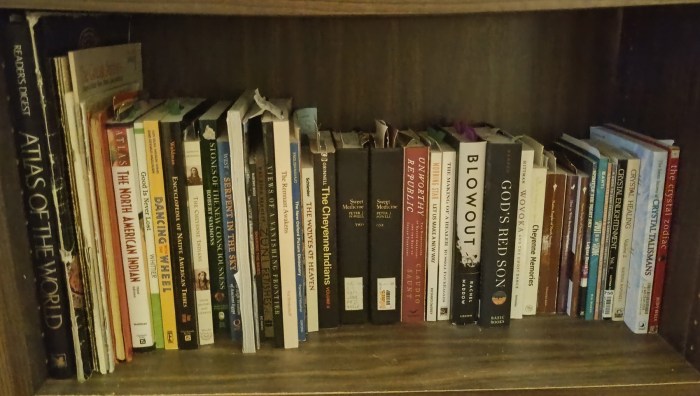
Let’s just say I have more than one shelf filled with books used researching this story along with my co-author, Pete Risingsun.
We read thousands of pages. More time was spent researching and crafting the story than writing it. Our idea of “perfection” was to present an accurate representation of Cheyenne culture, ancient and modern, as well as all they suffered at the hands of the U.S. Government. Their ceremonies have deep spiritual meaning, often beyond the comprehension of readers whose view of Native Americans hails from watching old TV shows like Gunsmoke depicting the “Old West” with its “cowboys and Indians.”
A 5-star review I found for Dickens’ “A Tale of Two Cities” helps explain this syndrome. This wise reviewer states, “I feel that this book is not viewed as being one of the top tier of Dickens works due to the fact that it is thrust upon grade 9 students as an introduction to literary classics and, being so, its impact and overall cultural power has become diluted due to the audience that initially received it. It is not in regards to the content of the work itself. The intellectual abilities of students of this educational level are not able to understand the historical era, appreciate the fluent descriptive nature of the writing nor to comprehend the literary nuances that the author presents.”
And there you have it.
Readers may consider a story “boring” when they can’t grasp its depth, context, and meaning.
Granted, many books lack all three and are the ones I’d be likely to give a 2-star review along with those riddled with typos, poor formatting, grammatical errors, plot holes, and so forth.
Reviews say as much about the reviewer as they do about the book. If they scare away readers like themselves that’s a good thing if it precludes more unfavorable reviews, right?
Forgive me for sounding defensive, but the fact the book earned both a Book Excellence Award and 5-stars from Readers’ Favorite since that horrific review helped restore my confidence. Hopefully, those awards also restore enough credibility for the story to highlight that bad review for what it is.
In the aftermath of that 2-star slam, truly the worst I’ve ever had, I cherish the Readers’ Favorite reviewer’s statement.
“This finale succeeds with a perfect 10 landing. Very, very highly recommended.”
It brought tears to my eyes. Thank you, thank you, thank you!
Needless to say, I’m beyond grateful that she “got it.”
My method of writing is generally referred to as a “pantser,” i.e., I write by the seat of my pants. The other prevalent writing style that of a “plotter,” where the author determines the entire story, scene by scene, in an outline. I tried plotting, but my characters persistently got out of hand. They’d refuse to follow my plan and do their own thing. It didn’t take long to discover they had a better grip on the story than I did. Thus, I became a “pantser.” I populate my story idea with characters, then sit back to watch what they do as would a dutiful scribe.
I began work on this saga before connecting with my co-author, Pete Risingsun. I had a handle on the story’s government conspiracy angle, but lacked cultural knowledge of my main character, Cheyenne Charlie Littlewolf. I wrote what he told me to, but didn’t know whether it was feasible.
As a science fiction author, I wondered.
Was my imagination getting carried away?
I tend to obsess over accuracy and can get carried away with research. I started reading books on Native American cultures, but I needed to find a Cheyenne elder who could let me know if what I had written from Charlie’s point of view was accurate or too off-the-wall.
When Pete got involved he assured me that the various incidents I’d included were indeed realistic in the Cheyenne world. I smiled, relieved to learn Charlie was not leading me astray.
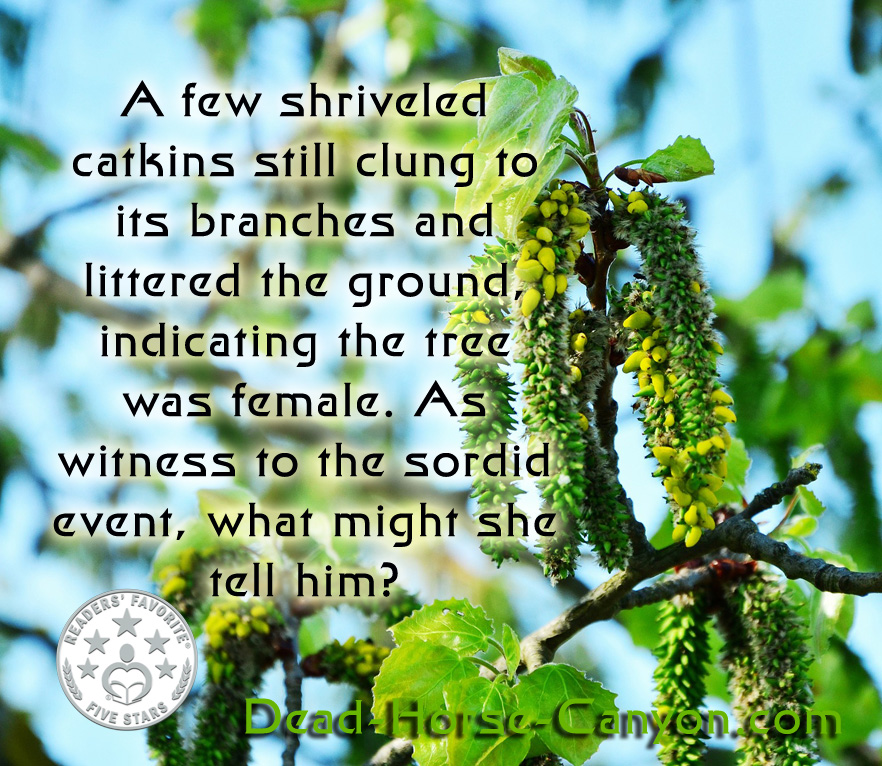
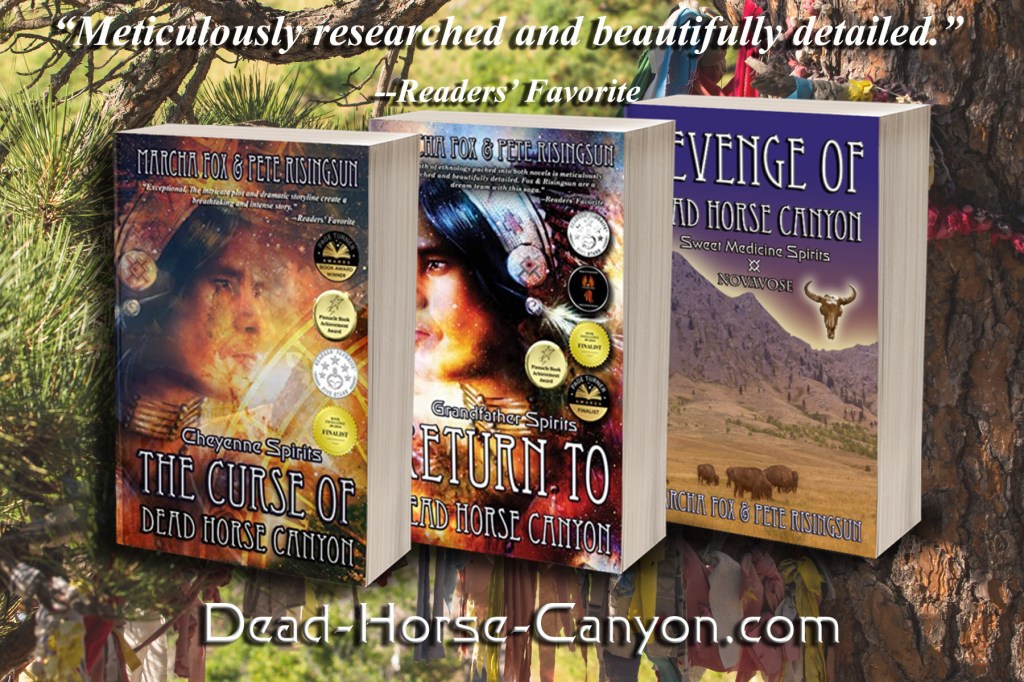
One incident that I wondered about is depicted in chapter six, “The Aspen,” of the first book, “The Curse of Dead Horse Canyon: Cheyenne Spirits.” It’s there that Charlie receives a message from the aspen tree that witnessed the wreck that killed his best friend. Besides numerous others, another one of my favorites is in the second book, “Return to Dead Horse Canyon: Grandfather Spirits,” where in chapter thirty-nine, “Trail Ride,” Charlie finds an ancient arrowhead that tells him and his brother, Winter Hawk, (cousin in western culture), that their prayer regarding the fate of the murderer had been heard.
As work on the saga continued, more and more research came into play. The works of George Bird Grinnell as well as Peter John Powell were excellent sources, but had limitations. I find it ironic that some of the most detailed information on ancient Cheyenne (Tsistsistas) beliefs and ceremonies is conveyed by German anthropologist, Karl H. Schlesier. His book “The Wolves of Heaven” was priceless while writing this trilogy, especially his detailed description of the Massaum, the Earth Giving Ceremony, that plays a key role in the final volume. In a typical episode of serendipity, I found Schlesier’s book on Amazon, attracted by its subtitle, “Cheyenne Shamanism, Ceremonies, and Prehistoric Origins.”
Or was it a maiyun who brought it to my attention?
What is a maiyun?
Schlesier tells us they are powerful spirits that associate with human beings. There are also the hematasoomaeo, which he describes as “the immortal spiritual forms of plants, animals, and human beings. . . .The maiyun most responsible for physical life on earth belong either to the deep earth or to the sky places. In Tsistsistas ceremonies they are celebrated especially and represented through plant and animal forms.”
The lodge of the maiyun is the Sacred Mountain, i.e., Novavose. (You’ll meet plenty of them in “Revenge of Dead Horse Canyon: Sweet Medicine Spirits – Novavose.”)
Why have western religions denied the existence of such things? Claim that animals do not have souls, a belief with which any pet owner, farmer, or rancher will disagree? Slowly the world is awakening to the reality of other dimensions; recognizing the thin veil between life and death and the elusive nature of time.
Things ancient peoples took for granted.
Speaking of animals, a few months ago, my precious 18 year old feline fur baby, Ophelia, crossed over. I hoped that when she did, that she was reunited with her half-brother, Hamlet, who’d left this life four years before. Thus, I was drawn to the “Pets and the Afterlife” book series by Rob Gutro. He’s a medium who specializes in connecting with pets in the spirit world. These books contain dozens of stories of such experiences. The truth of what he envisions is validated by multitudes of grieving pet owners when he provides details of the encounter that he couldn’t possibly have known.
As I read Gutro’s books I couldn’t help but think of the maiyun–spirit helpers that indigenous people have relied on for millennia. What are “civilized” people missing by tuning out these messages and connections?
I am beyond grateful for my introduction to this marvelous world while writing these three tomes with Pete. My heart and mind lived there from July 2018 when this story was conceived until the final book was published in January 2025. My life is enriched beyond measure for the experience.
Two of my favorite quotes related to this lost wisdom were spoken by Tȟašúŋke Witkó (Crazy Horse), the Oglala Lakota Leader who said:
The red nation shall rise again and it shall be a blessing for a sick world; a world filled with broken promises, selfishness and separations; a world longing for light again. I see a time of seven generations when all the colors of mankind will gather under the sacred tree of life and the whole earth will become one circle again. . . In that day, there will be those among the Lakota who will carry knowledge and understanding of unity among all living things and the young white ones will come to those of my people and ask for this wisdom.
The Curse of Dead Horse Canyon Trilogy is a lengthy saga that is more than a juxtaposition of a corrupt government’s clash with Cheyenne spirituality. It’s an introduction to a world too many don’t yet see.
But as Crazy Horse declared, they will.
You can find the trilogy on Amazon and other online vendors.
I couldn’t help laughing when I came across an article that contained this quote from Senator Tom Cotton (R-Ark) where he states: “The Jewish people’s legal and historic rights to Judea and Samaria goes back thousands of years. The U.S. should stop using the politically charged term West Bank to refer to the biblical heartland of Israel.” [Emphasis added.]
What does that have to do with this blog mostly dedicated to Native Americans? Can you not see where I’m going with this?
Okay, let’s say the quiet part out loud:
If the U.S. believes that Israel has “historic rights that go back thousands of years,” what about Native American’s rights to their lands? Like, for example, let’s say the entire Western Hemisphere!
In my mind, the most shameful is land seized by conquest to say nothing of attempted genocide, while purchases like Manhattan Island for $24’s worth of trinkets aren’t much better.
Did the white man steal Native Americans’ land?
You bet they did!
I don’t believe in coincidences for a variety of reasons. Thus, I don’t consider it an accident that the same day I encountered that article about Israel I also came across one recounting the Fort Robinson Breakout back in January 1879.
If that incident doesn’t ring a bell, that is when Chiefs Little Wolf and Morningstar (a.k.a. Dull Knife) refused to return to Indian Territory in Oklahoma as directed by the U.S. Army. Rather, they insisted on returning to their homeland. After being nearly starved and frozen to death, they decided to escape. The hardships they suffered and loss of life they endured to return to their ancestral home is heartbreaking.
Land they maintained was given to them by the Great Spirit.
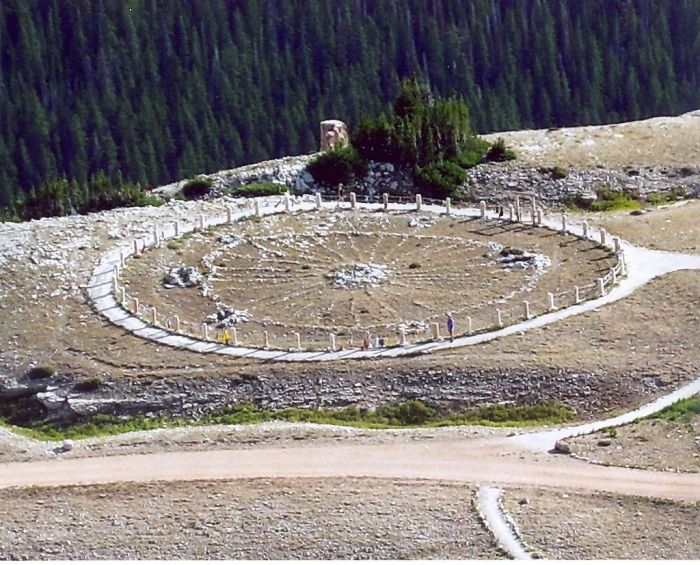
Karl Schlesier’s book, “The Wolves of Heaven: Cheyenne Shamanism, Ceremonies, and Prehistoric Origins” was an important reference developing the final book in the Curse of Dead Horse Canyon Trilogy. Schlesier is a German anthropologist who attributed the Bighorn Medicine Wheel in Wyoming (shown at the top of this article) to the Cheyenne and provided evidence that led him to believe it was the site of their ancient ceremony called the Massaum. (You can see my review of his book here.)
The Massaum, which Schlesier describes in fascinating, albeit laborious, detail, is also known as the “Earth Giving Ceremony.” It is likewise referred to by George Bird Grinnell and Peter J. Powell in their works about the Northern Cheyenne people. The first Massaum was conducted tens of thousands of years ago by Cheyenne prophet, Sweet Medicine, when he accepted land gifted to them from Maheo as their ancestral homeland. That land was centered on the Sacred Mountain in the Black Hills with them also given the right to expand their hunting ground by conducting the same ceremony.
I don’t know about you, but I suspect the reason the U.S. Government yielded and eventually gave them the Northern Cheyenne Reservation in southeast Montana was because it was part of the land consecrated for them by the Creator God through the Massaum.
But what about the rest of their land, “from sea to shining sea?”
Another thing that really gets me riled up is how much the U.S. Government has done for other “conquered” lands, e.g. Japan and Germany. Who attacked us or our allies during World War II! Yet, they allowed those countries to remain in the hands of their original occupants while giving them a whole lot of financial help rebuilding.
What have they done for First Americans other than break treaties and allow far too many to suffer in Third World conditions? Then an even bigger slap in the face, when for the past four years, illegal aliens were welcomed with payments far larger than my monthly Social Security benefit, which I earned.
That sounds an awful lot like speaking with a forked tongue, don’t you think?
But that’s another blog (or should I say rant?) for another time.
Meanwhile, I got my personal “revenge” in the grand finale of the Curse of Dead Horse Canyon Trilogy. I suspect there isn’t a single Indigenous person who would disagree.
P.S. And just for the record, I’m about as white as you can get. My ancestry is strictly Western European, some of which goes back to the Colonial Era in the late 1600s in Connecticut. That said, I’m ashamed and embarrassed by what my forefathers did.
[NOTE:–If you’re interested in more information related to the Israel issue, you can find the full article I referenced here.]
I am pleased to report that “Return to Dead Horse Canyon: Grandfather Spirits” has been awarded a 5-star review by Readers’ Favorite. Recognition such as this is always highly appreciated by authors, especially from a professional reviewer when it contains such complimentary comments. Here is what reviewer, Asher Syed, had to say:
“Return to Dead Horse Canyon: Grandfather Spirits” by Marcha Fox and Pete Risingsun is a conspiracy suspense novel and the second book in the Dead Horse Canyon Saga, preceded by the series’ critically acclaimed and award-winning first book, “The Curse of Dead Horse Canyon: Cheyenne Spirits.”
Two characters drive this saga, a widow named Sara Reynolds whose husband Bryan was murdered, and she very nearly along with him, after discovering corruption at a massive scale; and Charlie Littlewolf, Bryan’s dearest friend, whose connection to the history of the land, his Cheyenne roots and the spirits that reside in both is far deeper than believed.
The mission to avenge Bryan’s murder and get the truth about the government’s project out to the public is the driving force behind all of Sara’s actions, no matter how dangerous they are. Charlie shares in this but is also confronted with a battle of conscience, memories, physical and emotional trauma, and the wise words of family, both now and in the past, to reconcile who he has become and who he is meant to be. “Until you have seen death, you cannot comprehend life. Experience provides the path to understanding which leads to wisdom.”
I went into “Return to Dead Horse Canyon” not having read the first book and while it does read comfortably as a stand-alone, after just a couple of chapters I actually went back to read “The Curse of Dead Horse Canyon” before restarting book two. It was an excellent decision. The building of the Cheyenne history is critical to the story and had I not understood Sara’s complete motivation and Charlie’s fully fleshed-out roots, I’d have missed out on so much more than just a good read.
Sara’s plight is noble and even as she is met with roadblocks at every turn, she is not dissuaded. The peril she faces is amplified and pushed to maximum pacing when she pulls a Snowden-esque rabbit from her hard drive. However, it’s Charlie that is most compelling to me.
My gosh, the depth of ethnology packed into both novels is meticulously researched and beautifully detailed. There are moments of lessons hard learned and realized, a standout being a conversation at his grandfather’s deathbed and another is when Charlie is finally able to harness a previously dormant and profoundly spiritual faculty. Co-authors Marcha Fox and Pete Risingsun are a dream team with this saga and I’m really looking forward to the third and final installment of their trilogy.
The fact that this reviewer was so dedicated that he took time to read “The Curse of Dead Horse Canyon: Cheyenne Spirits” first went far beyond expectations in assessing a sequel. Needless to say, this is the kind of review author’s dream of. Many thanks to Mr. Syed for his thoughtful words.
Here’s some additional good news if your Texas library is a member of Biblioboard. If so, you can read this story for free here as part of the Indie Author Project. “The Curse of Dead Horse Canyon: Cheyenne Spirits” is also available there.
If your library is not a member, you can request IAP to invite them to learn more by submitting their name here.
See the many titles available in the Indie Texas collection here.
If you’re an author or know one who might want to consider being included more information can be found here. Librarians seeking more information about the IAP program and how it at can help them reach their patrons is available at this link.
The purpose of words is to convey meaning. How they’re spelled, how they sound differs tremendously. Sometimes they convey the same meaning, such as for a cat or dog. Others are unique and can’t be translated into another language, especially if they’re based on cultural context.
When immigrants come to a country, they assimilate better if they learn the host language. This is not simply a matter of getting along better in society. It integrates them into the culture. America became a “melting pot” as immigrants came from a multitude of foreign nations, then were united in a common language, i.e. English, even if they maintained their ethnic traditions.
When Europeans came to the American continent they encountered indigenous peoples whose languages were entirely foreign. While there’s a similarity in etymology and syntax among Latin-based languages (English, Spanish, French, Portuguese, Italian, etc.), those spoken by Native Americans (which were several) had no similarities to European languages. Their culture and society were so different, many words common to Europeans didn’t even exist in theirs and vice versa.
Most of our thoughts comprise words. A person’s vocabulary determines their ability to think and comprehend the world around them. Without applicable words, unfamiliar concepts cannot exist. Emotions, however, exist beyond words. If you see someone laughing or crying, you know they’re feeling something.
Europeans took possession of this country in a less than friendly manner. Eventually, indigenous people became the “Indian Problem.” They refused to cooperate by giving up the land gifted to them by the Creator, a.k.a. Great Spirit. After numerous wars, massacres, and ugly confrontations, those that remained were herded off to reservations. As if that wasn’t bad enough, their children were taken and sent to government boarding schools where they were “reprogrammed.” This comprised cutting their hair, dressing them in “civilized” clothing, and forbidding them from speaking their native tongue. Being caught doing so resulted in their mouth being washing out with soap.
This was not a benevolent gesture to help Native Americans assimilate into European/American society. The intent was to annihilate their culture, identity, and beliefs, an insidious form of virtual genocide. A slight improvement, I suppose, over edicts from the Vatican that gave early explorers and colonists permission to kill them or make them their slaves.
Imagine forcing new immigrants to give up their language and customs. As “guests” in this country, it could almost be justified, a condition of habitation that promotes unity. Instead, just about any document they may need to read is available in their own language at taxpayer expense. Yet, quite the opposite was done to indigenous peoples who were here first.
If you have a difficult time relating to this, consider hoards of Chinese soldiers swarming our borders and forcing us to abandon our way of life, including our language, and adapt to theirs or die.
As intended, indigenous languages began to disappear. Fortunately, some survived. Ironically, helping the current younger generations to learn their native tongue is now a function of the very schools who originally forbade them from speaking it.
Why should they care? Because that is who they are. Culture, ceremonies, and their collective philosophy of life is embedded in their language. They have words with no English analog. Even in English, certain things have different meaning. For example, “All my relations” to a Native American includes all living things as well as the Earth herself. “Turtle Island” is not only this continent, but embodies their creation story.
Why should we care if their culture is lost? Because it’s in the world’s best interest for it to be revitalized. Assimilating it may be the only thing that can save us from ourselves in this war-torn, polluted, technology-dependent world.
This short video (less that 3 minutes) contains the 10 Commandments of Native Americans. As you listen, consider they initially welcomed Europeans to their land. They only became aggressive when the Founding Fathers and those who followed didn’t want to share this country with its original inhabitants.
The Founding Fathers believed they created the perfect structure for government when they wrote the Constitution. But did you know that it was inspired by the Iroquois Federation, an agreement between indigenous nations hundreds of years before the white man arrived?
As the USA approaches its 246th birthday, things are not looking very good. Where have we gone wrong?
What better source of answers than a Native American? The video below narrated by Lakota, Russel Means, explains it perfectly.
“They took away EVERYONE’S rights–Time to Wake up”
Image by M C from Pixabay
The wisdom of indigenous people is something the world is in sorry need of today. There is nothing I can say that would have greater meaning on this day set aside to honor indigenous peoples throughout the world than what is said in the following video. Note that the speaker, Floyd “Red Crow” Westerman (Kangi Duta) crossed over to the next life in 2007. His words are truer now than ever before.
What we have done to our planet is shameful. The consequences will not be pretty.








 The Curse of Dead Horse Canyon