The Indigenous World View and the Physics of Consciousness

If there’s one thing that few will argue, it’s that Indigenous people have a closer connection to the Earth and all living things than the science-based white man. They repeatedly tell us we are all related, including the animals and all other living things.

Book cover for "The Making of a Healer" by Russell FourEagles

Even what a geologist would consider an inanimate mineral can have a story to tell, as conveyed in “The Making of a Healer” by Russell FourEagles. In that book he found a stone that was shaped such that it had apparently been the head of hide scraping tool. Using his Indigenous healer gift of perception, which inspired him to pick it up in the first place, he discerned its history, from when the rock was found by a young girl, to its evolution to a tool when it was secured in a young tree to grow around it to form it’s handle.

Book cover of "The Physics of Consciousness" by Ivan Antic

Many supposed “scientists” would undoubtedly think that this was nothing short of some elaborate hallucination. Except, perhaps, a man named Ivan Antic whose book “The Physics of Consciousness: In the Quantum Field, Minerals, Plants, Animals, and Human Souls” I recently finished reading.

Yeah, that’s who I am. I read weird stuff like that. But I must admit that much of this went over my head, but what I did absorb was remarkable. And right in synch with Native American beliefs regarding the unity of all existence.

I have a bachelors degree in physics. Thus, I’ve had college classes in quantum theory. I’ve had my own thoughts on that over the years. Years ago scientists thought that light needed to propagate through some medium and theorized the existence of the aether, that permeated all of creation, including outer space. Then, when this couldn’t be detected and proven to exist, it was dismissed, the term declared verboten, and space declared an empty vacuum. Then a few decades later, they come up with dark matter, which to me, is the same thing with a different name. And Mr. Antic agrees.

The quantum world is nothing like what we experience day to day. Its weird and loaded with mystery. Gradually, science is admitting it doesn’t know everything. Big surprise! In my mind the most laughable scientific period of time was “The Enlightenment” where we were supposedly beginning to understand how the world operates.

Yeah, right.

Instead, the true essence of existence was dismissed if it couldn’t be proven in the lab in a repeatable manner. Sadly, too many people still believe that today.

Like Antic states in this book, “Since our current stage of evolution has not gone past the monkey phase, obviously that explains why we are so imperfect, incapable, and destructive, and appear to be on a collision course aimed at destroying the whole planet we live on.”

He describes the world of quantum physics as the very foundation of nature where there is nothing solid. “There is not a material world as such, it is rather a universal energy field, a big information field where everything is interconnected in one unity outside of space and time, in which  all the subatomic particles communicate with one another currently and irrelevantly of space and time.” [Emphasis added]

Well, well, well. Imagine that.

He goes on to explain that the infamous Maxwell Equations that I learned in college were actually modified by mathematicians after Maxwell’s death because the world was not ready for what the originals contained. Indeed, they blasted the “Enlightenment” out of the water by recognizing the aether as well as both Hertzian and non-Hertzian waves, which are separated by the speed of light.

He notes that “There is a common belief that the earth we walk on is a conscious being.” He notes that water has “physical properties that are a characteristic of the quantum world: it reacts to thoughts and neighboring frequencies, it remembers all the shapes and informational influences it was exposed to, both physical and mental, and acts the way consciousness would act in its most elementary form. Water unites consciousness with the elements, making it the foundation of life that is present in all living beings….”

I cannot count the times I’ve seen the statement “Water is Life” in Native American context.

Antic notes that “Plants adapt to their environment showing creative consciousness in their forming…Plants live on water and sunlight, sense and perceive, have non-local communication, bond emotionally with other beings, and feel the states of living organisms in their surroundings, especially in people.”

Is it any wonder that Indigenous people have certain plants they consider sacred?

He points out that “Tree trunks are antennas connecting the earth to the cosmos; they communicate with the stars. They communicate with people who are aware enough to have communication of this kind, those who can sense in their bodies the mild signals containing simple messages, always amicable and full of affection. [Emphasis mine]

The Curse of Dead Horse Canyon book cover

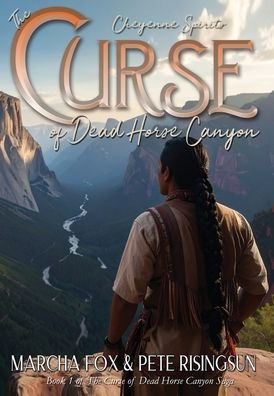
I was delighted when I read that since that’s exactly what Charlie did in “The Curse of Dead Horse Canyon” in the chapter entitled “The Aspen” where the tree that witnessed the accident that killed his best friend gave him a clue on where to find evidence. When I wrote some of these scenes I wondered if they were realistic. My Cheyenne coauthor, Pete Risingsun, assured me that they were.

And there it is, in a book about the physics of consciousness.

Out-of-body experiences, such as near-death experiences (NDEs) have an important message in that they teach individuals directly that they are not their body but immortal consciousness. Per Antic, “For as long as we remain identified with the physical body as the only reality, we cannot know the true nature of consciousness and existence.”

This explains the reason why people who have had NDEs often are changed upon returning to their bodies. In the Dead Horse Canyon trilogy, both Sara and Charlie are different after going through NDEs. In many instances I’ve read that one is necessary for one to become a medicine man or shaman because it opens up their perception to other dimensions.

Star Ancestors book cover

Shona Bear Clark in Nancy Redstar’s book “Our Star Ancestors” states, “I had been dead for seven minutes. I was in pure light. I didn’t see or hear anyone in the light, but ever since then I have been able to hear people thinking. I can see a person’s spirit floating above his head, which tells me a great deal about the person.” She goes on to say, ” I have lived a long life, continually aware of the existence of other realities and of strange, magical beings who can traverse the dimensional barriers and enter my world. These are things Indians rarely speak about to White men. But we are changing all that now.”

I found it profound, satisfying and gratifying to find the phenomena depicted in mine and Pete’s books to be validated by a book that describes the “physics of consciousness.”

Undoubtedly what is commonly called our current “civilized” world is a gross overstatement.

Antic’s book, of which this is one of many, is not an easy read. I think I underlined a substantial percentage of it due to its wealth of fascinating content. Many paragraphs I had to read several times before I could grok what he was saying. It’s a book I will definitely read again. If you’re interested in what consciousness really is and its amazing implication, then you might want to pick up a copy on Amazon here.

If you enjoyed this blog be sure to subscribe so you’re notified when a new one is posted. I plan to do several more posts on this subject in the days and weeks to come. I also invite you to read “The Curse of Dead Horse Canyon” trilogy, which is loaded with examples of Indigenous culture and their connection to dimensions most people cannot see and some claim don’t exist.

Like Antic noted, sadly too many are still at the monkey stage.

Beautiful Prose, Beautiful Message

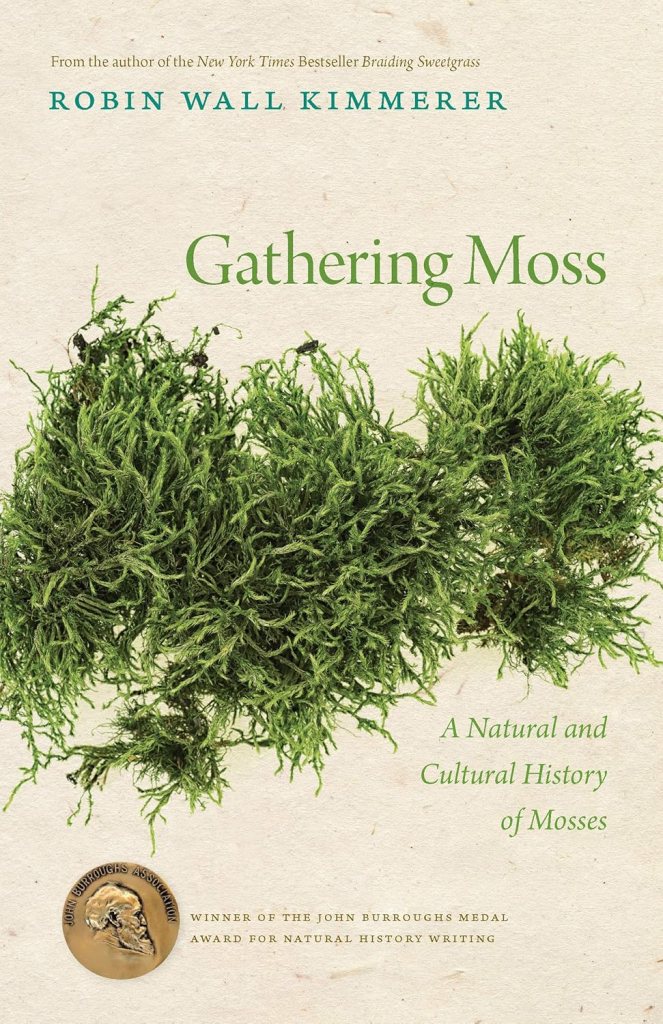
Cover of Robin Wall Kimmerer's book Gathering Moss

Review of Robin Wall Kimmerer’s “Gathering Moss: A Natural and Cultural History of Mosses”

This book has so many layers I hardly know where to start. First of all the prose is so beautifully poetic that aspiring writers of any genre should read it as a sterling example of that alone. Her use of analogies and metaphors add so much for the depth it reveals about this incredible author whose indigenous roots shine brightly in her books.

I never would have imagined that there could be that many varieties of mosses or that someone could devote their life and earn a PhD to their study. Our world is full of wonders, many of which are consistently overlooked. The beauty of mosses is clearly overlooked by the average person, myself included.

 I love nature of all varieties, and was fascinated as well as astounded by the botanical side of this book. Who has ever expected more beauty from a moss beyond its soft, velvety touch on tree trunks or an old stone wall? That some mosses you may find are as old as the place they occupy? That they are true home-bodies and don’t respond well to being moved? That they can live for centuries, yet are so sensitive and particular about where they grow?

How many people realize that moss has amazing absorption qualities such that it can hold 60X its weight in liquid? Or that prior to the availability of cloth much less Huggies that ancient woman used it for diapers or sanitary products? If you need a trivia question no one is likely to guess there’s one for you!

Robin’s love for nature is impossible to miss. As a Native American she has a connection to Mother Earth that most white people lack. A couple times when she mentioned a species evolving I had to smile. I guess you can’t get to PhD level without being indoctrinated to the white scientific view of the world to some degree. But surely in her heart she knows that each of these beautiful plants was created as were all the animals and humans.

Her experiences during her research were fascinating. Canoeing through rivers embraced by steep canyon walls, a research center accessible only by boat where she would spend summers with her daughters, a consulting job at some anonymous wealthy owner’s estate who was trying to coerce nature to his will, thinking money alone was enough.

As an integrated whole, this book is like a guided meditation. It’s about so much more than the science of bryophytes. The title has as many layers as the book itself. Like the cliche, “A rolling stone gathers no moss,” it beckons you to slow down and look closer at the world around you.

This book is a masterpiece. Think of it as a walk through the woods on a spring day, not to be rushed, expectations open, or you’ll miss its magic. It’s encouraging to see how popular her books are, that people are seeking a world that those obsessed with power and greed have tried so hard to hide.

You can pick up a copy on Amazon here.

Medicine Men: Then and Now (Part 1)

AI Generated image of a traditional medicine man shaking hands with a modern woman doctor

Healing is something we all seek at one time or another. In these modern times, many turn to their physician, who then sends a prescription to their chosen pharmacy. If you can afford it, you take it as directed. Sometimes it works, sometimes it doesn’t.

Yet the human race survived for thousands of years without pharmaceutical companies. Probably the most questionable thing about them is how they did all in their power to suppress natural cures.

Why?

A natural substance cannot be patented and thus assure income.

Of course it’s becoming more apparent day by day that the pharmaceutical/healthcare industry isn’t about helping people get well–it’s about profits. While this subject is ripe for discussing any number of conspiracy theories, that is not the point I want to make.

Rather, I’d like to illustrate similarities between methods used for thousands of years by indigenous healers (i.e., medicine men or, in some cultures, shamans) versus “new” alternative medicine approaches that eschew drugs for other means for optimizing health, both physical and emotional, which are more connected than most people realize.

Cover of Louise Hay's book "You Can Heal Your Life"

That is one of the most fascinating “breakthroughs” in relatively recent times. Much of this began with Louise Hay’s book, You Can Heal Your Life. A similar book that was my first introduction to the possibility is Feelings Buried Alive Never Die by Karol Kuhn Truman.

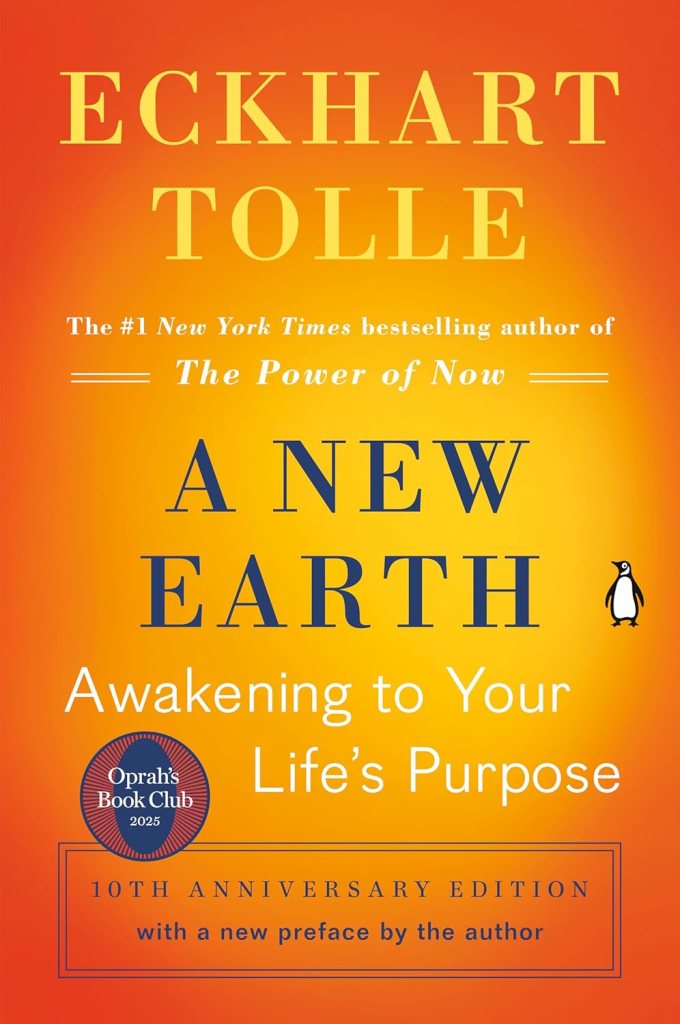
In his book, A New Earth, Eckhart Tolle states, “Suffering or negativity is often misperceived by the ego as pleasure because up to a point the ego strengthens itself through it. For example, anger or resentment strengthen the ego enormously. . . If you were able to observe the physiological changes that take place inside your body when possessed by such negative states, how they adversely affect the functioning of the heart, the digestive and immune systems, and countless other bodily functions, it would become abundantly clear that such states are indeed pathological, are forms of suffering and not pleasure…”

Cover of Eckhart Tolle's book "A New Earth"

He goes on to say, ” The remnants of pain left behind by every strong negative emotion that is not fully faced, accepted, and then let go of join together to form an energy field that lives in the very cells of your body…The pain-body is a semi-autonomous energy-form that lives within more human beings, an entity made up of emotion. It has its own primitive intelligence, not unlike a cunning animal, and its intelligence is directed primarily at survival…That’s why it thrives on negative thinking as well as drama in relationships. The pain-body is an addiction to unhappiness.

Cover of "The Making of a Healer" by Russell FourEagles

Here is what Russell FourEagles, a modern-day Native American healer, has to say about such emotions:

“We humans tend to hang on to too much baggage such as anger, guilt, and pain. We tend to keep inside the hurts and sorrows from losses of family and friends. We also hang onto other life losses such as money and material things. That little place the Creator gave us to store our hurts was meant to be used for just a short while, until we were ready to let them go. But instead, we stuff our heart boxes with more and more hurts and traumas until we learn from our life’s lessons or die. We may often carry this baggage for many lifetimes if we don’t learn to let it go…

“The addition of the new trauma has caused the heart box to swell, so that it presses uncomfortably against the heart and lungs. But then, in an unconscious ability the Creator gave us, we have stolen energy from our own cells to build a wall around our heart box… One way to unload our heart boxes is through the Oneida Fire Ceremony. The ceremony’s main function is for us to give all our painful memories and traumas to the Creator. We do this through writing things down and offering them up in prayer. This ritual helps us to heal and get stronger. In the process, we uncover ever and ever deeper old hurts.” (The Making of a Healer: Teachings of my Oneida Grandmother)

Cover of Dr. Bradley Nelson's book "The Emotion Code"

As far as the Heart Box is concerned, modern researcher and chiropractor, Bradley Nelson, states: “Trapped emotions can create a wall around your heart that can block you from living life to the fullest…Your subconscious mind–which knows no limitations–will sometimes use the energy of these trapped emotions to create a barrier or shield around your heart. Literally, it creates a wall of energy around your heart, to protect it…

“When you have a Heart Wall, you are not able to give love as well as you might, because that love energy that is in your heart cannot get out as well. (The Emotion Code: How to Release Your Trapped Emotions for Abundant Health, Love and Happiness)

Cover of Karol Kuhn Truman's book "Feelings Buried Alive Never Die."

The heart is not the only place that emotions can be trapped. As Louise Hay, Karol Kuhn Truman, and Dr. Bradley Nelson each explained, different feelings get stored in different organs. If you have specific health problems, its origin could lie in some past emotional trauma.

I invite you to check out one or all of these books for details.

Watch for more on this fascinating subject of how ancient beliefs about everything from healing to the true meaning of consciousness are coming full-circle with modern science.

Living in a Gift Economy with Reciprocity and Gratitude

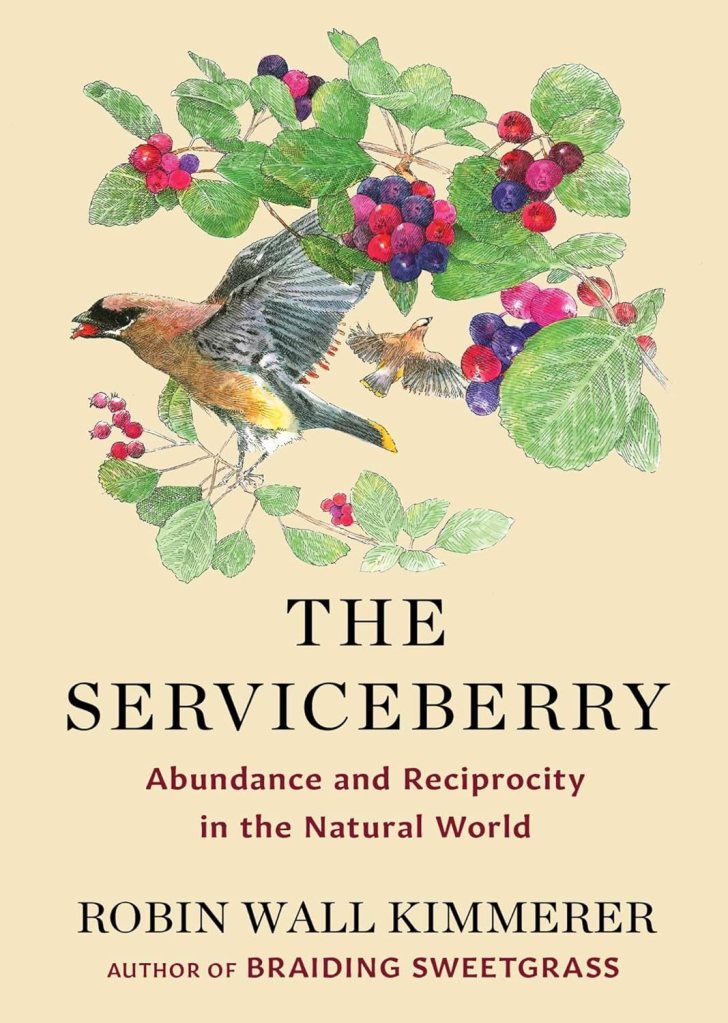
Book Cover of "The Serviceberry"

Review of “The Serviceberry: Abundance and Reciprocity in the Natural World” by Robin Wall Kimmerer

This beautiful little book gives you plenty to think about. The illustrations complement the text perfectly and help convey it’s sweet message. I expected it to be a bit longer, but it’s the expansion of an essay/article done previously.

I love the author’s insights based on her Native American heritage. There is so much wisdom there. The core message of the analogy to the serviceberry is reflected in the subtitle, “Abundance and Reciprocity in the Natural World.” Everything we have and need comes from the Earth as a gift. We should take only what we need. Greed and hoarding are not how nature operates. When do we attain the feeling of “enoughness?”

It’s message is also nicely expressed in Chief Seattle’s quote, “Take only memories, leave only footprints” from a speech he gave on honoring the environment.

Sharing builds friends and community. Giving back benefits both the donor and the recipient. She states, “Gratitude and reciprocity are the currency of a gift economy, and they  have the remarkable property of multiplying with every exchange, their energy concentrating as the pass form hand to hand, a truly renewable resource.”

She tells the story of a little wooden “Free Farm Stand” that was placed by the road where excess produce was left for people to take. The irony was that when winter approached and the stand was shut down, someone took the sign literally and actually took the stand itself! Fortunately, a young man in the area was working on his Eagle Scout Award and planned to build a new one as his project.

Many years ago I lived in a community that dated back to the 1800s where everyone knew each other. Probably more than half of them were related, progeny of the town’s founders. Our children played together, we shared our talents and our harvests. We bartered, eggs for fresh milk and various other exchanges.

This is fairly easy to do in a small community.  She mentions potlatches, which I was not familiar with, so I looked it up. The American Heritage Dictionary defines it as “A ceremonial feast among Indian tribes on the northwest Pacific coast to which the host distributes gifts requiring reciprocation.”

I have seen that on a smaller scale, where you would take a treat or dinner to someone and tell them to pay it forward to someone else as opposed to paying it back to the giver. To think this was a inherent part of Indigenous culture is thought provoking at the least.

These practices are more easily accomplished in small neighborhoods where everyone knows each other. It brings to mind something I read in Nancy Red Star’s book, “Star Ancestors,” about a great migration that occurred thousands of years ago. The people were advised not to stop and build cities, but of course some of them did.

If you look at cities today you can see the wisdom of that advice. In cities people lose touch with one another. Jean-Jacques Rousseau, clear back in the 18th Century, argued that humans were happier and more virtuous in a “state of nature.” Cities, civilization, and fancy social structures just made people fake, greedy, and miserable. He saw city life as the root of inequality and moral decay. He believed living close to nature, simple living, and smaller, self-sufficient communities — not the crowded, artificial world of cities, was the way to live. Centuries later, Henry David Thoreau echoed the same sentiment in Walden Pond.

Going deeper into that subject opens Pandora’s Box, so I’ll leave that for another day.

Indigenous cultures had a beautiful concept of community and taking care of one other. Small communities often operate in a similar manner. Each of us could start with our families by instilling the concept of giving, reciprocity, and gratitude, then expanding it to friends, neighbors, and relatives.

After all, it’s the family where such beliefs should begin.

You can get your copy on Amazon here.

Confessions of a Life-Long Bibliophile

The True Loves of My Life

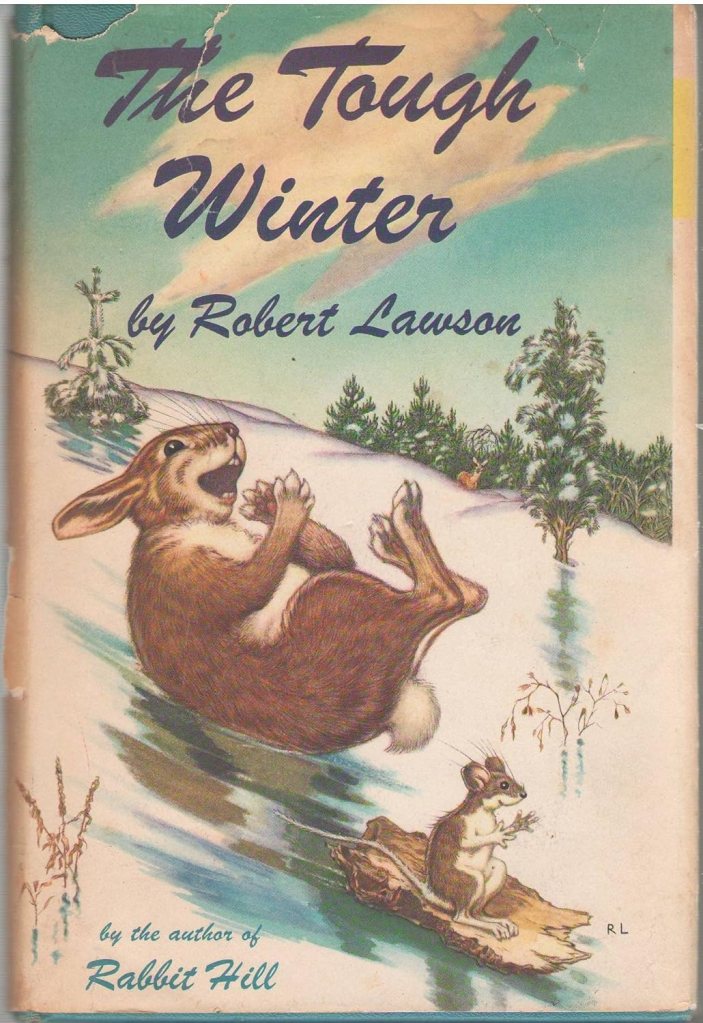
As an only child, books were important. Fortunately, my mother read to me as a young child such that I could read by the time I went to school. I was reading chapter books by 3rd grade, maybe sooner. My early favorites were animal stories by authors like Paul Gallico, who wrote “The Abandoned,” my favorite book for many years, perhaps for all time. Robert Lawson, author of “The Tough Winter” was another favorite.

I remember going to the Peekskill New York Public Library in my home town and coming home with a huge stack of books, especially in the summer.

While still in elementary school I discovered Nancy Drew Mysteries. I would save my allowance to buy the latest release and had them all, which were usually read more than once. As a teen my favorite was “The Catcher in the Rye” by J.D. Salinger. I remember reading on a city bus and coming to a part that made me laugh out loud, earning odd looks from my fellow passengers.

As a working adult, I had to give up certain authors because they kept me up all night: Michael Crichton, Tom Clancy, John Grisham, to name a few.

Home at Last!

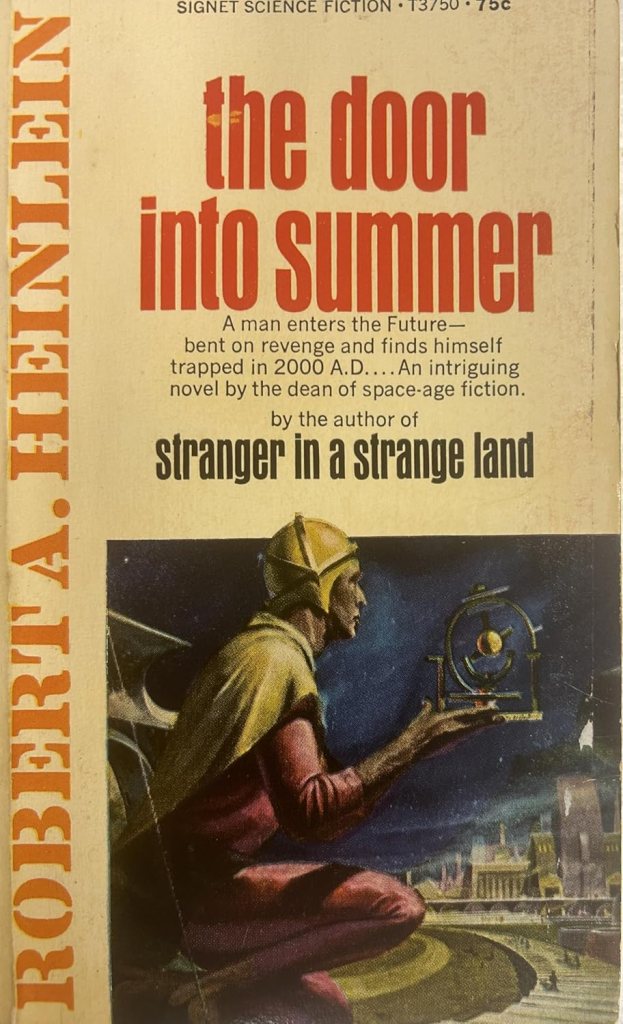
Somewhere along the line I discovered science fiction. The classics by Jules Verne such as “Journey to the Center of the Earth” and H.G. Wells’ “The Time Machine” were my first discovery, followed by Isaac Asimov and Robert A. Heinlein, the latter my all-time favorite, especially “The Door Into Summer” and “A Stranger in a Strange Land,” where the word “grok” originated, for those of you who didn’t know.

I scratched out my first science fiction story in 6th grade on yellow lined paper about the planet our teacher hailed from.  Not much of a plot, but my classmates found it entertaining. Not surprisingly, an avid reader like myself aspired to be an author when I grew up, more specifically a science fiction author.

One thing that always frustrated me was that science fiction books had very little actual science in them, probably why I favored Heinlein, who was an aeronautical engineer whose fiction started the “hard science fiction” sub-genre.

As a perfectionist, I wanted to learn more about science so that when I wrote my stories they would contain the scientific explanations I craved as a youth. Thus, at 35 I returned to school to earn a bachelor’s degree in physics from Utah State University, followed by a 21 year career at NASA’s Johnson Space Center in Houston, Texas.

We’re told to “Write what you know,” right?

My first science fiction novel, “The Capture of Phaethon,” about an asteroid collision with Earth was written while I was in college. It won me a scholarship as well as First Place Honor in a state competition. Maybe someday I’ll get it published. For now, the manuscript is in a box in the basement. Writing Phaethon was when I discovered the mysterious serendipity associated with creating fiction.

That’s all it is, right? Fiction? Something made up in your head?

My fictitious asteroid was named Phaethon, after the son of Apollo who crashed his father’s chariot into the Sun. Imagine my shock when doing research in the USU library’s NASA section that I found an asteroid by that name had recently been discovered! OMG! Later I discovered its usefulness in astrology, where it often indicates a “crash and burn” situation, figuratively or literally.

Heaven on Earth

The first time I set foot inside a library it felt like I was in Heaven. How it feels within the walls of a building lined with thousands upon thousands of books is as unique as it is indescribable. Every cell senses the knowledge and secrets that await, stirring my soul.

That could be why I often spend as much time researching a book as I do writing it, sometimes more. As much as I love my Kindle, for research it has to be a print book. I dog-ear pages, highlight, and leave sticky-notes galore.  When I encounter a used book like that, it tells me someone was really into its content, which is what any author hopes for.

When I wrote the Star Trails Tetralogy I incorporated science and technology problems into the plot. These were books I wanted to read as a youth but couldn’t find. I even created a Compendium with additional information for readers, teachers, and home-schoolers.

Star Trails books were popular in a charter school in Utah among young nerds like I was. I had the privilege of talking to those students a few years ago, which was so much fun. I know of at least one middle school science teacher in Florida who has my books in her classroom for extra credit reading. 

My favorite review for these books is the one where my writing was compared to Robert A. Heinlein. Imagine that! I have no idea how many children may have been inspired by them, but it’s good to know of at least a few.

Shifting Genres

The Curse of Dead Horse Canyon” saga started as a cozy mystery, but my propensity for research quickly led to a far deeper and darker story. My characters got out of hand, as usual, and suddenly I had a main character who was Cheyenne, a culture about which I knew nothing. My encounters with Native Americans was limited, and primarily with the Navajo. Research and serendipity delivered coauthor, Pete Risingsun, who kept the cultural elements on target, to say nothing of the story itself and additional research we did together.

The Reader’s Favorite review for the second book, “Return to Dead Horse Canyon: Grandfather Spirits” noted, to our delight, that “The depth of ethnology packed into both novels is meticulously researched and beautifully detailed. Fox and Risingsun are a dream team with this saga.”

Serendipity was alive and well writing that saga, especially how beautifully ancient ceremonies dove-tailed with the plot as if I’d known about them all along.

What will be lost?

Besides a book’s creative or intellectual content, to me it’s a physical thing. I love how they feel and smell, whether it’s fresh ink newly off the press or a musty antique over a hundred years old. Ebooks just didn’t feel that satisfying. I was grateful when self-publishing a paperback was an option, making it possible to hold my first print book, “Beyond the Hidden Sky,” in my hands and flip through the pages.

However, to me, a real book is a cloth-bound hardback with a dust jacket.

And this past June that dream was finally realized when all three books of the “Dead Horse Canyon” saga were released as hardbacks, laminated covers on Amazon, and real books with a cloth cover and dust jacket available through Ingram and found on Barnes and Noble, Books-A-Million (BAM), and numerous other booksellers’ websites.

Everything is being digitized, which is convenient, but I shudder to think that my generation of Baby Boomers may be the last to embrace physical, print books. The expense and storage involved versus the option of digitizing everything leaves no other choice.

Given that, how many will grow up without the joy of holding a brand new release from their favorite author in their hands, much less an autographed copy? Or never know the awe and expectation amid the imposed silence found within a massive library? While the words may be the same, there’s an essence found only from a tome in tangible form. When they’re my age will they miss their first smart phone the way I treasure the memory of those beloved books?

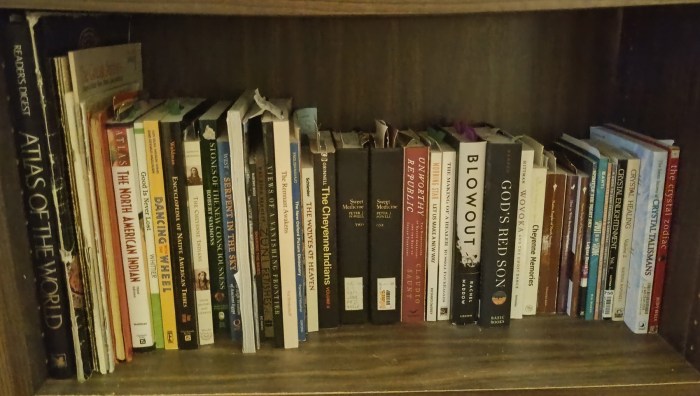
Or maybe that’s just me, an admitted bibliophile, who loves the print medium as much for its physical presence as what lies within. Digital formats that could disappear with a power surge or a few key strokes just aren’t the same. (Probably a thought my children will express loudly when I die and they have to deal with my many bookshelves full, only one of which you see at the top of the page.)

And how much easier might it be to pull the plug on books with content found offensive or declared “wrong” by someone in authority? Where would we be as a civilization without old tablets, scrolls, and other records?

To a bonafide bibliophile like myself digitizing books reeks of sacrilege. If you agree, be sure to buy a physical book once in awhile. Preferably a new one, so the author sees even a few dollars of benefit from it.

Epilogue

When I saw “The Abandoned” and “The Tough Winter” were still available on Amazon I literally cried. The book cover for “The Tough Winter” looks exactly like the book I had as a child. I ordered “The Abandoned,” planning to read it again, then leave it as my favorite book from my childhood to whomever wants such an anachronism when I die.  

This trip down memory lane led me to discover my reading list for the remainder of this year. Revisiting those favorites from the perspective of a septuagenarian should be interesting.

What books did you love from the time you could read? What made them special? Would you like to hold them again as you would hug a dear friend you hadn’t seen for years?

And that, no doubt, is why I simply had to order a physical copy of “The Abandoned.”
Explore Cultural Depth with Dead Horse Canyon Reader’s Guides

open book overlooking canyon

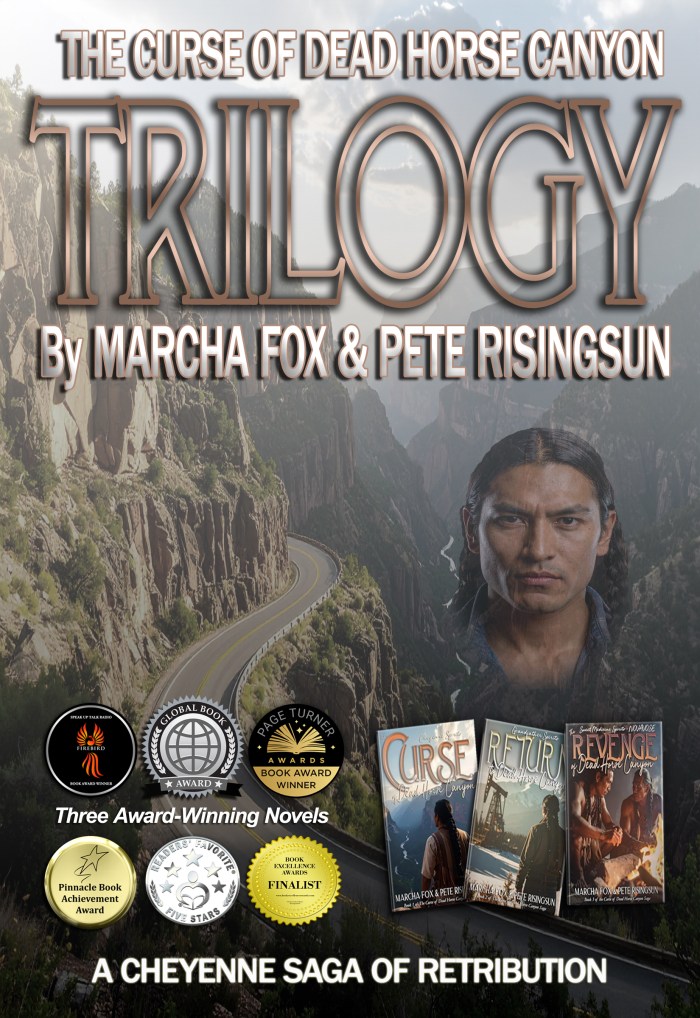
Grab your reading glasses and find a comfortable chair! Reader’s Guides for all three books in The Curse of Dead Horse Canyon Trilogy are now complete! You can download each one in pdf format below as well as on each book’s respective page on this website.

Note that there are two for each book. The “Thematic” version is much shorter and addresses the book as a whole. The Reader’s Guides are more comprehensive, especially for Books Two and Three. These proceed chapter by chapter while they’re grouped for Book One. 

Just for fun, trivia, a playlist and even a few recipes are included. Why? To further relay the tone, feeling, and in some cases, taste, of the books. 

Along those lines, here’s a link to some indigenous music I love to get you in the mood. It’s not Cheyenne, it’s Australian, but who can resist that beat? Why is it here? This is what Charlie and Sara are listening to when they’re searching for Bryan’s data! This scene is found in Chapter 42, Canopus, of The Curse of Dead Horse Canyon: Cheyenne Spirits.

This trilogy not only lent itself to reader’s guides, but demanded them. Why? Serious readers, including book club members, crave a deep dive into complex stories. This trilogy is loaded with characters, each with their own agenda. So many that a dramatis personae was included in each book to help keep them straight. Greedy oil barons, corrupt government officials, and lobbyists on one side with charismatic indigenous men and women reestablishing a culture white men tried to destroy on the other–plus a wide variety of other supporting characters.

Their destiny? Light the fuse on a 19th Century curse.

Here are a few comments from emails I received:

“…intrigued, not only by the depth of the storyline, but by how seamlessly you blend Indigenous prophecy, science, and spiritual awakening. That balance isn’t easy to strike, yet your work does it with power and purpose.”

“You two are such a powerful creative force, and this story is proof of what fiction can be when it’s written with purpose, cultural depth, and emotional honesty. The pacing, the point of view shifts, the drama, the reverence– even the surprising emotional pivots and that healing ceremony…wow came together in a way that felt epic, yet deeply personal.”

“An explosive conclusion blending conspiracy, cultural heritage, and spiritual awakening is an incredible hook. The depth you’ve woven from Cheyenne prophecy to modern corruption creates a narrative that’s both gripping and profound.”

What are you waiting for? Dive in today, armed with a Reader’s Guide that will assure you don’t miss a thing. If you do, it’s okay. Multiple readers have reported reading the books more than once, catching details they previously missed.

Less likely, however, with the Reader’s Guide. 😉

Available as ebooks, paperbacks, and hardcovers. If you have Kindle Unlimited you can read the entire Trilogy for free. [NOTE:–Hardcovers on Amazon are laminated covers, those on Barnes and Noble are cloth covers with a dust jacket.]

And when you’ve finished devouring the saga please leave a review! Reviews help other readers find books they’ll like and help authors as well. If you read reviews before you buy something, then you know how important they are.

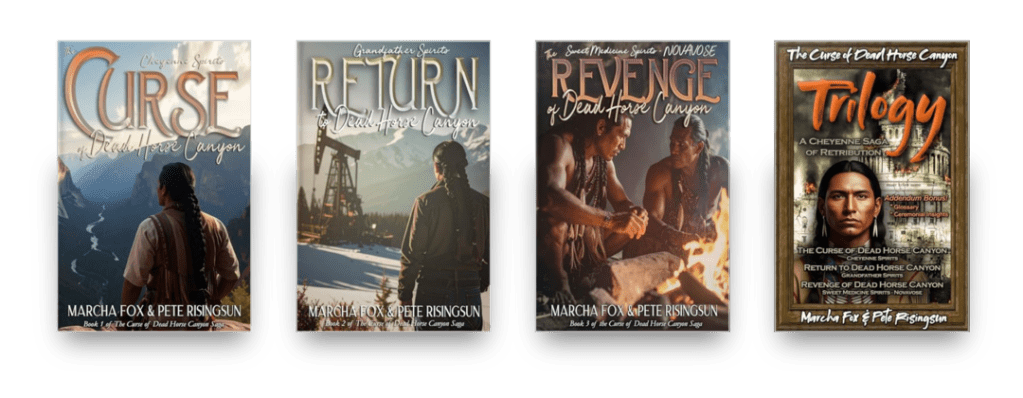
The Curse of Dead Horse Canyon: Cheyenne Spirits (Book 1)

Return to Dead Horse Canyon: Grandfather Spirits (Book 2)

The Revenge of Dead Horse Canyon: Sweet Medicine Spirits — Novovose

Co-Author Matchmaking

Have you ever wondered how Pete Risingsun, a Northern Cheyenne elder living on the tribe’s reservation in southeastern Montana, and Marcha Fox, a science fiction author living in Texas, became coauthors? If so, you’ll want to read the article published by the staff of Soaring Eagle, the charitable organization that supports the Heritage Living Center for Northern Cheyenne elders where Pete resides. You can find it in the Spring edition on their website here. That organization was key to facilitating this incredible partnership that has produced three award-winning novels over the past five years.

Pete and Marcha have never met face-to-face and he does not even have a computer! Phone calls, texting, and snail mail were the vehicles used to communicate, collaborate, and produce over 1400 pages of an incredible three-volume story.

The response to the article was great, as shown by a significant increase in book sales. Of particular interest was a letter, which you can see below, that was sent to Soaring Eagle by a woman who read the newsletter and as a result purchased and read the three books.

The biggest challenge for most authors, especially those that are self-published, is finding their audience. The Dead Horse Canyon Saga is unique, making this even more difficult since it doesn’t fit a single genre. However, with multiple story themes including a government conspiracy, murder, a detailed glimpse at Cheyenne history and ceremony, deep bonds of family and friendship, to say nothing of Charlie Littlewolf’s transformational journey back to his roots, there is something for everyone.

So far the three volumes have captured a total of 13 awards. This includes 5-stars and glowing reviews from Readers’ Favorite for each book, along with prestigious Book Excellence Awards.

Fans of the Longmire series (Craig Johnson’s books as well as the TV series) or the Leaphorn and Chee stories by Tony Hillerman and continued by his daughter, Anne, (novels and the Dark Winds TV series) are likely to enjoy these books. Dead Horse Canyon takes an even deeper dive into native culture and history with characters the reviewer from The Book Commentary described as “lovable,” while an Amazon reviewer of the third book described them as “Characters you will fall in love with. Characters you will fantasize horrible death wishes for with fingers crossed. And sleepless nights as you read it.

It’s been said, “Do not to judge a book by its cover.” Just in case this is an issue, new covers are coming the end of June! Stay tuned!

You can find the books on Amazon here.

Did I Channel this Trilogy?

Okay, folks. Here’s the deal.

Pete Risingsun, my coauthor, and I did a vast amount of research when we wrote “The Curse of Dead Horse Canyon” trilogy. The depiction of the Cheyenne culture is accurate. The history referred to in the stories really happened, save that which was clearly made-up, though even that was feasible. Abandoned mines definitely are a pollution issue. The astrology is actual for the time and place and characters involved, which is weird and another blog in itself.

But if there was one thing that was made up it was the source of the conspiracy, i.e., the Pearson Underground Residence Facility (PURF).

Or was it?

My jaw dropped when a friend sent me this article about just that, such a facility on an even grander scale than I have in our novel! Check it out here.

The article in The New York Post linked above opens with the following paragraph, “The federal government has secretly spent trillions building an elaborate network of subterranean ‘cities’ where the rich and powerful can shelter during a ‘near-extinction event,’ a former Bush White House official sensationally claimed.”
Much of its source and, if you’ll excuse the expression “from the horse’s mouth,” can be found in this short video (12 minutes) where Elizabeth Austin Fitts, who served as the assistant secretary of Housing and Urban Development for Housing between 1989 and 1990, talks about it on Tucker Carson’s podcast.

While I knew there were plenty of underground bases (because the History Channel says so, right?) which made PURF credible, I had no idea it was even worse than I imagined!

So if anyone out there thinks that part of the story is a stretch, bear in mind that they have actually spent even more, by several orders of magnitude, than I have noted in the books. We’re talking TRILLIONS whereas in the story it was BILLIONS.

The money probably came from those “magic money machines” the DOGE team found, right? The actual corruption coming out these days makes my fictitious situation pale by comparison.

While Pete and I were writing these books I was amazed by how many actual situations–historical and otherwise–fit perfectly. Particularly, as we researched Cheyenne ceremonies, much came out that drove and further defined the storyline. I didn’t know anything about the Massaum as the Earth Giving Ceremony, the meeting of Indigenous leaders at Walker Lake, Nevada, or any number of other things when I conceived this story. I knew how it would end but I had no idea how.

As I look back, I can’t help but wonder where this story came from? Mine and Pete’s imagination? I may have mentioned this before, but I’m what they call a “pantser,” not a “plotter.” In other words, I write “by the seat of my pants.”

I start with a very general idea/theme in mind. I populate it with characters and turn them loose. I’m more of a scribe than an author making the story up. I simply watch what they do and write it down. My characters repeatedly get themselves into scrapes where I have absolutely no idea how they’ll get out.

But they do. Usually in some way I never dreamed of.

Did I channel these books rather than make them up?

I think most of us can agree there are other dimensions out there. Psychic phenomena are very real and no doubt operate in some other reality beyond what we can currently detect. Did these stories actually take place in one of them?

I had much the same experience while writing the Star Trails Tetralogy, especially in “The Terra Debacle: Prisoners at Area 51″ in developing the science behind a telepathic walking plant.

One of the reasons I love research is all the amazing, serendipitous factoids I uncover that fit and often drive the plot and action. It’s as if the story is already out there, just waiting for some writer’s muse to whisper it in their ear.

I must say, not knowing what will happen makes writing as much fun as reading. I like to think that if it has me in suspense that such will be conveyed to my readers as well.

Here’s one teaser from “Revenge of Dead Horse Canyon: Sweet Medicine Spirits – Novavose” where I had absolutely no idea what would happen. The character in question popped up quite late in the book, but she fit perfectly.

If you’d like to get the entire trilogy in a single mega-ebook that also includes some bonus material about that Earth Giving Ceremony, you can pick one up on Amazon here.

Let me know in the comments what you think regarding where stories come from as well as whether you find my stories predictable. Like I say, I know how they’ll end, but rarely if ever know how it comes about.

Navigating the Review from Hell

I believe that most artists, like myself, are basically insecure. Especially those of us who are perfectionists. We’re acutely aware of any flaws in our work and cringe at their discovery. Nonetheless, authors look forward to readers’ reviews, albeit with fingers crossed, that they’ll be good.

Imagine my horror when my latest release got an abysmal 2-star nasty review! Not only had I made a mistake that she gleefully pointed out, but said it was “long and boring.”

OMG!

Part of what she criticized actually was a mistake (and perfectionist that I am, immediately corrected), but clearly she didn’t have the same experience I had with how some Texans butcher English grammar.

It’s been said that a book doesn’t have true credibility until it has a few “bad” reviews. True as that may be, it’s not much consolation when it’s your book. Especially when it was only the second review posted, so it dragged the rating down significantly, as you can see above.

I immediately turned to people I know who’d read it as well as the previous two books and asked for their honest opinion. I really wanted to know if it was that bad, not fishing for unworthy praise. If it was truly that awful I was ready to unpublish it and do some serious editing. I was told that it was just fine, there was nothing wrong with it, the person simply didn’t “get it.”

Only slightly consoled, I decided to follow the advice of a fellow author’s blog which stated to check out the bad reviews given to some of the classics.

Such as this 1-star review of Hemingway’s “Farewell to Arms” that states, “This is, according to critics, one of Hemingway’s best books. If so, I really cannot fathom his greatness. Really boring book that feels neither exciting nor, for that matter, educational. Just dry…”

That helped.

Then I found this 3-star review for Charles Dickens’ classic, “A Tale of Two Cities:” It’s dense, wordy, and often confusing, making the story tough to follow and, at times, flat-out boring. The writing felt clunky, not lyrical, bogging down the epic scope with unclear details and slow pacing.

By then I was starting to see my reader friends were right. It’s all a matter of “getting” the story’s meaning. Having the mental and emotional depth to comprehend something that’s not the usual straight-line plot loaded with continual action is not every reader’s superpower.

Did being described as “boring” rank me with other great misunderstood authors?

Probably not, but it was a pleasant, albeit fleeting, thought. 😉

The reviewer admitted she’d “skipped” several parts and hated the ending. No doubt by skipping certain parts she missed the context leading up to the finale, detracting from its impact and meaning.

As I write this, I know of at least one reader who is already reading it for the second time. Her first read was a marathon race to whiz through it, just wanting to know what happened. Now she’s reading it to savor and absorb all that it contains.

The book has 569 pages. That is definitely long.

Why?


Let’s just say I have more than one shelf filled with books used researching this story along with my co-author, Pete Risingsun.

We read thousands of pages. More time was spent researching and crafting the story than writing it. Our idea of “perfection” was to present an accurate representation of Cheyenne culture, ancient and modern, as well as all they suffered at the hands of the U.S. Government. Their ceremonies have deep spiritual meaning, often beyond the comprehension of readers whose view of Native Americans hails from watching old TV shows like Gunsmoke depicting the “Old West” with its “cowboys and Indians.”

A 5-star review I found for Dickens’ “A Tale of Two Cities” helps explain this syndrome. This wise reviewer states, “I feel that this book is not viewed as being one of the top tier of Dickens works due to the fact that it is thrust upon grade 9 students as an introduction to literary classics and, being so, its impact and overall cultural power has become diluted due to the audience that initially received it. It is not in regards to the content of the work itself. The intellectual abilities of students of this educational level are not able to understand the historical era, appreciate the fluent descriptive nature of the writing nor to comprehend the literary nuances that the author presents.”

And there you have it.

Readers may consider a story “boring” when they can’t grasp its depth, context, and meaning.

Granted, many books lack all three and are the ones I’d be likely to give a 2-star review along with those riddled with typos, poor formatting, grammatical errors, plot holes, and so forth.

Reviews say as much about the reviewer as they do about the book. If they scare away readers like themselves that’s a good thing if it precludes more unfavorable reviews, right?

Forgive me for sounding defensive, but the fact the book earned both a Book Excellence Award and 5-stars from Readers’ Favorite since that horrific review helped restore my confidence. Hopefully, those awards also restore enough credibility for the story to highlight that bad review for what it is.

In the aftermath of that 2-star slam, truly the worst I’ve ever had, I cherish the Readers’ Favorite reviewer’s statement.

“This finale succeeds with a perfect 10 landing. Very, very highly recommended.”

It brought tears to my eyes. Thank you, thank you, thank you!

Needless to say, I’m beyond grateful that she “got it.”

Following the Same Path

I am very pleased to report that “The Revenge of Dead Horse Canyon: Sweet Medicine Spirits – Novavose” has received both a Book Excellence Award and a 5-star review from Readers’ Favorite. I give tremendous credit to the reviewer, Jamie Michele, who had a heavy task, dealing with the final book in this long, complex saga. I’m beyond grateful she was clearly up to it, however, and comprehended the significance and import of the events. Here is what she had to say:

“The Revenge of Dead Horse Canyon: Sweet Medicine Spirits – Novavose by Marcha Fox and Pete Risingsun is the finale to the Dead Horse Canyon Saga. In books one and two, Sara Reynolds recalls only her husband Bryan’s dying plea to discover his killers after a deadly crash. With the help of Bryan’s friend, Charlie Littlewolf, and ancient ceremonies, they uncover the truth behind Bryan’s murder, sending their lives into turmoil.

“As Charlie roils with conflict over his oil drilling job, he also faces his true destiny on the Northern Cheyenne reservation. Meanwhile, Sara risked her life to expose a government conspiracy that was ready to silence her permanently. Now, Sara fights for survival after the attack that left her paralyzed, and Charlie vows to help her heal. His journey to Bear Butte reveals a destiny tied to restoring the ancient Massaum ceremony. As corrupt officials celebrate a secret facility’s opening, Indigenous leaders gather, fulfilling long-held prophecies that could change the fate of Dead Horse Canyon forever.

“’Do not become afraid when the Sweet Medicine Spirits come to you. Do not disobey them. Be humble and do what you are told.’

“The Revenge of Dead Horse Canyon by Marcha Fox and Pete Risingsun stands out for its sharp writing and complete ability to immerse readers, especially in Charlie’s spiritual transformation. Poor Sara just cannot get a break. Attacked, paralyzed, kidnapped, and then labeled a domestic terrorist and sanctioned! This isn’t just a fight for survival; this is about the power of truth in the face of overwhelming opposition.

“Charlie fits into this description, with a spectacular ceremony for Sara’s healing, but also as a powerful catalyst when he is in the presence of Grandmother Earth and the consequences of his actions. Fox and Risingsun are a dream writing team in every way, and, culturally, this portrayal of Charlie’s heritage is painted from the sky to the smallest pebble and the fire burning in between. The pacing is elevated by point of view shifts and all the drama, but also a surprising relationship transformation as well. Ultimately, this finale succeeds with a perfect 10 landing.

“Very, very highly recommended.”

Every author believes in their work but receiving validation from an objective reviewer who doesn’t know you from Adam is worth its weight in gold. Self-promotion is not my superpower, making me appreciate the kudos even more.

If you haven’t yet read the trilogy, all three volumes are coming out April 18 as a box set ebook on Amazon. You can preorder your copy here.