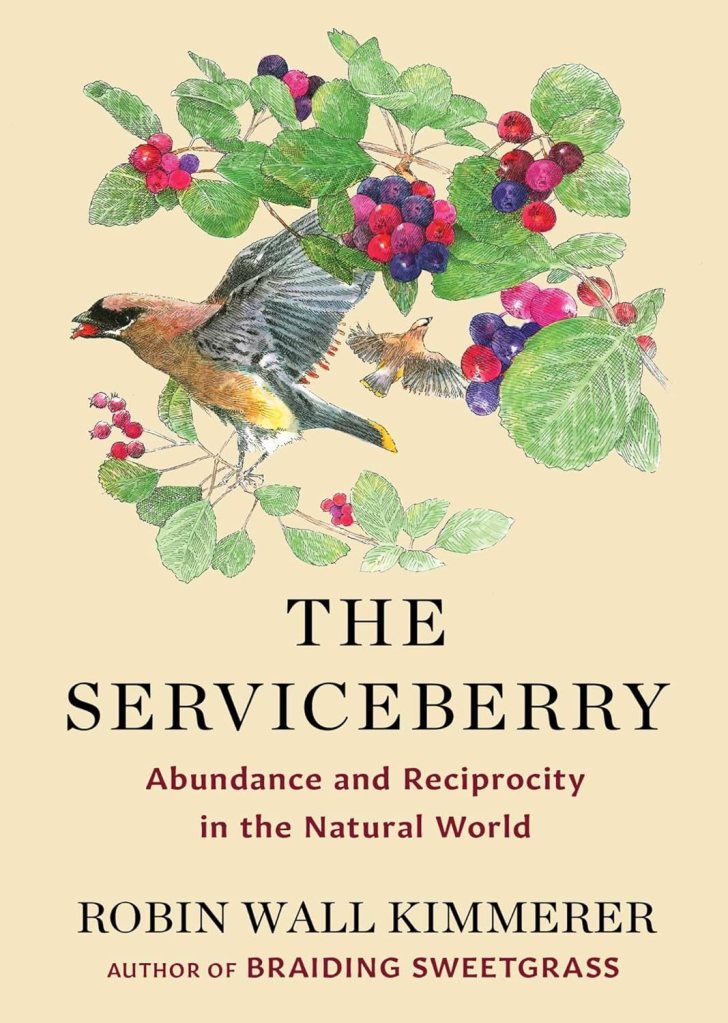
Review of “The Serviceberry: Abundance and Reciprocity in the Natural World” by Robin Wall Kimmerer
This beautiful little book gives you plenty to think about. The illustrations complement the text perfectly and help convey it’s sweet message. I expected it to be a bit longer, but it’s the expansion of an essay/article done previously.
I love the author’s insights based on her Native American heritage. There is so much wisdom there. The core message of the analogy to the serviceberry is reflected in the subtitle, “Abundance and Reciprocity in the Natural World.” Everything we have and need comes from the Earth as a gift. We should take only what we need. Greed and hoarding are not how nature operates. When do we attain the feeling of “enoughness?”
It’s message is also nicely expressed in Chief Seattle’s quote, “Take only memories, leave only footprints” from a speech he gave on honoring the environment.
Sharing builds friends and community. Giving back benefits both the donor and the recipient. She states, “Gratitude and reciprocity are the currency of a gift economy, and they have the remarkable property of multiplying with every exchange, their energy concentrating as the pass form hand to hand, a truly renewable resource.”
She tells the story of a little wooden “Free Farm Stand” that was placed by the road where excess produce was left for people to take. The irony was that when winter approached and the stand was shut down, someone took the sign literally and actually took the stand itself! Fortunately, a young man in the area was working on his Eagle Scout Award and planned to build a new one as his project.
Many years ago I lived in a community that dated back to the 1800s where everyone knew each other. Probably more than half of them were related, progeny of the town’s founders. Our children played together, we shared our talents and our harvests. We bartered, eggs for fresh milk and various other exchanges.
This is fairly easy to do in a small community. She mentions potlatches, which I was not familiar with, so I looked it up. The American Heritage Dictionary defines it as “A ceremonial feast among Indian tribes on the northwest Pacific coast to which the host distributes gifts requiring reciprocation.”
I have seen that on a smaller scale, where you would take a treat or dinner to someone and tell them to pay it forward to someone else as opposed to paying it back to the giver. To think this was a inherent part of Indigenous culture is thought provoking at the least.
These practices are more easily accomplished in small neighborhoods where everyone knows each other. It brings to mind something I read in Nancy Red Star’s book, “Star Ancestors,” about a great migration that occurred thousands of years ago. The people were advised not to stop and build cities, but of course some of them did.
If you look at cities today you can see the wisdom of that advice. In cities people lose touch with one another. Jean-Jacques Rousseau, clear back in the 18th Century, argued that humans were happier and more virtuous in a “state of nature.” Cities, civilization, and fancy social structures just made people fake, greedy, and miserable. He saw city life as the root of inequality and moral decay. He believed living close to nature, simple living, and smaller, self-sufficient communities — not the crowded, artificial world of cities, was the way to live. Centuries later, Henry David Thoreau echoed the same sentiment in Walden Pond.
Going deeper into that subject opens Pandora’s Box, so I’ll leave that for another day.
Indigenous cultures had a beautiful concept of community and taking care of one other. Small communities often operate in a similar manner. Each of us could start with our families by instilling the concept of giving, reciprocity, and gratitude, then expanding it to friends, neighbors, and relatives.
After all, it’s the family where such beliefs should begin.
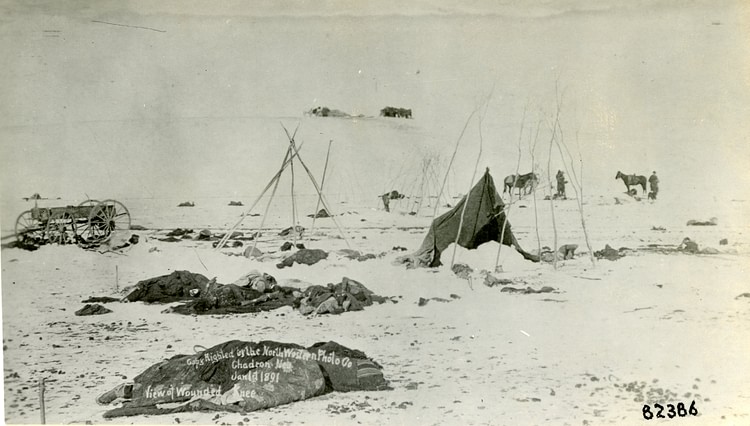
Remains of Lakota Sioux people and horses lying dead in the snow. (Library of Congress)
Introduction
Most people have heard of Wounded Knee and know it relates somehow to Native Americans without knowing the details. As the cliché states, the devil is in the details, so here is what you probably don’t know but need to about what happened that day in December 1890.
I am posting this in response to the news Defense Secretary Pete Hegseth announced recently that 20 soldiers involved in what happened at Wounded Knee would keep their military honors. Those soldiers include Mosheim Feaster, who was awarded for “extraordinary gallantry,” Jacob Trautman, who “killed a hostile Indian at close quarters,” and John Gresham, who “voluntarily led a party into a ravine to dislodge Sioux Indians concealed therein.”
Please read what follows, then consider what restoring those honors really says about our country.
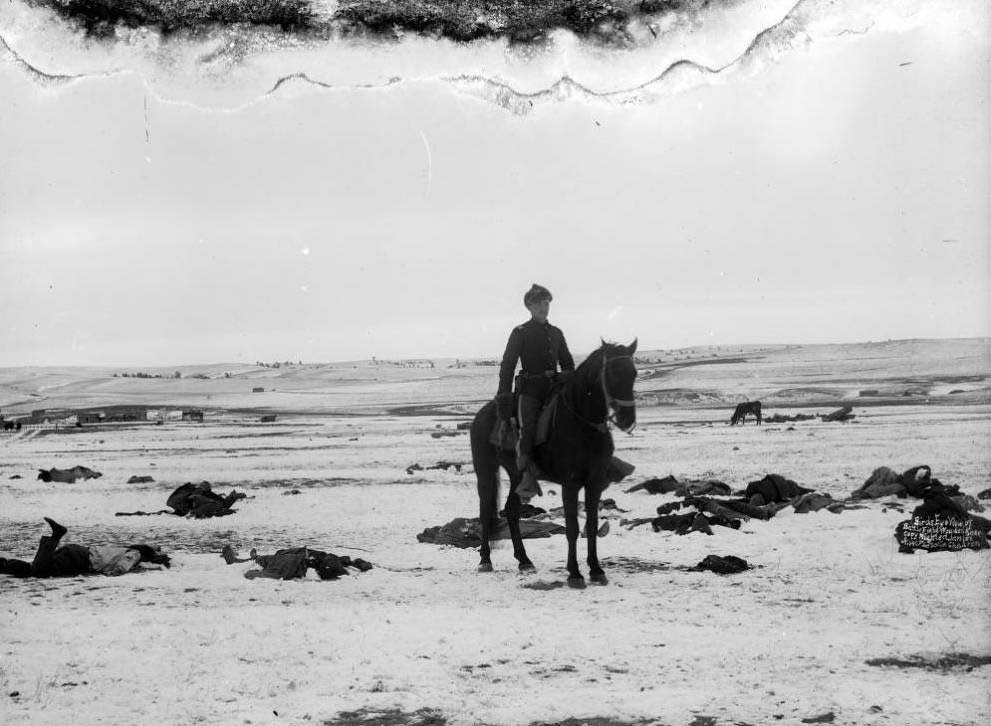
Burial of the dead at the Battle of Wounded Knee, S.D. U.S. Army soldiers observing as Lakota dead are buried in a trench. (Library of Congress)
It Wasn’t a Battle
First of all, if you’ve heard it was a battle, you are sadly mistaken. It was a massacre. As many as 300 mostly unarmed men, women, children, and babies were gunned down by the U.S. Army under the command of Colonel James Forsyth. This ended the so-called Indian Wars. The story behind the 1890 massacre is long, deep, and complex, but I will do my best to condense it to the highlights.
Back in 1888 a Northern Paiute from Nevada named Wovoka had a vision during a total eclipse of the Sun. He began sharing what he saw, that the Earth would soon perish, then come alive again in its original, pristine state with lush prairie grass and herds of buffalo, which Native people as well as their dead would inherit for their eternal existence free from suffering.
Remains of Lakota & horses after Wounded Knee massacre. (Library of Congress)
The conditions to receive this great blessing included living harmoniously and honestly, cleansing themselves often in body, mind and spirit, and shunning the ways of the whites, especially alcohol. They were told not to mourn the dead because they would be resurrected. Prayers, meditation, singing praises to the Great Spirit, and especially dancing, were taught as well as the charge to lay down their weapons and no longer fight, with each other or the white man.
A great gathering with representatives from many tribes occurred at Walker Lake, Nevada, where a Holy Man taught them these principles of peace that Wovoka promoted, along with a specific dance, song, and prayer. It was originally known as the Dance of Peace.
But like most religions, even those of divine origin, original teachings and directives were changed and perverted by those seeking power. In this case, it was Sitting Bull and others, who had not been to Walker Lake to hear its intended purpose, but interpreted the teachings to indicate victory over the white man and restoration of their lands. It’s entire meaning and purpose were twisted and it became known as the Ghost Dance.
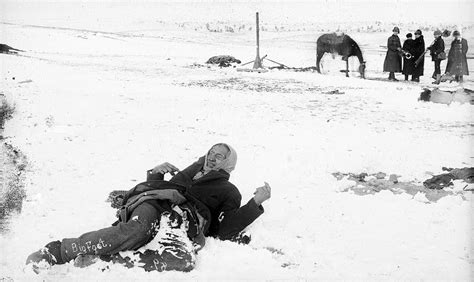
Remains of Chief Spotted Elk following massacre. (Library of Congress)
While many tribes continued to perform the dance according to its original peaceful intent, some adopted Sitting Bull’s new interpretation as a victory dance. As word reached the U.S. Government, they feared a massive Indian uprising, and in response outlawed the dance in November 1890 and sent out troops to enforce the edict.
Kicking Bear and Short Bull, who had both been at the gathering at Walker Lake, led their followers to the northwest corner of the Pine Ridge Reservation. They invited Sitting Bull, perhaps to explain to him the dance’s original purpose. Before Sitting Bull could leave, however, he was arrested by Indian police. A scuffle resulted in which Sitting Bull was killed as well as seven of his warriors.
Spotted Elk, a.k.a. Big Foot, and his followers were on their way to Pine Ridge as well at the behest of Red Cloud, a proponent of peace, hoping to restore tranquility. General Miles sent the Seventh Cavalry under Major S.M. Whitside to intercept them, finally locating them to the southwest at Porcupine Creek, about 30 miles east of Pine Ridge.
The Indians offered no resistance and were told to set up camp for the night about five miles westward at Wounded Knee Creek. Colonel James Forsyth arrived, took command from Whitside and ordered his guards to place four Hotchkiss guns in position around the camp. There were about 500 soldiers and 350 Indians, 230 of which were women and children (67%).
On the morning of December 29, 1890, the soldiers came into the Indian camp to gather all firearms. While some Indians were aware of the dance’s true nature, some saw it as Sitting Bull had, and wanted to resist. Spotted Elk urged nonviolence, but when one of the soldiers attempted to roughly disarm a deaf Indian by the name of Black Coyote, the rifle discharged.
Other guns immediately echoed the first shot. As the Indians ran for cover, soldiers began firing the Hotchkiss artillery, pursuing some who fled and killing them.
Dick Fool Bull, a child at the time, was an eyewitness. He was traveling with his parents and uncle to join the others at Wounded Knee, but delayed. (The following account was recorded by Richard Erdoes and included in his book American Indian Myths and Legends.)
It was cold and snowing. It wasn’t a happy ride, all the grown-ups were worried. Then the soldiers stopped us. They had big fur coats on, bear coats. They were warm and we were freezing. I remember wishing I had such a coat. They told us to go no further, to stop and make a camp right there. They told the same thing to everybody who came, by foot, or horse, or buggy. So there was a camp, but little to eat and little firewood, and the soldiers made a ring around us and let nobody leave.
Then suddenly there was a strange noise, maybe four, five miles away, like the tearing of a big blanket, the biggest blanket in the world. As soon as he heart it, Old Unc burst into tears. My old ma started to keen as for the dead, and people were running around, weeping, acting crazy.
I asked Old Unc, “Why is everybody crying?”
He said, “They are killing them, they are killing our people over there.”
My father said, “That noise–that’s not the ordinary soldier guns. These are the big wagon guns which tear people to bits–into little pieces!” I could not understand it, but everybody was weeping, and I wept, too…The next day, we passed by there. Old Unc said: “You children might as well see it; look and remember.”
There were dead people all over, mostly women and children, in a ravine…people were frozen, lying there in all kinds of postures, their motion frozen, too. The soldiers, who were stacking up bodies like firewood, did not like us passing by. They told us to leave there, double-quick or else. Old Unc said: ‘We’d better do what they say right now, or we’ll lie there too.’
So we went on toward Pine Ridge, but I had seen. I had seen a dead mother with a dead baby sucking at her breast. The little baby had on a tiny beaded cap with the design of the American flag.
Then, adding insult to injury, starting in 1927 the federal government sponsored the carving of four presidents’ faces on Mount Rushmore in the Black Hills, sacred land to many tribes to this day, for which they fought with everything they had to retain. Furthermore, it was originally given them, then taken back in typical “Indian Giver” fashion when gold was discovered.
There are credible reports that the Holy Man who taught the gathering of Native Americans at Walker Lake was none other than Jesus Christ. Whether or not you choose to believe that is up to you, but clearly the teachings reflected what Jesus taught.
Yet it was supposed “Christians” who slaughtered these innocents and the Pope authorized it through a Bull. Pete Hegseth professes to be a Christian. What Christians have done in the name of religion should be horrifying to any civilized person, from the Inquisition to the Crusades.
I am a white woman who is about as white as you can get. My maternal heritage goes back to Connecticut in the 1600s. My paternal grandfather came from France, my paternal grandmother was French Canadian. Perhaps somewhere in my genealogy someone married a Native American, but as far as I know, that is not the case. I would be proud if it were.
I have done a wealth of research related to writing the Dead Horse Canyon trilogy with my coauthor, Pete Risingsun. It was a startling revelation “how the West was won.” It’s now obvious to me that we stole this land from its original inhabitants. They have been slaughtered, the target of genocide, treaties repeatedly broken, and promises not kept for hundreds of years. In reality, Indigenous peoples were treated better by the English and French than by the U.S. government. The United States has treated people better who attacked us during World War II than they have those from whom they stole this land.
Let that sink in.
The government even initially denied Native American “birthright citizenship” because, even though they had lived here for thousands of years or longer, it was not yet the United States when they were born.
If I were related to any of those 20 men who received “honors” for their part in the Wounded Knee massacre I’d be ashamed to admit it. I am horrified by what they did to say nothing of outraged that someone who claims to be a civilized person would condone such barbaric, heartless actions.
Forsyth was later charged with the killing of innocents, but exonerated. In 1990, Congress declared it a “Tragedy” in a bipartisan resolution. Even Major General Nelson A. Miles, who sent the Seventh Cavalry to intercept those heading for the gathering as noted earlier, condemned the Wounded Knee incident as “the most abominable military blunder and a horrible massacre of women and children.”
And yet, over a century later, our current Secretary of War wants to honor them.
What despicable human being could possibly see anything honorable in what happened that day? In the Post-WW II Nuremberg trials the allies rejected “I was only following orders” as a defense for war crimes. The Nuremberg Charter specifically said that acting under orders was not enough to free you of responsibility — it might only be considered when determining punishment.
Principle IV of the Nuremberg Principles states, “The fact that a person acted pursuant to order of his Government or of a superior does not relieve him from responsibility under international law, provided a moral choice was in fact possible to him.”
It appears that what is considered immoral action by Nuremberg standards today was okay in 1890 thanks to the Pope.
What is wrong with this picture?
It’s my opinion that Hegseth represents the worst of the white man’s world and epitomizes the “Manifest Destiny” mentality, the very reason that people of color see whites as the enemy.
Have we not learned anything or evolved beyond barbarism in a hundred years?
If this is how war crimes are judged today by the Secretary of War, in full violation of the Nuremberg Principles, then Hegseth should be impeached at least, preferably ousted, for leveling such an insult on people who have suffered enough over the past five hundred years. As far as I’m concerned, the blood of the victims at Wounded Knee is on his hands every bit as much as Forsyth, Miles, and all the others.
If you agree, please comment below, forward this blog, and notify your congressional representatives of your opinion on this matter.
Photo Credits: Library of Congress
References
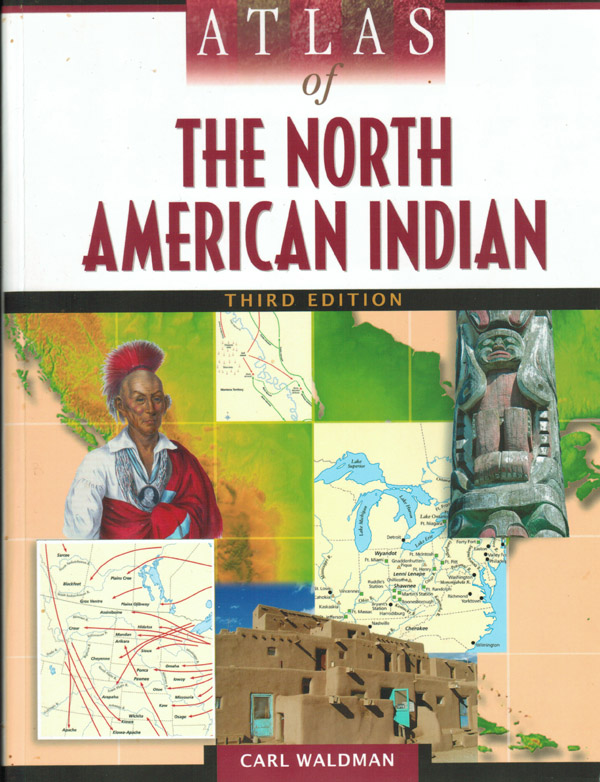
Waldman, Carl, Atlas of the North American Indian, (c) 2009, Infobase Publishing
Brinkerhoff, Val, The Remnant Awakens, (c) 2018 by the author
Erdoes, Richard and Ortiz, Alfonso, editors, American Indian Myths and Legends, “The Ghost Dance at Wounded Knee” as told by Dick Fool Bull in the 1960s and recorded by Richard Erdoes, (c) 1984
I tumbled down that particular rabbit hole upon reading, “How to Truly Own your Land: Land Patents” by Ashley Rocks, Kenneth Plaster, and Gwendolyn Morris. More on that later. Since writing the Dead Horse Canyon trilogy with my coauthor, Pete Risingsun, I now filter many issues through what I’ve learned about how “trustworthy” the United States has been regarding Native Americans.
Right. I can hear you laughing already.
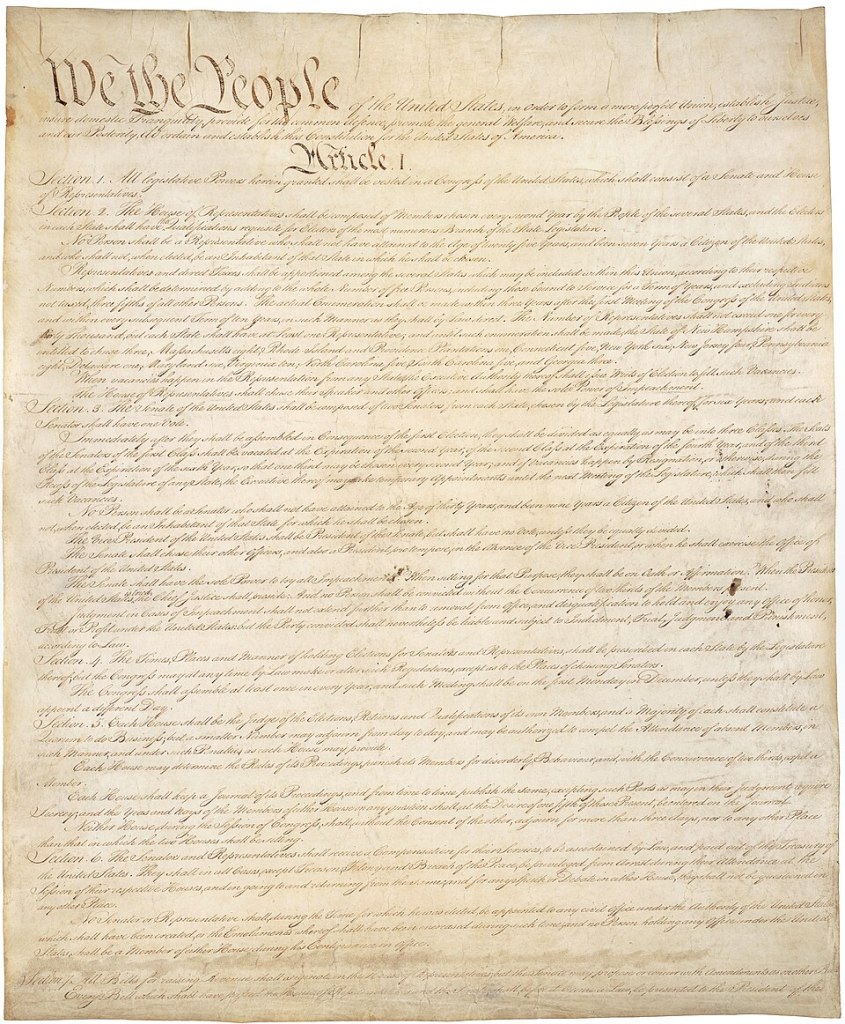
That book about land patents started with Article VI of the U.S. Constitution which states:
“This Constitution, and the Laws of the United States which shall be made in Pursuance thereof; and all Treaties made, or which shall be made, under the Authority of the United States, shall be the supreme Law of the Land; and the Judges in every State shall be bound thereby, any Thing in the Constitution or Laws of any State to the Contrary notwithstanding.”
And that is where I fell down the rabbit hole.
If treaties represent the supreme law of the land, how did Native Americans lose so much of theirs? No Constitutional amendments exist that pertain to Article VI.
So what happened?
Brace yourself for a brief history lesson to illustrate how convoluted that simple question’s answer tends to be. Then we’ll get into how this affects you as a home or property owner.
Consider that the Constitution was ratified September 17, 1787, over a hundred-fifty years after the Pilgrims arrived in 1620. Per Carl Waldman’s “Atlas of the North American Indian,” during the Colonial period, the English, French, and Dutch recognized the sovereignty of Indian nations and negotiated a plethora of treaties. Their intent was mostly to legitimize their own land purchases, claim colonial powers, and establish trade agreements. (p. 236)
Following the American Revolution, it’s easy to guess what happened to those early treaties. Like an incoming hostile landlord, the U.S. Government assumed control with a new set of conditions. Years later, Article I, Section 10 of the Constitution specifically banned states from entering into any treaty or alliance, implying previous ones were of little effect.
From 1781 to 1789 the Articles of Confederation prevailed as the rule of law. The United States’ intent with treaties was typically to legalize the right of conquest.
In a similar manner, Native Americans were not initially granted “birth right citizenship” in spite of Section 1 of the 14th Amendment, ratified in July 1868. Why? Because they were not born in the official United States. Furthermore, reservations were under Indian jurisdiction and therefore were deemed not to qualify.
During the 1850s, numerous treaties were negotiated with Indian tribes, i.e. 52 from 1853 to 1856 alone. Treaties as policy ended with a negotiated agreement between the federal government and the Nez Perce in 1867, the last of some 370 treaties! (Waldman, p. 237) Furthermore, numerous agreements made between tribes and supposed government representatives that failed to be ratified by Congress fell through the cracks while Native Americans signed them in good faith, often not even knowing what they contained.
Is it any wonder Native Americans accused the white man of “speaking with a forked tongue?”
In 1871 an act of Congress officially impeded further treaties. Supposedly, treaty obligations were not invalidated, but Indians were now subject to unilateral laws of Congress and presidential rulings. (Waldeman, p. 237)
Blackfoot said, “What we say to them, and what they said to us, was “Good.” We said “Yes, yes,” to it; but it is not in the treaty….When we were in council at Laramie we asked whether we might eat the buffalo for a long time. They said yes. That is not in the treaty. We told them we wanted a big country. They said we should have it; and that is not in the treaty. They promised us plenty of goods, and food for forty years–plenty for all the Crows to eat; but that is not in the treaty….”
Of course it wasn’t, since two years before, as stated earlier, Congress impeded further treaties.
Get the picture?
Do you really think the government holds any of its citizens in higher regard than First Nation Americans?
Which brings us to the book that started this tangent.
If you think you own your home or land, think again. While those who came to the New World in the 17th Century did so for freedom and the opportunity to own land versus a feudal system, over the years that has been corrupted like everything else the Founding Fathers intended, reverting back to what they supposedly left behind.
This book is essential reading for anyone who thinks they own their land. You most likely hold an equitable interest title or deed, but do not hold full title to the land. Don’t believe me? Fail to make your mortgage payments or pay your property taxes and see what happens.
If you held what is known as an allodial title, the land would be yours. Period. You would not owe homage to some financial institution or government authority to retain it. It would be yours. Forever.
So why don’t you own your land? This relatively short book of 83 pages describes all the particulars, of which the average person is entirely unaware.
It is possible to obtain a Land Patent, or allodial title, but it involves a complicated process and a lot of research, tracing your property’s ownership history back to its origins as a land grant with an allodial title. While this book is not intended as legal advice, it does give you plenty of information to help you along that convoluted path.
I’m definitely interested in getting an allodial title to my existing land. My property taxes are horrible and nothing would please me more than to be situated to avoid them.
You can get a copy of this eye-opening book on Amazon. It’s a bit pricey for a skinny paperback, but the information it contains could save orders of magnitude more should allodial title be achieved.
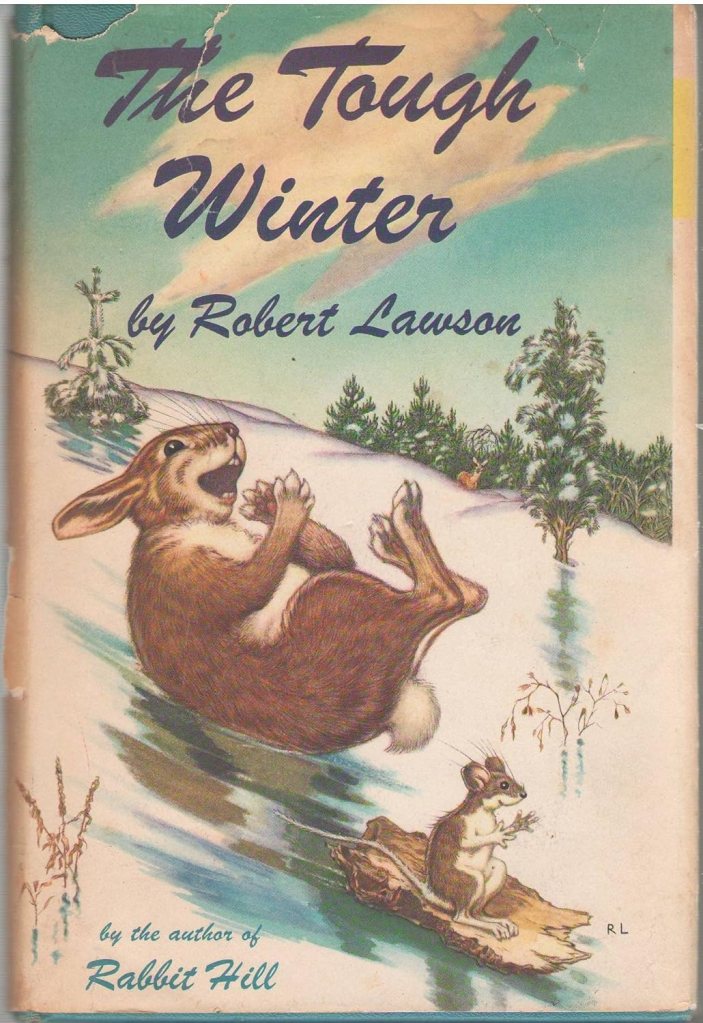
As an only child, books were important. Fortunately, my mother read to me as a young child such that I could read by the time I went to school. I was reading chapter books by 3rd grade, maybe sooner. My early favorites were animal stories by authors like Paul Gallico, who wrote “The Abandoned,” my favorite book for many years, perhaps for all time. Robert Lawson, author of “The Tough Winter” was another favorite.
I remember going to the Peekskill New York Public Library in my home town and coming home with a huge stack of books, especially in the summer.
While still in elementary school I discovered Nancy Drew Mysteries. I would save my allowance to buy the latest release and had them all, which were usually read more than once. As a teen my favorite was “The Catcher in the Rye” by J.D. Salinger. I remember reading on a city bus and coming to a part that made me laugh out loud, earning odd looks from my fellow passengers.
As a working adult, I had to give up certain authors because they kept me up all night: Michael Crichton, Tom Clancy, John Grisham, to name a few.
Home at Last!
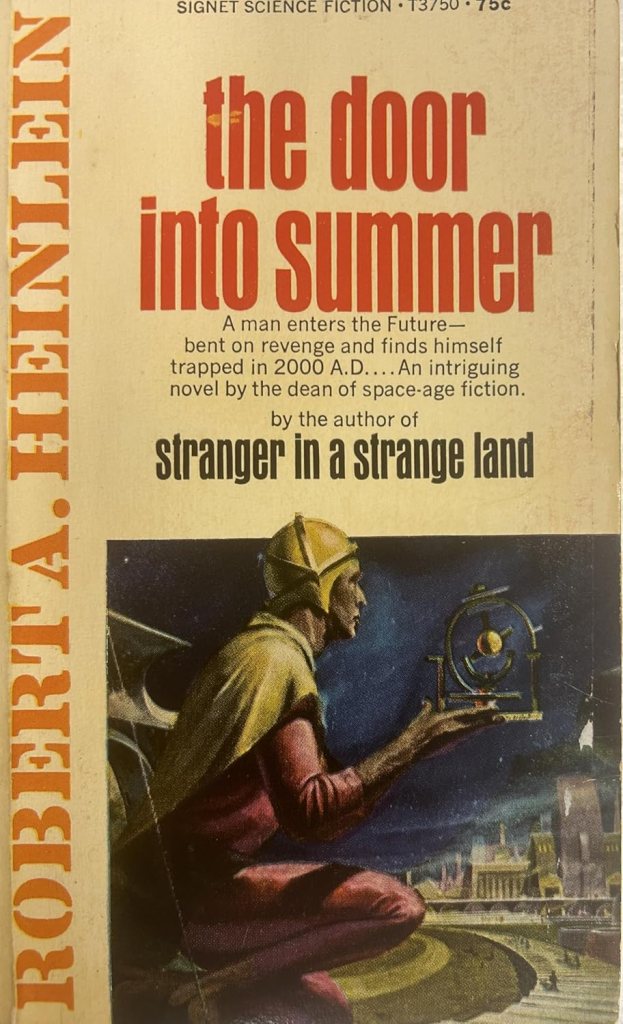
Somewhere along the line I discovered science fiction. The classics by Jules Verne such as “Journey to the Center of the Earth” and H.G. Wells’ “The Time Machine” were my first discovery, followed by Isaac Asimov and Robert A. Heinlein, the latter my all-time favorite, especially “The Door Into Summer” and “A Stranger in a Strange Land,” where the word “grok” originated, for those of you who didn’t know.
I scratched out my first science fiction story in 6th grade on yellow lined paper about the planet our teacher hailed from. Not much of a plot, but my classmates found it entertaining. Not surprisingly, an avid reader like myself aspired to be an author when I grew up, more specifically a science fiction author.
One thing that always frustrated me was that science fiction books had very little actual science in them, probably why I favored Heinlein, who was an aeronautical engineer whose fiction started the “hard science fiction” sub-genre.
As a perfectionist, I wanted to learn more about science so that when I wrote my stories they would contain the scientific explanations I craved as a youth. Thus, at 35 I returned to school to earn a bachelor’s degree in physics from Utah State University, followed by a 21 year career at NASA’s Johnson Space Center in Houston, Texas.
We’re told to “Write what you know,” right?
My first science fiction novel, “The Capture of Phaethon,” about an asteroid collision with Earth was written while I was in college. It won me a scholarship as well as First Place Honor in a state competition. Maybe someday I’ll get it published. For now, the manuscript is in a box in the basement. Writing Phaethon was when I discovered the mysterious serendipity associated with creating fiction.
That’s all it is, right? Fiction? Something made up in your head?
My fictitious asteroid was named Phaethon, after the son of Apollo who crashed his father’s chariot into the Sun. Imagine my shock when doing research in the USU library’s NASA section that I found an asteroid by that name had recently been discovered! OMG! Later I discovered its usefulness in astrology, where it often indicates a “crash and burn” situation, figuratively or literally.
Heaven on Earth
The first time I set foot inside a library it felt like I was in Heaven. How it feels within the walls of a building lined with thousands upon thousands of books is as unique as it is indescribable. Every cell senses the knowledge and secrets that await, stirring my soul.
That could be why I often spend as much time researching a book as I do writing it, sometimes more. As much as I love my Kindle, for research it has to be a print book. I dog-ear pages, highlight, and leave sticky-notes galore. When I encounter a used book like that, it tells me someone was really into its content, which is what any author hopes for.
When I wrote the Star Trails Tetralogy I incorporated science and technology problems into the plot. These were books I wanted to read as a youth but couldn’t find. I even created a Compendium with additional information for readers, teachers, and home-schoolers.
Star Trails books were popular in a charter school in Utah among young nerds like I was. I had the privilege of talking to those students a few years ago, which was so much fun. I know of at least one middle school science teacher in Florida who has my books in her classroom for extra credit reading.
My favorite review for these books is the one where my writing was compared to Robert A. Heinlein. Imagine that! I have no idea how many children may have been inspired by them, but it’s good to know of at least a few.
Shifting Genres
“The Curse of Dead Horse Canyon” saga started as a cozy mystery, but my propensity for research quickly led to a far deeper and darker story. My characters got out of hand, as usual, and suddenly I had a main character who was Cheyenne, a culture about which I knew nothing. My encounters with Native Americans was limited, and primarily with the Navajo. Research and serendipity delivered coauthor, Pete Risingsun, who kept the cultural elements on target, to say nothing of the story itself and additional research we did together.
The Reader’s Favorite review for the second book, “Return to Dead Horse Canyon: Grandfather Spirits” noted, to our delight, that “The depth of ethnology packed into both novels is meticulously researched and beautifully detailed. Fox and Risingsun are a dream team with this saga.”
Serendipity was alive and well writing that saga, especially how beautifully ancient ceremonies dove-tailed with the plot as if I’d known about them all along.
What will be lost?
Besides a book’s creative or intellectual content, to me it’s a physical thing. I love how they feel and smell, whether it’s fresh ink newly off the press or a musty antique over a hundred years old. Ebooks just didn’t feel that satisfying. I was grateful when self-publishing a paperback was an option, making it possible to hold my first print book, “Beyond the Hidden Sky,” in my hands and flip through the pages.
However, to me, a real book is a cloth-bound hardback with a dust jacket.
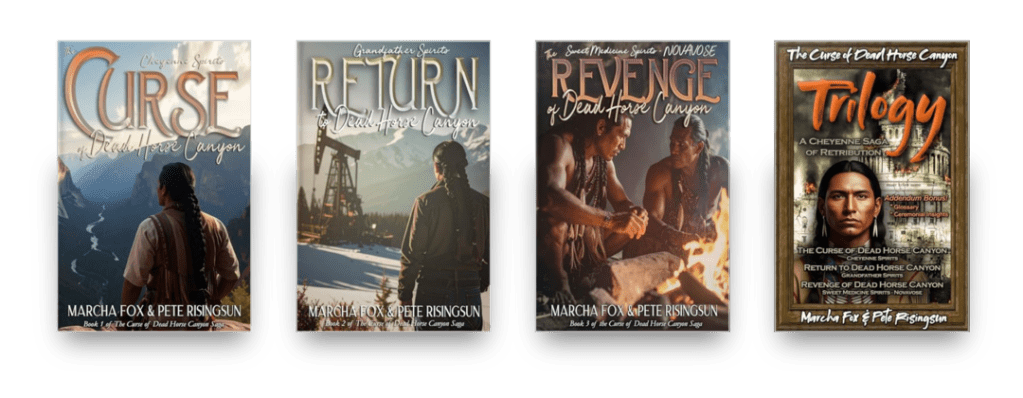
And this past June that dream was finally realized when all three books of the “Dead Horse Canyon” saga were released as hardbacks, laminated covers on Amazon, and real books with a cloth cover and dust jacket available through Ingram and found on Barnes and Noble, Books-A-Million (BAM), and numerous other booksellers’ websites.
Everything is being digitized, which is convenient, but I shudder to think that my generation of Baby Boomers may be the last to embrace physical, print books. The expense and storage involved versus the option of digitizing everything leaves no other choice.
Given that, how many will grow up without the joy of holding a brand new release from their favorite author in their hands, much less an autographed copy? Or never know the awe and expectation amid the imposed silence found within a massive library? While the words may be the same, there’s an essence found only from a tome in tangible form. When they’re my age will they miss their first smart phone the way I treasure the memory of those beloved books?
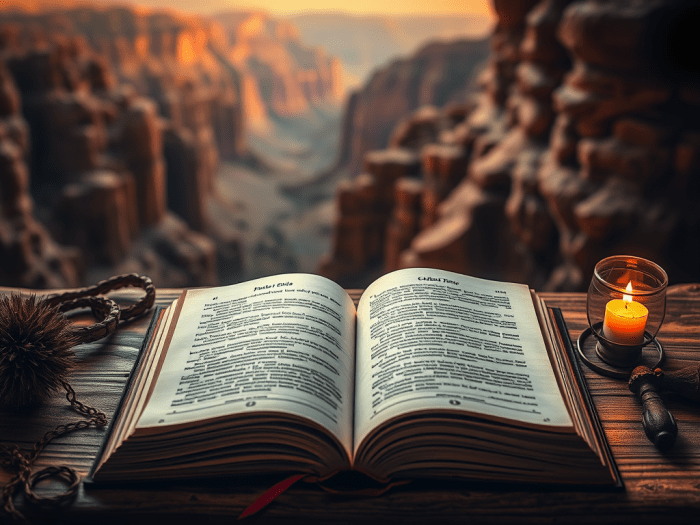
Or maybe that’s just me, an admitted bibliophile, who loves the print medium as much for its physical presence as what lies within. Digital formats that could disappear with a power surge or a few key strokes just aren’t the same. (Probably a thought my children will express loudly when I die and they have to deal with my many bookshelves full, only one of which you see at the top of the page.)
And how much easier might it be to pull the plug on books with content found offensive or declared “wrong” by someone in authority? Where would we be as a civilization without old tablets, scrolls, and other records?
To a bonafide bibliophile like myself digitizing books reeks of sacrilege. If you agree, be sure to buy a physical book once in awhile. Preferably a new one, so the author sees even a few dollars of benefit from it.
Epilogue
When I saw “The Abandoned” and “The Tough Winter” were still available on Amazon I literally cried. The book cover for “The Tough Winter” looks exactly like the book I had as a child. I ordered “The Abandoned,” planning to read it again, then leave it as my favorite book from my childhood to whomever wants such an anachronism when I die.
This trip down memory lane led me to discover my reading list for the remainder of this year. Revisiting those favorites from the perspective of a septuagenarian should be interesting.
What books did you love from the time you could read? What made them special? Would you like to hold them again as you would hug a dear friend you hadn’t seen for years?
And that, no doubt, is why I simply had to order a physical copy of “The Abandoned.”
I love making trailer videos to capture the essence of these stories that my coauthor, Pete Risingsun, and I created together. As an author I’m absolutely thrilled with how AI can bring them to life like never before!
Let me know what you think in the comments and be sure to share!
The entire trilogy is now available in ebook, paperback, and laminated hardback formats on Amazon. If you prefer a classic dust-jacket hardback, they’re available through Barnes and Noble and other book dealers.
Grab your reading glasses and find a comfortable chair! Reader’s Guides for all three books in The Curse of Dead Horse Canyon Trilogy are now complete! You can download each one in pdf format below as well as on each book’s respective page on this website.
Note that there are two for each book. The “Thematic” version is much shorter and addresses the book as a whole. The Reader’s Guides are more comprehensive, especially for Books Two and Three. These proceed chapter by chapter while they’re grouped for Book One.
Just for fun, trivia, a playlist and even a few recipes are included. Why? To further relay the tone, feeling, and in some cases, taste, of the books.
Along those lines, here’s a link to some indigenous music I love to get you in the mood. It’s not Cheyenne, it’s Australian, but who can resist that beat? Why is it here? This is what Charlie and Sara are listening to when they’re searching for Bryan’s data! This scene is found in Chapter 42, Canopus, of The Curse of Dead Horse Canyon: Cheyenne Spirits.
This trilogy not only lent itself to reader’s guides, but demanded them. Why? Serious readers, including book club members, crave a deep dive into complex stories. This trilogy is loaded with characters, each with their own agenda. So many that a dramatis personae was included in each book to help keep them straight. Greedy oil barons, corrupt government officials, and lobbyists on one side with charismatic indigenous men and women reestablishing a culture white men tried to destroy on the other–plus a wide variety of other supporting characters.
Their destiny? Light the fuse on a 19th Century curse.
Here are a few comments from emails I received:
“…intrigued, not only by the depth of the storyline, but by how seamlessly you blend Indigenous prophecy, science, and spiritual awakening. That balance isn’t easy to strike, yet your work does it with power and purpose.”
“You two are such a powerful creative force, and this story is proof of what fiction can be when it’s written with purpose, cultural depth, and emotional honesty. The pacing, the point of view shifts, the drama, the reverence– even the surprising emotional pivots and that healing ceremony…wow came together in a way that felt epic, yet deeply personal.”
“An explosive conclusion blending conspiracy, cultural heritage, and spiritual awakening is an incredible hook. The depth you’ve woven from Cheyenne prophecy to modern corruption creates a narrative that’s both gripping and profound.”
What are you waiting for? Dive in today, armed with a Reader’s Guide that will assure you don’t miss a thing. If you do, it’s okay. Multiple readers have reported reading the books more than once, catching details they previously missed.
And when you’ve finished devouring the saga please leave a review! Reviews help other readers find books they’ll like and help authors as well. If you read reviews before you buy something, then you know how important they are.
The Curse of Dead Horse Canyon: Cheyenne Spirits (Book 1)
If you’re a serious reader and want to really sink your teeth into this saga, now you can download our free Readers’ Guide for help along the way. Loaded with thought-provoking insights, discussion ideas, a few recipes, playlists, and a touch of trivia, it will enhance your enjoyment and understanding of the complexities of this award-winning story. Numerous readers have reported reading it at least twice, which bodes well for its quality and reader engagement.
If you belong to a book club, this will facilitate your dive into the series, with similar guides for the other two books coming soon.
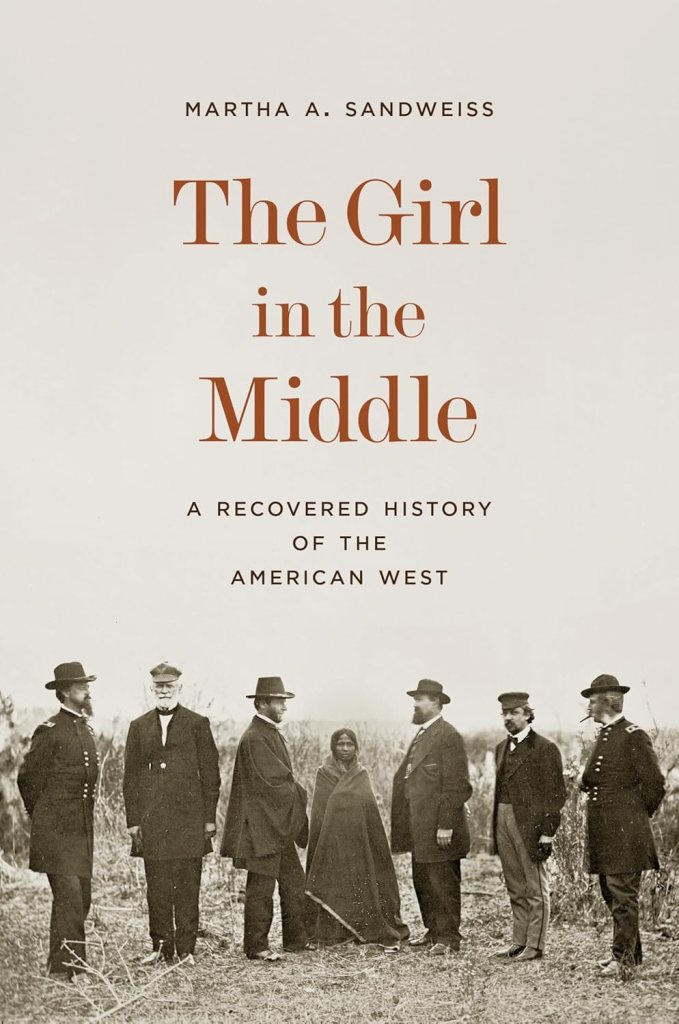
Review of “The Girl in the Middle: A Recovered History of the American West” by Martha Sandweiss
A magnificent must-read for aficionados of the West’s colorful history
When I saw this book’s haunting cover, I knew I had to find out what was inside. I’m astounded by the wealth of research done by the author and what she uncovered, revealing who and what those six men were as well why they were gathered at that place and time. Sandweiss includes the photographer and even succeeds in identifying the lone Native American girl, whose name was not included in the photo’s caption.
Be aware that every incident included in the text is documented in fifty-seven pages of “Notes.”
Wow.
What an incredible quest! One accomplished through scrutinizing government records of official actions, census records, newspaper articles, wills, land records, and personal interviews with the progeny of those involved.
The men in the photo are General William S. Harney; Senator John B. Henderson; John B. Sanborn; Samuel F. Tappan; Nathaniel G. Taylor; Alfred Howe Terry. The photographer is Alexander Gardner, famous for his documentation of the Civil War as well as portraits of President Abraham Lincoln, General William T. Sherman, and other dignitaries. The girl is Sophie Mousseau.
Looking at it journalistically, let’s use the standard who, what, when, where, and why.
Who: The men are members of the federal Peace Commission.
What: Meet with a multitude of Native American tribes.
When: It’s 1868, the nation still recovering from the Civil War.
Where: Fort Laramie, Wyoming Territory
Why: To work out treaties and agreements with the Native Americans
Not a simple task, to be sure.
Within the pages of this amazing tome lie details not found anywhere else about who each of those men were besides soldiers, politicians and activists. Not their public persona: their angels and demons, opinions, political sway, family, and in some cases, criminal records.
Their negotiations with the various tribes is detailed as well.
This is not some dry, impersonal chronology that makes your eyes glaze over like you encountered in high school. It’s an intimate look at not only these men and the circumstances that brought them there, but a glimpse of the true condition the United States (which was still in the process of forming) and the challenges faced by the government.
Besides the challenge of integrating the slaves freed following the Civil War into society, they had troubles galore related to the settlement of the West and working out agreements with the Native Americans. Don’t forget that the nation was also loaded with immigrants, with everyone trying to find their place in the adolescent nation.
You may have heard of the Sand Creek Massacre and Wounded Knee, but what about Blue Water Creek? If you believe like I do that this land was deliberately stolen from its original inhabitants, (who were not considered citizens until 1924 because they were not born in the United States), you will learn even more of the sordid details.
At least some of the Peace Commissioners (obviously not the military members) were actually pretty objective and fair, acknowledging the many gripes the Native Americans had as legitimate. The report even pointed out conflicting values by stating, “If the lands of the white man are taken, civilization justifies him in resisting the invader. Civilization does more than this: it brands him as a coward and slave if he submits to the wrong.” Conversely, “If the savage resists, civilization, with the ten commandments in one hand and the sword in the other, demands his immediate extermination.” While the commissioners didn’t want Indians to disrupt the settlement of the West, they doubted “the purity and genuineness of that civilization which reaches its ends by falsehood and violence, and dispenses blessings that spring from violated rights.” (p. 159)
I was aware that the Black Hills were very much stolen. The Fort Laramie Treaty of 1868, which promised the area to the Lakotas in perpetuity, was nullified by the so-called Agreement of 1877 and redrew the boundaries of the Great Sioux Reservation to exclude the Black Hills.
Why? To open it up to white settlement and the pursuit of gold while also ending the military defense of Lakota treaty rights.
Originally, that reservation was around sixty million acres. But the 1877 agreement (signed by only about 10% of Lakota men versus the required 75% according to an 1868 treaty), returned most of the Black Hills to the United States. The new reservation was now slightly less than twenty-two million acres, a 63% reduction.
In 1892 the Lakota began demanding compensation. Petitions and protests persisted for roughly 60 years until 1980, when the Supreme Court ruled in their favor, stating that the 1877 federal seizure of the land was done in bad faith without the proper consent from the adult men of the tribe. It awarded the tribe $17.1 million in damages, plus interest from 1877, for a total of roughly $106 million.
That may sound as if the issue is resolved. It’s not. The tribe refuses to take the money, which with accruing interest, would now be around $1.5 billion. Why? Some leaders say it would represent relinquishing their claim to the land–a price too high.
Since then the Seven Council Fires of the Great Sioux Nation has resorted to purchasing parcels of land from private ranchers. The Interior Department now hold that land in trust to be governed by the same laws that govern other trust land in Indian Country.” (p. 273)
Did you know the U.S. Government had a program that accepted “Indian Depredation Claims” from people who had suffered property damage from Indian raids and other incidents? Some of those claims took decades to settle, typical of government programs to this day. Some things never change.
So what about the girl, Sophie Mousseau?
It turns out that Sophie was “in the middle” in another respect as well. Her mother was Yellow Woman, a Oglala Lakota. Her father was Magloire Alexis Mousseau, a French Canadian.
Indeed, Sophie went on to marry and have children with two different white husbands. In censuses and other records it was common for individuals to show up as white in one document and native in another.
This was another situation that arose with its own set of complications, the matter of mixed breed individuals who were often not accepted by either culture. Furthermore, there were Indians who behaved like whites, and whites who behaved like Indians. Some of this came about when reservations were broken up via allotment programs, where many stepped in to grab land, which further reduced the size of reservations.
We think the times we live in now are complicated, but this books demonstrates that the 19th Century was loaded with challenges, some of which we still face today.
If you’re a history buff interested in the growing pains of the American West, many of which still remain as various aches and pains, I cannot recommend this book highly enough. Maybe the detail will be too much for some, but getting to know the people in this iconic photo brings it to life like never before. It was heartening to find out that the Peace Commission did recognize many of the injustices perpetrated against Native People. However, Congress didn’t agree and thus ignored its recommendations as they pleased.
As stated before, Pete Risingsun and I did a lot of research writing the Dead Horse Canyon Saga, but it was nothing compared to what was done to create this amazing book. You can find it on Amazon here.
If you’ve read any books in the Dead Horse Canyon trilogy you’ve encountered numerous instances where Charlie received a message from something other than another human being. In the Cheyenne culture these messengers are known as the maiyun, or spirit helpers. When I was writing these stories and Charlie would come across one, I always wondered if it was a stretch, my imagination getting out of hand. However, my coauthor, Pete Risinsun, always assured me they were quite typical in his culture.
If we focused on tuning into nature, considering we’re all part of the same greater, spiritual whole, we could hear them, too. You could start with noticing spirit animals, which is when you spot anything from a spider, bird, squirrel, or other wild animal that gets your attention. What is he or she trying to tell you? Often it will relate to one or more of its characteristics that you would do well to replicate. You can find a previous blog on spirit animals here.
If relating to an indigenous culture is too much of a stretch, try reading about the experiences of someone from a more familiar western way of life; someone whose work provides a bridge of sorts between the two belief systems. One I’ve learned from is medium, Rob Gutro, who has first-hand experience with the world of spirits.
I first discovered his books when I stumbled upon his “Pets and the Afterlife” series after losing one of my fur babies, an 18 year old Bengal named Ophelia. He not only channels humans, but pets as well, providing information he couldn’t possible know or understand, yet has meaning to grieving pet parents. I found considerable comfort in the stories, which include information on signs to watch for that your pet is paying you a visit from beyond the Rainbow Bridge.
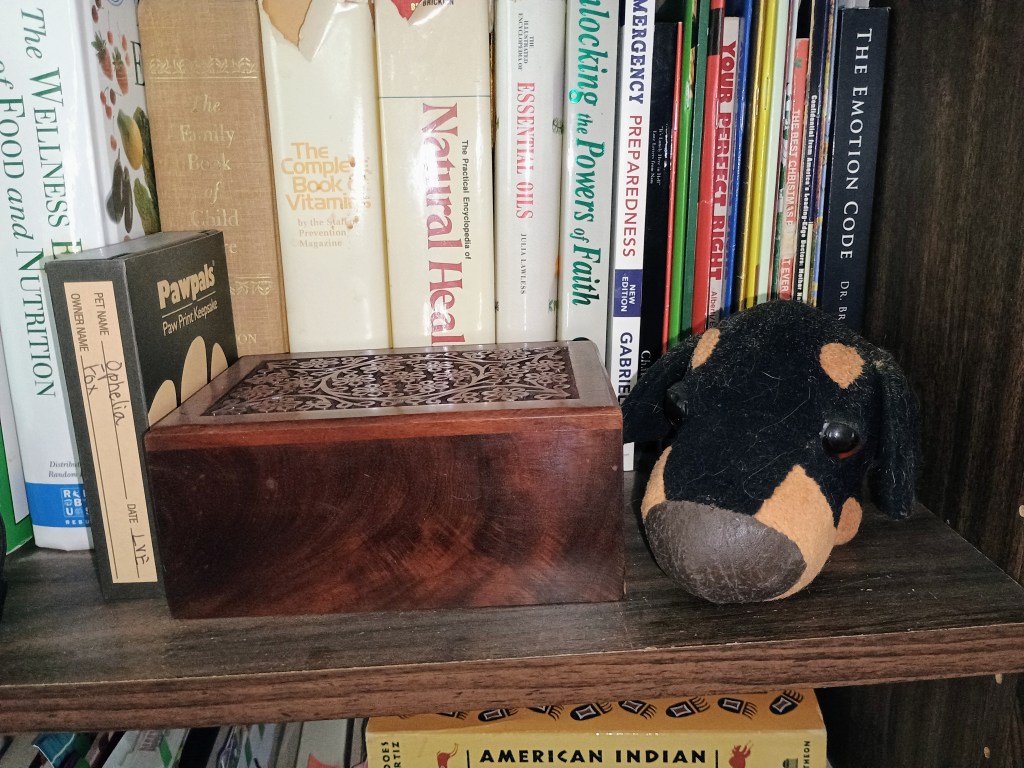
Indeed, shortly after reading the first book in that series, Ophelia did, indeed, come to visit one night. I have her cremated remains on a bookshelf in a little wooden box. Next to it is her favorite toy that she used to carry around. When she did, she would meow as Bengals do which, with the toy in her mouth, came out as a distorted blood-curdling yowl.
She loved her “baby” and often slept with it. And one morning, when I got up, her “baby” was on the floor. There was no other way it could have gotten there since it was out of reach of my other two cats. Furthermore, there was a chair stacked with pillows in front of it, so it should have fallen on top. If one of the cats had jumped on it, the pillows would have fallen. However, the toy was not only on the floor, but underneath the chair.
I’m sure she’s come by other times as well, most likely with her much larger brother, who passed in 2020, which I suspect is what’s going on when my other two cats are staring with wide eyes at something I cannot see.
If you have ever lost a beloved pet, I highly recommend this series. I had the first two books, both of which I’ve given away to friends and family when they were grieving a similar loss.
Thus, when I encountered another of Gutro’s book, “Kindred Spirits: When a Medium Befriends a Spirit” I was fascinated. The other books were very informative about the Spirit World, so I wondered what else I might learn. A few details came out that were new and directly related to the Cheyenne concept of maiyuns.
One very basic concept is that our deceased loved ones are not as far away as we may think. He explains how spirits are those who “go into the light” when they pass while ghosts remain in a fixed location for some reason known only to them. Sometimes they’re lost or confused and can be helped to cross over, which Gutro has done on occasion.
If you’ve read the Dead Horse Canyon books, you may recall White Wolf and Charlie talking about doing that in book 2 when they drove to Billings to get a new alternator for the Explorer and perceived spirits along the highway, which according to Gutro’s explanations, would have been ghosts.
Gutro noted that spirits can interact with anything living. There are various instances in the trilogy where Charlie encountered just that. What comes to mind is whether it was the spirit of the aspen tree (Book 1, Chapter 6), or the squirrel (Book 3, Chapter 43) that spoke to him, or was it a spirit of one of his ancestors prompting the interaction?
According to Gutro, visiting spirits often leave something for you to find, like a coin. In most cases its date will relate to the person in some way, such as their birth or death year, or other key time, for example when you met. Such an example in the books is the arrowhead Charlie came upon during a trail ride. (Book 2, Chapter 39). Later, in Book 3, White Wolf told him that a maiyun spooked the horse so that he would fall off and find it.
Gutro also mentioned how a person’s energy is retained in their cherished possessions. This is what “sentimental value” is all about. What do you have that is quite possibly just sitting around collecting dust, but you simply can’t get rid of it because it means something to you or did to someone you cared about and is now gone?
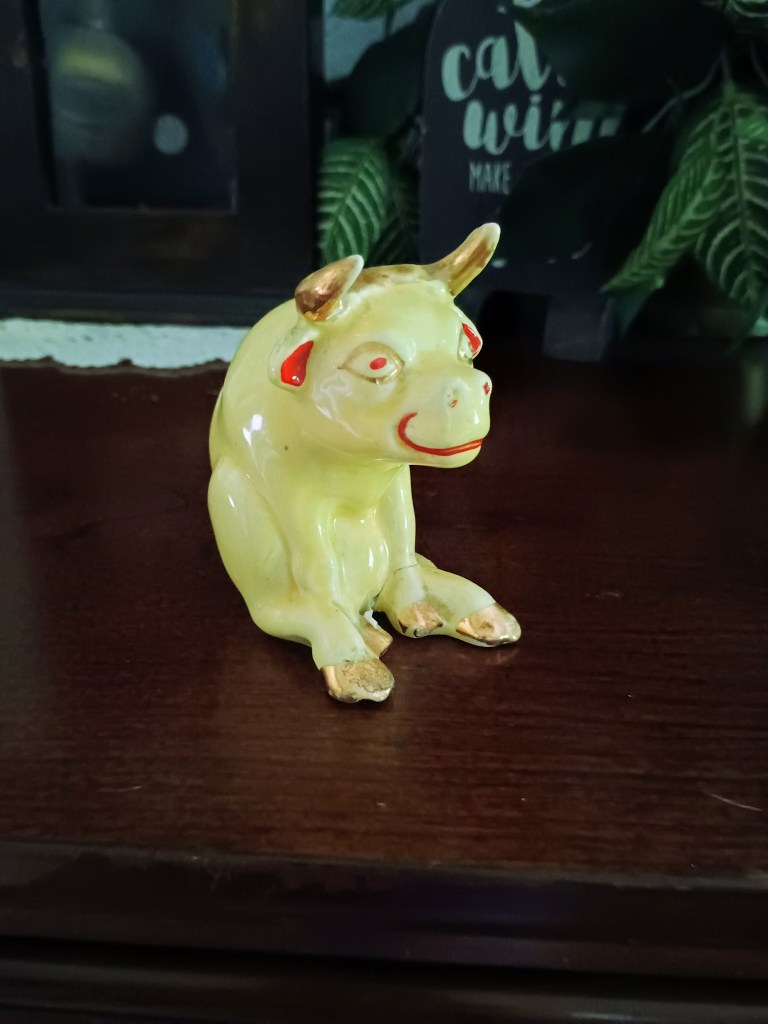
Here’s an example of such an object I have doing just that. That little knick knack,
which is older than I am and at one time cost $0.79, which is inked on the bottom, belonged to my mom. As long as I can remember it sat on the kitchen windowsill. I have no idea what it meant to her or why, but it was always there, and has been broken and repaired numerous times. For whatever weird reason, I think I would protect that little bull with my life! (Maybe not, but you get the idea.) Something about that little guy touches my heart.
Not long ago, a friend sent me something and when I received it I could feel the affection it contained. That made me rethink my usual practice of having presents drop-shipped to save money rather than reshipping them myself. Should I be infusing these gifts with affection, like Star did with the gifts for Sara and her family in Book 2? And what about Amasani’s blanket, (Book 1, Chapter 24) that conveyed her love and comfort to Charlie?
I can’t help wondering about trickster maiyuns, like the ones that always caused minor household problems whenever White Wolf and Charlie were away from home. If you’ve ever had a friend or relative who was prone to practical jokes, could that be their origin? Still up to no good in the afterlife?
Gutro’s knowledge of the Spirit World has vast similarities with what the Northern Cheyenne and other indigenous cultures not only know but take for granted. Spiritually enlightened people continue to remind us we are all connected and love is the strongest energy there is. We can always hope that daily living spirituality is making a comeback.
The real question is not only why but when was it lost to the white man, but not indigenous people?
History undoubtedly holds the answer.
[Note:–The Dead Horse Canyon Trilogy mega-ebook that contains all three Dead Horse Canyon volumes is now on Kindle Unlimited! If you haven’t yet indulged in this series and don’t have Kindle Unlimited, you can get your copy for only $7.99, a 38% savings over buying the ebooks separately, plus a special addendum is included.]
Have you ever wondered how Pete Risingsun, a Northern Cheyenne elder living on the tribe’s reservation in southeastern Montana, and Marcha Fox, a science fiction author living in Texas, became coauthors? If so, you’ll want to read the article published by the staff of Soaring Eagle, the charitable organization that supports the Heritage Living Center for Northern Cheyenne elders where Pete resides. You can find it in the Spring edition on their website here. That organization was key to facilitating this incredible partnership that has produced three award-winning novels over the past five years.
Pete and Marcha have never met face-to-face and he does not even have a computer! Phone calls, texting, and snail mail were the vehicles used to communicate, collaborate, and produce over 1400 pages of an incredible three-volume story.
The response to the article was great, as shown by a significant increase in book sales. Of particular interest was a letter, which you can see below, that was sent to Soaring Eagle by a woman who read the newsletter and as a result purchased and read the three books.
The biggest challenge for most authors, especially those that are self-published, is finding their audience. The Dead Horse Canyon Saga is unique, making this even more difficult since it doesn’t fit a single genre. However, with multiple story themes including a government conspiracy, murder, a detailed glimpse at Cheyenne history and ceremony, deep bonds of family and friendship, to say nothing of Charlie Littlewolf’s transformational journey back to his roots, there is something for everyone.
So far the three volumes have captured a total of 13 awards. This includes 5-stars and glowing reviews from Readers’ Favorite for each book, along with prestigious Book Excellence Awards.
Fans of the Longmire series (Craig Johnson’s books as well as the TV series) or the Leaphorn and Chee stories by Tony Hillerman and continued by his daughter, Anne, (novels and the Dark Winds TV series) are likely to enjoy these books. Dead Horse Canyon takes an even deeper dive into native culture and history with characters the reviewer from The Book Commentary described as “lovable,” while an Amazon reviewer of the third book described them as “Characters you will fall in love with. Characters you will fantasize horrible death wishes for with fingers crossed. And sleepless nights as you read it.“
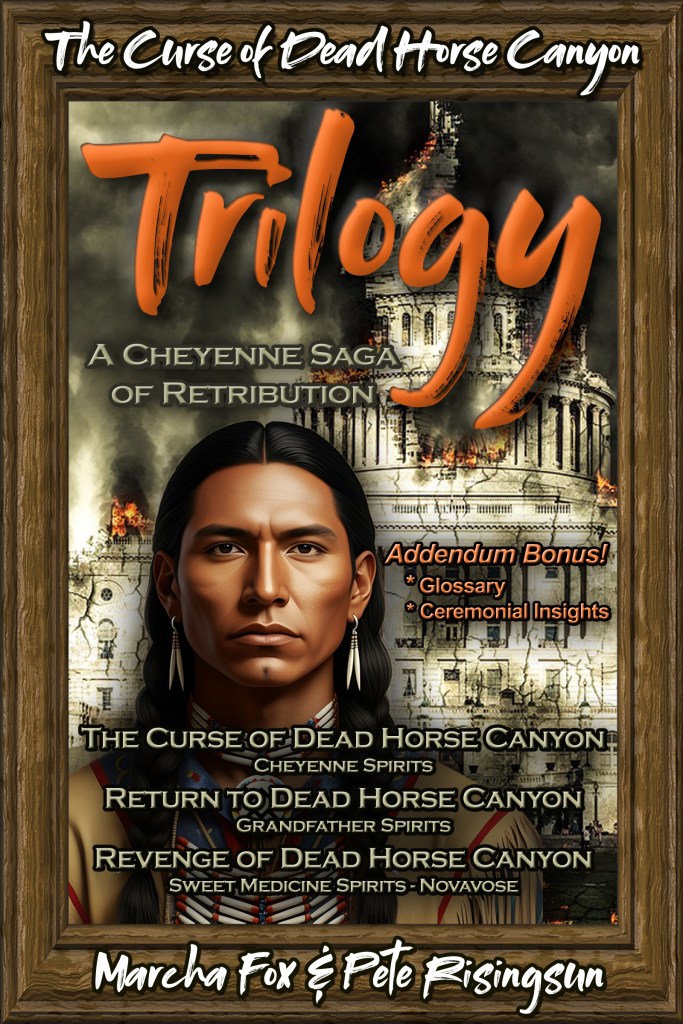
It’s been said, “Do not to judge a book by its cover.” Just in case this is an issue, new covers are coming the end of June! Stay tuned!















 The Curse of Dead Horse Canyon