Indigenous Wisdom of the Hopi Mysteries

In Honor of Native American Heritage Day, November 28, 2025

Wars are often caused by fear. Even when conquest is the intent, there is still an element of fear behind it.  In may be deeply buried in the subconscious, but it is there. It’s part of history that the white man has done everything possible to eliminate Indigenous people. This was clearly the intent of the Manifest Destiny era of western expansion of the United States when Native tribes were in the way. Had the tribes united against this invasion, they may have been able to prevail. But infighting among them made unification, even for their survival, impossible.

While given lip service as “sovereign nations” and even recognizing the strength of treaties in the constitution, nonetheless all the original occupants of what is now the United States retained was roughly 56.2 million acres (Bureau of Indian Affairs) which equals 87,800 square miles out of a total of  3.794 million square miles, or about 2.3%.

NationalAtlas.gov map of federa lands and Indian reservations

Those that weren’t killed or forcibly anglicized through brutal boarding schools were driven to these reservations. The definition of a “reservation” in Carl Waldman’s “Encyclopedia of Native American Tribes” states: A tract of land set aside historically by the federal government or state government for Indians. Reservations originally served as a kind of prison for Indians, who were not permitted to leave them. Nowadays, reservations are tribally held lands, protected by the government, where Indians are free to come and go as they choose.

So back to the original premise, before I went off on one of my usual tangents: What were they afraid of?  

I believe they were afraid of their inherent wisdom and connection with the Earth. Rather than belabor the sorry history of this country’s relationship with Indigenous people, let’s skip to the present time and the renewed attention to Hopi Prophesies concerning the end of the 4th world.

In her book, “Star Ancestors: Extraterrestrial Contact in the Native American Tradition,” Nancy Redstar states: Spiritual wisdom keepers around the world have recognized signs that were predicted by the ancient prophecies. These signs have signified the Time Keepers that they must now speak their closely held sacred knowledge concerning our origin from the stars; the influence of visitation on the formation of culture, tradition, and ceremony; and the imminent return of our Star Guardians.

The following video explains much of what the Hopi prophesy contains and definitely worth listening for 23 minutes.

Whether or not December 2025 is the turning point as implied by the video is a moot point. Timing in prophesy is difficult, but knowing what to look for is helpful– “Signs in the heavens,” if you will.

 Speaking of which, it’s interest to note that astrologically there are numerous changes occurring amongst the planets that likewise bode toward major change. The outer planets move slowly and they are all in the process of changing their zodiacal sign. It has been said that such a condition in the heavens has not been seen for 10,000 years.

Being a bit longer than western civilization has endured leaves us woefully ignorant of what happened back then.

Cover of Nancy Redstar's book "Star Ancestors: Extraterrestrial Contact in the Native American Tradition

This statement from Chief Dan Katchongva of the Sun Clan Hopi Sovereign Nation, (also found in Redstar’s book) explains why we might want to pay attention to the Hopi: The Hopi were survivors of another world that was destroyed. Therefore, Hopi were here first and made four migrations–North, South, East, and West–claiming all the land for the Great Spirit, as commanded by Massau, and for the True White Brother who will bring on Purification Day.

Others are not as confident as the video’s narrator that this transition will proceed peacefully. Thomas Benyaca states in Redstar’s book: Then you people must understand that the only way we can slow the cleansing and its terrible disasters is for the uniting of the Indian people to occur first.

This statement makes me smile as the author with Pete Risingsun of the Curse of Dead Horse Canyon Trilogy. The final volume of the saga depicts that very thing, unification of Native people, as they arrive on the cusp of prophesy. If you’re curious about a fictitious rendition of various Native American prophesies you would probably enjoy the story. While you may be tempted to skip to the third book, and if you’re really impatient, to the last chapter or so, reading the entire saga starting with the first book is highly recommended. Context is important regarding what precipitated the end result, which will also enhance your reading enjoyment. Let’s just say that a corrupt government gets what it deserves.

Troy Lang, another Native American quoted by Redstar, wisely states: The White race can choose two paths–the Black Road of Destruction or the Red Road of Spirit. The sacred circle cannot be complete as long as one of the race colors thinks it is the boss of all the colors.

Interesting times are on the way. The epilogue of “The Revenge of Dead Horse Canyon: Sweet Medicine Spirits” occurs on Native American Heritage Day. Maybe one in the future will see similar circumstances.

To quote the conclusion of the video, “Some truths open only when we’re ready to see them.”

I believe there are many people out there of all colors who are ready.
Beautiful Prose, Beautiful Message

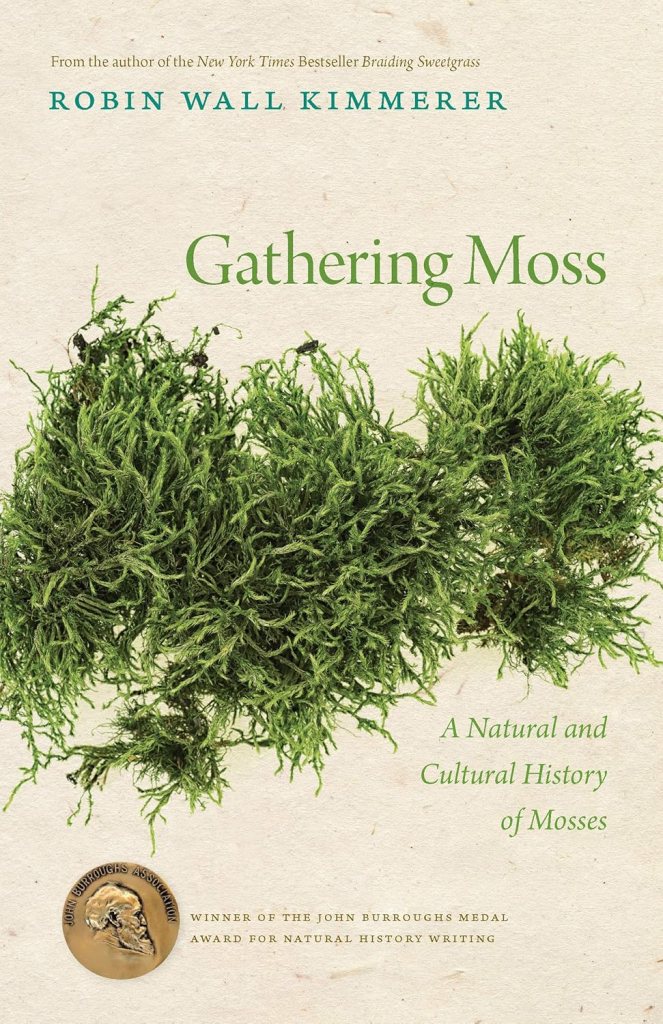
Cover of Robin Wall Kimmerer's book Gathering Moss

Review of Robin Wall Kimmerer’s “Gathering Moss: A Natural and Cultural History of Mosses”

This book has so many layers I hardly know where to start. First of all the prose is so beautifully poetic that aspiring writers of any genre should read it as a sterling example of that alone. Her use of analogies and metaphors add so much for the depth it reveals about this incredible author whose indigenous roots shine brightly in her books.

I never would have imagined that there could be that many varieties of mosses or that someone could devote their life and earn a PhD to their study. Our world is full of wonders, many of which are consistently overlooked. The beauty of mosses is clearly overlooked by the average person, myself included.

 I love nature of all varieties, and was fascinated as well as astounded by the botanical side of this book. Who has ever expected more beauty from a moss beyond its soft, velvety touch on tree trunks or an old stone wall? That some mosses you may find are as old as the place they occupy? That they are true home-bodies and don’t respond well to being moved? That they can live for centuries, yet are so sensitive and particular about where they grow?

How many people realize that moss has amazing absorption qualities such that it can hold 60X its weight in liquid? Or that prior to the availability of cloth much less Huggies that ancient woman used it for diapers or sanitary products? If you need a trivia question no one is likely to guess there’s one for you!

Robin’s love for nature is impossible to miss. As a Native American she has a connection to Mother Earth that most white people lack. A couple times when she mentioned a species evolving I had to smile. I guess you can’t get to PhD level without being indoctrinated to the white scientific view of the world to some degree. But surely in her heart she knows that each of these beautiful plants was created as were all the animals and humans.

Her experiences during her research were fascinating. Canoeing through rivers embraced by steep canyon walls, a research center accessible only by boat where she would spend summers with her daughters, a consulting job at some anonymous wealthy owner’s estate who was trying to coerce nature to his will, thinking money alone was enough.

As an integrated whole, this book is like a guided meditation. It’s about so much more than the science of bryophytes. The title has as many layers as the book itself. Like the cliche, “A rolling stone gathers no moss,” it beckons you to slow down and look closer at the world around you.

This book is a masterpiece. Think of it as a walk through the woods on a spring day, not to be rushed, expectations open, or you’ll miss its magic. It’s encouraging to see how popular her books are, that people are seeking a world that those obsessed with power and greed have tried so hard to hide.

You can pick up a copy on Amazon here.

Hopi Blue Star Prophecy Meets Inter-stellar Object 3i/Atlas

There’s been a lot of hype lately about that strange interstellar object cruising through our solar system dubbed 3i/Atlas. Many weird things about it that differ significantly from the average, garden-variety comet have scientists puzzled and numerous others capitalizing on it for some excitement.

Will it deliver Star People that indigenous people have promised will return to save our planet from annihilation? The earth is definitely in a phase of radical change that many recognize.

Cover of Nancy Red Star's book, Star Ancestors

In the introduction to her book, Star Ancestors: Extraterrestrial Contact in the Native American Tradition, Nancy Red Star states, “The Hopi call the world we are now in the Fifth World. The creation and destruction of four previous worlds is held in common belief by the Mayans, Tibetans, North American Indians, Egyptians, and other cultures around the world. In four previous worlds, on four previous continents, humankind held technology and rituals of the highest order. Now, in the Fifth World, the abuse of technology through greed has led us to chaos, a world out of balance with the natural laws.”

Here’s a fascinating video about the Hopi Blue Star prophecy that speaks to its return to change the world as we know it and echoes Red Star’s statement.

And for comparison, here are two with a more scientific flavor. This first one is from the YouTube channel Space Race, the one following that from Fraser Cain for any techies out there who want references to scientific papers.


And to finish up, here’s as a link to Vedic astrologer, Juliana Swanson’s blog that provides loads of astrological insights into it.

Enjoy and let me know what you think in the comments.

Where have all the leaders gone?

As always, Navajo Wally Brown does a fantastic job in the following video summing up what it takes to be a great leader.

Sad but true, lack of leadership has brought the United States to where we are today. Caring for the people you lead is paramount. Who wants to follow someone who is exploiting their people for power and financial gain and sets a poor example of a moral individual?

Once again, Native Americans have shown that their culture is far superior to what has been the norm in Western culture for millennia.

Leadership starts in the home. Respect for authority is important, but must be earned and deserved. Just because someone has a title does not mean they’re worthy to be obeyed or followed. Do you have the courage to stand for truth?

Like Wally says in the video, leaders are not necessarily born. They are raised. Everyone has the capability with the right training and example. His story about the blind sheep is so apropos for today’s world.

What qualities do you think are essential for a leader? How many of those traits do you have? What can you teach to those around you, especially the youth who will inherit the mess the world is today?

Returning to true principles based on love is the only way.

Native Power!

November is Native American Heritage month! To kick it off, the organization, IllumiNative, has produced a short video highlighting Native American accomplishments.

Our world has so much to gain by recognizing and adopting Native American principles. Take a few moment to browse the IllumiNative website to see the many influences that have not received the publicity they deserve. Native influence is everywhere! Celebrate and share!

Lessons from the Big Freeze

In February 2021 Texas temperatures plunged into the single digits. This historic freeze also brought an ice storm. Such frigid weather is far from normal in the Lone Star State. Usually we’re enjoying paper-whites blooming and planning our spring garden. We don’t have snow plows standing by and our homes are not designed for extreme cold. Rather we typically worry more about the heat!

This picture of the paper-whites was taken the day before the historic storm rolled in. You can see what they looked like afterward in the last picture below where their remains are by the birdbath behind the water tank.

Over 700 died during this freeze when the power grid nearly failed. The only way to keep it operating was to have blackouts and rolling blackouts. A tremendous amount of bad decisions at numerous levels caused this weather event to be far worse than it should have been. I could go on and on about what those bad decisions and mistakes were, but I want to focus on my own experience.

Fortunately, I’m pretty much a “homebody” and don’t go out much. I usually have plenty of food on hand since I only shop every couple of weeks.

I also believe in being as self-sufficient as possible. I have a propane stove that works just fine with no power as well as a few other items that were helpful. As noted earlier, being cold is not usually an issue here.

I have a fireplace and had some firewood. The power was out for 14 hours and during that time the house got pretty chilly, but the fireplace saved the day. When the rolling blackouts started, they were on a schedule so when the power was on you ran the heater and anything else, then braced for the next outage.

At one point there was only a trickle of running water. I live in a community that comprises several vacation homes. Any of these empty homes that hadn’t turned off their water at the meter had ruptured pipes. Some who were home also had ruptured pipes that flooded their entire home. Plumbing here is often in the ceiling and not insulated for such extreme temperatures.

I had an on-demand water heater mounted on the outside of my house. My efforts to protect it were vain with no power. Thus, the pipes froze and ruptured. A few days later when things started to thaw out, I went out my backdoor to take something to the trash can and found a mini-Niagara Falls spewing from it.

I hightailed it to the meter to turn it off and was lucky enough to have my plumber driving by at the time. Long story short, it took three weeks to get a new water heater installed. Needless to say, that was 3 weeks without running hot water. Taking sponge baths courtesy of a spaghetti pot with water heated on my propane stove (thank heaven for that!) was definitely different that my usual warm, cozy showers.

There was actually a similar freeze this past February, but not as severe. The power stayed on and my new water heater, which has a built-in heater, survived. I learned a lot during that week in 2021. I hope to think I’m better prepared now.

However, it was a sobering thought that there are many people in the USA who live with no heat and no running water as a matter of course. The majority of these people live on Indian Reservations. If there’s an ethnic group in this country who has been forgotten it’s the indigenous people who occupied this great land for millennia before the white man “discovered” it. Other races have a variety of valid complaints, but none compare to what was done to Native Americans.

I’m not going to enumerate what those offenses were other than the obvious ones: stealing their land and attempted genocide. If you can find it in your heart to help these people, this blog from a few years ago lists 20+ ways you can make a difference. 

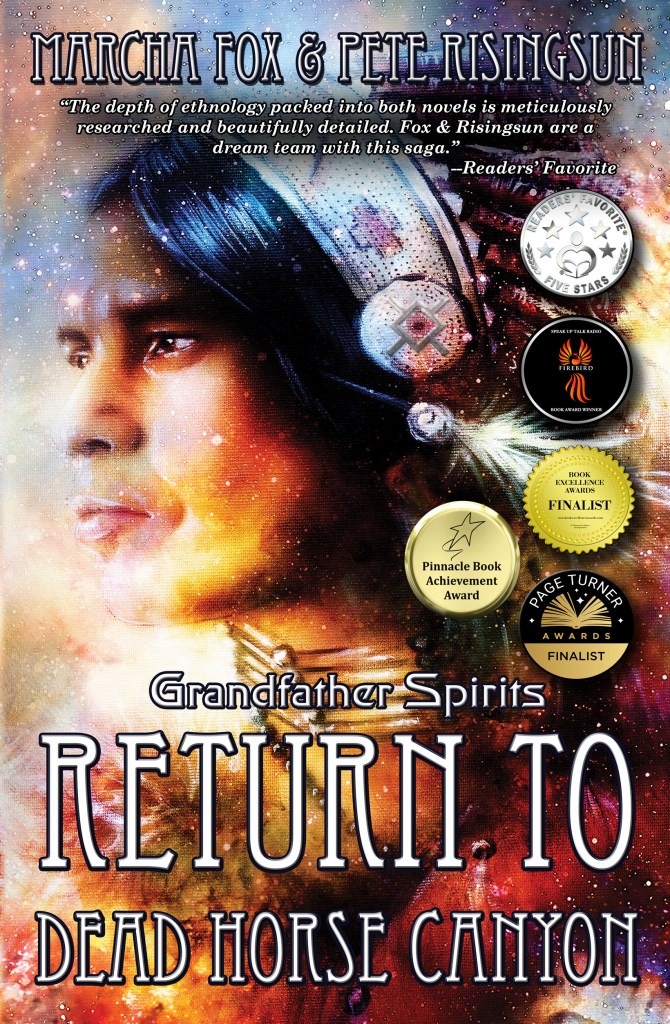
The entire month of November is Native American Heritage Month. The point of these designations is to highlight something that deserves attention coupled with an opportunity to learn more. One way to learn more about Native American culture, or more specifically the Northern Cheyenne, is to read our multi-award winning books in the Dead Horse Canyon saga!

The most gratifying review we ever received was from Asher Syed on behalf of Readers’ Favorite who gave us 5-stars and said, “The depth of ethnology packed into both novels is meticulously researched and beautifully detailed. Fox and Risingsun are a dream team with this saga.”

Get your copy today!

Things Are Getting A Bit Crowded…

…BUT IN A GOOD WAY.

An author never knows how a sequel will be received in a contest. Without the backstory presented in the previous book, the judges may be lost or unimpressed, thinking there are too many unanswered questions. All you can do when you submit it is cross your fingers and hope for the best.

Clearly, this was not a problem with Return to Dead Horse Canyon: Grandfather Spirits. So far it has done as well as its precursor, plus winning a Firebird Book Award, but The Curse of Dead Horse Canyon: Cheyenne Spirits was not entered in that particular competition.

Each of the awards is described on the book page, so I won’t repeat that information here. While winning another award is always a good day for authors, the one that impressed me the most was the wonderful review rendered by Asher Syed on behalf of Readers’ Favorite.

It was beyond gratifying to see that he comprehended the message Pete and I were trying to convey. Not only that, but that he actually went back and read the first book when that was not required. Yet, he did so, and provided very complimentary comments about that as well. Calling us a “dream team” truly made that day and several since! To be perfectly honest, it made me cry.

Many thanks to the various individuals who have read our work and provided us with such valued feedback. Nothing makes all the work more worthwhile than being recognized by complete strangers. Thank you, one and all.

Our goal with this ongoing saga is to provide readers with a glimpse of the beautiful Northern Cheyenne culture about which most know little, if anything. Pete and I are learning more about it as well. The conclusion to this trilogy is in work with the goal to be well underway by the time we celebrate Native American Heritage Month in November. The challenge upon us is to make the conclusion even better than the first two installments.

That, my friends, is a daunting task.

A Quizzical Glimpse of Native American History

Most people are familiar with the saying “To the victor go the spoils,” which includes writing (or rewriting) history books to justify defeating the enemy.

With that in mind, see how many of the following questions you can answer correctly.


1. True/False King Ferdinand was given permission to kill indigenous people or make them their slaves by the pope.


2. How many tribal nations have a formal nation-to-nation relationship with the U.S. Government?

a. 14

b. 567

c. 173


3. How many federal and state-recognized American Indian reservations are there?

a. 492

b. 39

c. 334


4. How many states have a recognized American Indian reservation?

a. 35

b. 9

c. 17


5. True/False The Founding Fathers were sympathetic toward Native Americans and recognized their rights under the Declaration of Independence.


6. True/False The Declaration of Independence’s statement that “all men are created equal” included Native Americans.


7. What was the reason for the majority of U.S. Government – Indian wars?

a. White settlers occupying Indian land in violation of treaties

b. U.S. Government ignoring existing treaties due to westward expansion.

c. Loss of livelihood and hunting grounds to encroachment by white settlers.

d. All of the above


8. Indian people are categorized by culture and geography. Which of the following are NOT considered culture areas?

a. Arctic, subarctic, Northwest Coast, Plateau

b. Great Basin, California, Southwest, Mesoamerica

c. Great Plains, Northeast, Southeast, Caribbean

d. None of the above


9. In the early 19th Century, Sequoyah, a Cherokee polymath from the Little Tennessee Valley created:

a. A list of treaty violations to present to the U.S. Congress

b. The allotment system to assign land to individuals

c. A syllabary of 86 ornate characters


10. Which of the following places are based on Native American names?

a. Allegheny, Alaska, Adirondack

b. Biloxi, Caddo, Chattanooga

c. Hatteras, Erie, Huron

d. Wyoming, Winnebago, Wichita

e. All of the above


ANSWERS

1. True. The first papal bull issued for King Ferdinand in Spain after Columbus returned from the Caribbean stated: “All people of North America are no better than feral animals and may be slaughtered at will.” 

And that bull was followed by another that accompanied the North American land grants: “All land grants will be governed by the same rules as the land grants in Spain, to which you have been accustomed. Thus, as usual, any people populating your land defined by the land grant here issued are your slaves.”

2. b. 567 tribal nations

3. c. 334 reservations

4. a. 35 states with reservations

5. False. George Washington was known as Town Destroyer in the Seneca language based on the decimated cornfields and razed villages he promoted. Thomas Jefferson as Governor of Virginia, ordered a war of extermination against the Shawnee.

6. Following that “created equal” statement it states “except the inhabitants of our frontiers, the merciless Indian Savages, whose known rule of warfare, is an undistinguished destruction of all ages, sexes, and conditions.

Yes, it really says that. The Natives were accused of being savages for defending their homeland while as one example, at Sand Creek the U.S. Army slaughtered innocent Native Americans who were literally flying the U.S. Flag with a white banner of surrender.

Custer did, indeed, have it coming.

I find it ironic that following WWII the U.S. was more than generous helping to rebuild war zones of former enemies in Germany and Japan, yet few promises made to this country’s original residents have been kept.

7. d. All of the above are reasons for the U.S. – Indian Wars.

The “Manifest Destiny” attitude of America’s early European explorers and subsequent settlers toward the country’s native population was overtly hostile. Land that was virtually stolen, deceptive treaties of which the Indigenous signers were not advised of their true content, and treaties to which both signatories agreed but Congress never ratified are but a part of the sordid tale.

Too many members of the Native population live in substandard conditions with many reservations comparable to a Third World Country and comprise some of the poorest counties in the United States. Yet now the government proposes giving hundreds of thousands of dollars to illegal aliens for being “inconvenienced.”

What’s wrong with this picture?

8. d. None of the above. All represent designated cultural areas.

9. c. A syllabary of 86 characters based on the sound of syllables in the Cherokee language

10. e. All of the above. Hundreds, more likely thousands, of places in the U.S. and Canada retain their Native American names.


SCORES BASED ON NUMBER CORRECT

9 – 10 Cheated or has a college degree in Native American History.

7 – 8 Assumed this was an open-book quiz.

5 – 6 Fan of Longmire series on Netflix.

3 – 4 A few lucky guesses.

0 – 2 Don’t waste your money on lotto tickets.


Swallow your pride and leave your scores below.

“Return to Dead Horse Canyon: Grandfather Spirits” Now Available!

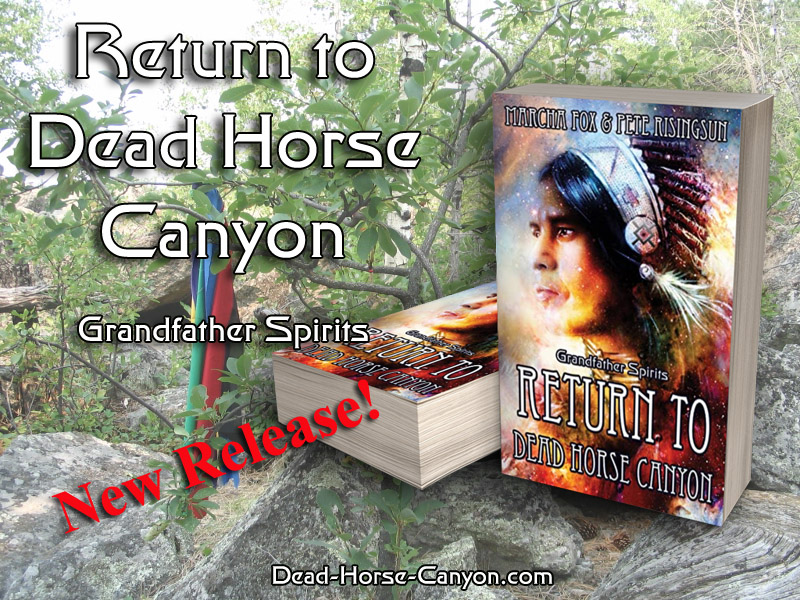
The suspense-laden sequel to triple award winning “The Curse of Dead Horse Canyon: Cheyenne Spirits” is now available!

In honor of Native American Heritage Month both this new release as well as its predecessor, “The Curse of Dead Horse Canyon: Cheyenne Spirits,” are on sale in ebook format for only $0.99 through November 30, 2021.

If you’ve read the first book, no doubt you’ve been wondering what happens now that Charlie and Sara have discovered what her husband, Bryan, discovered that cost him his life.

While Charlie swore to avenge his white brother’s death, the path to do so remains unclear.

His job with Lone Star Operations allows him to use his college education and earn a generous income. However, it conflicts with everything he knows to be right. Is violating the Earth wrong or not? Little does he realize that his work will ultimately return him to the Northern Cheyenne reservation where his true destiny will manifest in ways he never imagined.

Sara is determined to fulfill Bryan’s last request to expose the government corruption coupled with the lethal forces that stole his life. Releasing the scandalous Top Secret data via WikiLeaks infuriates those with much to lose, which places her in the cross-hairs of a hired killer.

While miles apart, each struggles with life-threatening situations as a result of their dedication to Bryan’s legacy. Their lives remain entangled through a series of fateful decisions and circumstances that define a future fraught with unknowns for them both.

The books are available through the following links with more vendors to follow in the coming days. Remember that reviews are pure gold to authors and help other readers decide on whether a book is right for them.

Book 1:

Amazon Affiliate Link

Barnes and Noble

Google Play

Other eBook Vendors

Book 2

Amazon Affiliate Link

Barnes and Noble

Google Play

Smashwords

Veterans’ Day Kudos to Native Americans

Ira Hayes, one of the soldiers depicted in the iconic statue of the Marines raising the American flag at Iwo Jima, was a Code Talker.
[Picture attribution: By Famartin – Own work, CC BY-SA 4.0, Link]

It’s Native American Heritage Month as well as Veterans’ Day, the perfect time to show appreciation for the many astouding contributions Native Americans have made to the U.S. Military. Their participation rate is higher, 19% having served in the armed forces versus 14% of other ethnic groups. Furthermore, even though they were exempt from the draft, many enlisted.

The “warrior tradition” of Native American tribes was mostly squashed once they were exiled to reservations, yet their love for their country and willingness to defend it remained. They already dealt with the consequences of one “foreign invader” stealing their land. The prospect of things getting even worse with another one was not an acceptable option.

It’s ironic that in the late 19th and early 20th centuries Native Americans were forced by the U.S. Government to leave their traditions behind, including their languages. Fortunately, however, their many dialects survived, a fact that was a major factor in U.S. victory during World Wars I and II.

Choctaws in training in World War I for coded radio and telephone transmissions. [Wikipedia]

During that time their unique, unwritten languages were perfect candidates for development into code. If you’re unfamiliar with the “Code Talkers,” here’s a brief summary, courtesy of Wikipedia:

 “…there were approximately 400 to 500 Native Americans in the United States Marine Corps whose primary job was to transmit secret tactical messages. Code talkers transmitted messages over military telephone or radio communications nets using formally or informally developed codes built upon their native languages. The code talkers improved the speed of encryption and decryption of communications in front line operations during World War II.

Comanche code talkers of the 4th Signal Company [Wikipedia]

There were two code types used during World War II. Type one codes were formally developed based on the languages of the several tribes, including the Lakota, Crow, Comanche, Hopi, Meskwaki, Seminole, and Navajo peoples. They used words from their languages for each letter of the English alphabet. Messages could be encoded and decoded by using a simple substitution cipher where the ciphertext was the native language word. Type two code was informal and directly translated from English into the native language. If there was no word in the native language to describe a military word, code talkers used descriptive words. For example, the Navajo did not have a word for submarine so they translated it to iron fish.”

Navajo Code Talkers, Saipan, 1944 [Wikipedia]

Several tribes were represented during the course of various wars and campaigns, including the Navajo, Comanche, Hopi, Meskwaki, Cherokee, Choctaw, Cree, Mohawk, Muscogee (Seminole and Creek), and Tlingit. Military and government honors have been bestowed on them for their contribution, in some cases years later because it couldn’t occur until the program was declassified.

Micah Highwalking, U.S. Military Academy 2010 graduate.

If you’re a history buff, especially as it relates to intelligence encryption, you’ll want to check this out further. Wikipedia has a comprehensive article at here and Military Times published an outstanding piece which includes interviews with former Code Talkers here.

Clearly this honorable tradition is continuing today for both Native men and women. The first Northern Cheyenne to graduate from West Point was Micah Highwalking. As of her 2010 graduation date, she was one of only five Native Americans to accomplish that honor. You can read more about her on Facebook here.

On this special day all former and current members of our military deserve our respect and gratitude, but especially the many Native Americans from all tribes who willingly fought beside those who had previously been their foe. It’s notable that on Veterans’ Day 2020 the Smithsonian Institute dedicated the National Native American Veterans’ Memorial. You can learn more about it here and watch their virtual message in the following video (17:25 min).


OTHER RESOURCES

Print

Available from Southwest Indian Foundation Website

The Navajo Codetalkers

Video Introduction to the book (3 min)

Video

Wyoming PBS Special on Native American Veterans (27 min)

Help Native American Veterans

If you’d like to show your appreciation for their service by helping Native American veterans, Native American Veterans’ Assistance (NAVA) does exactly that. Their website is here and their donation page is here.