Exploring the Untold Stories of the 19th Century Peace Commission

Review of “The Girl in the Middle: A Recovered History of the American West” by Martha Sandweiss

A magnificent must-read for aficionados of the West’s colorful history

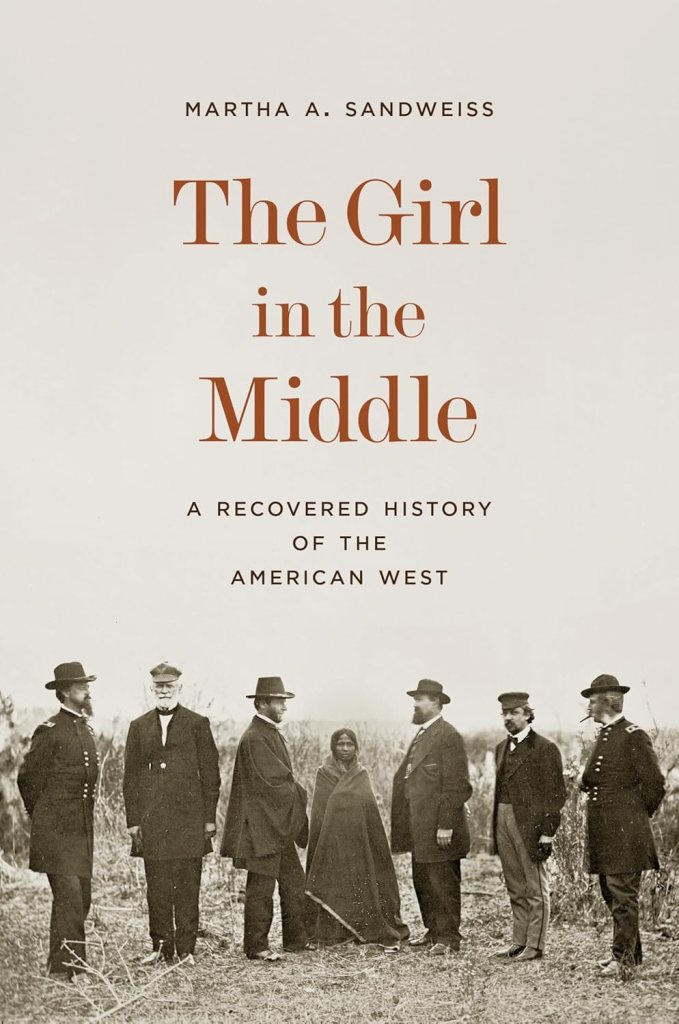
When I saw this book’s haunting cover, I knew I had to find out what was inside. I’m astounded by the wealth of research done by the author and what she uncovered, revealing who and what those six men were as well why they were gathered at that place and time. Sandweiss includes the photographer and even succeeds in identifying the lone Native American girl, whose name was not included in the photo’s caption.

Be aware that every incident included in the text is documented in fifty-seven pages of “Notes.”

Wow.

What an incredible quest! One accomplished through scrutinizing government records of official actions, census records, newspaper articles, wills, land records, and personal interviews with the progeny of those involved.

The men in the photo are General William S. Harney; Senator John B. Henderson; John B. Sanborn; Samuel F. Tappan;  Nathaniel G. Taylor; Alfred Howe Terry. The photographer is Alexander Gardner, famous for his documentation of the Civil War as well as portraits of President Abraham Lincoln, General William T. Sherman, and other dignitaries. The girl is Sophie Mousseau.

Looking at it journalistically, let’s use the standard who, what, when, where, and why.

Who: The men are members of the federal Peace Commission.

What: Meet with a multitude of Native American tribes.

When: It’s 1868, the nation still recovering from the Civil War.

Where: Fort Laramie, Wyoming Territory

Why:  To work out treaties and agreements with the Native Americans

Not a simple task, to be sure.

Within the pages of this amazing tome lie details not found anywhere else about who each of those men were besides soldiers, politicians and activists. Not their public persona: their angels and demons, opinions, political sway, family, and in some cases, criminal records.

Their negotiations with the various tribes is detailed as well.

This is not some dry, impersonal chronology that makes your eyes glaze over like you encountered in high school. It’s an intimate look at not only these men and the circumstances that brought them there, but a glimpse of the true condition the United States (which was still in the process of forming) and the challenges faced by the government.

Besides the challenge of integrating the slaves freed following the Civil War into society, they had troubles galore related to the settlement of the West and working out agreements with the Native Americans. Don’t forget that the nation was also loaded with immigrants, with everyone trying to find their place in the adolescent nation.

You may have heard of the Sand Creek Massacre and Wounded Knee, but what about Blue Water Creek? If you believe like I do that this land was deliberately stolen from its original inhabitants, (who were not considered citizens until 1924 because they were not born in the United States), you will learn even more of the sordid details.

At least some of the Peace Commissioners (obviously not the military members) were actually pretty objective and fair, acknowledging the many gripes the Native Americans had as legitimate. The report even pointed out conflicting values by stating, “If the lands of the white man are taken, civilization justifies him in resisting the invader. Civilization does more than this: it brands him as a coward and slave if he submits to the wrong.” Conversely, “If the savage resists, civilization, with the ten commandments in one hand and the sword in the other, demands his immediate extermination.” While the commissioners didn’t want Indians to disrupt the settlement of the West, they doubted “the purity and genuineness of that civilization which reaches its ends by falsehood and violence, and dispenses blessings that spring from violated rights.” (p. 159)

I was aware that the Black Hills were very much stolen.  The Fort Laramie Treaty of 1868, which promised the area to the Lakotas in perpetuity, was nullified by the so-called Agreement of 1877 and redrew the boundaries of the Great Sioux Reservation to exclude the Black Hills.

Why? To open it up to white settlement and the pursuit of gold while also ending the military defense of Lakota treaty rights.

Originally, that reservation was around sixty million acres. But the 1877 agreement (signed by only about 10% of Lakota men versus the required 75% according to an 1868 treaty), returned most of the Black Hills to the United States. The new reservation was now slightly less than twenty-two million acres, a 63% reduction.

In 1892 the Lakota began demanding  compensation. Petitions and protests persisted for roughly 60 years until 1980, when the Supreme Court ruled in their favor, stating that the 1877 federal seizure of the land was done in bad faith without the proper consent from the adult men of the tribe. It awarded the tribe $17.1 million in damages, plus interest from 1877, for a total of roughly $106 million.

That may sound as if the issue is resolved. It’s not. The tribe refuses to take the money, which with accruing interest, would now be around $1.5 billion. Why? Some leaders say it would represent relinquishing their claim to the land–a price too high.

Since then the Seven Council Fires of the Great Sioux Nation has resorted to purchasing parcels of land from private ranchers. The Interior Department now hold that land in trust to be governed by the same laws that govern other trust land in Indian Country.” (p. 273)

Did you know the U.S. Government had a program that accepted “Indian Depredation Claims” from people who had suffered property damage from Indian raids and other incidents? Some of those claims took decades to settle, typical of government programs to this day. Some things never change.

So what about the girl, Sophie Mousseau?

It turns out that Sophie was “in the middle” in another respect as well. Her mother was Yellow Woman, a Oglala Lakota. Her father was Magloire Alexis Mousseau, a French Canadian.

Indeed, Sophie went on to marry and have children with two different white husbands. In censuses and other records it was common for individuals to show up as white in one document and native in another.

This was another situation that arose with its own set of complications, the matter of mixed breed individuals who were often not accepted by either culture. Furthermore, there were Indians who behaved like whites, and whites who behaved like Indians. Some of this came about when reservations were broken up via allotment programs, where many stepped in to grab land, which further reduced the size of reservations.

We think the times we live in now are complicated, but this books demonstrates that the 19th Century was loaded with challenges, some of which we still face today.

If you’re a history buff interested in the growing pains of the American West, many of which still remain as various aches and pains, I cannot recommend this book highly enough. Maybe the detail will be too much for some, but getting to know the people in this iconic photo brings it to life like never before. It was heartening to find out that the Peace Commission did recognize many of the injustices perpetrated against Native People. However, Congress didn’t agree and thus ignored its recommendations as they pleased.

As stated before, Pete Risingsun and I did a lot of research writing the Dead Horse Canyon Saga, but it was nothing compared to what was done to create this amazing book. You can find it on Amazon here.

Did I Channel this Trilogy?

Okay, folks. Here’s the deal.

Pete Risingsun, my coauthor, and I did a vast amount of research when we wrote “The Curse of Dead Horse Canyon” trilogy. The depiction of the Cheyenne culture is accurate. The history referred to in the stories really happened, save that which was clearly made-up, though even that was feasible. Abandoned mines definitely are a pollution issue. The astrology is actual for the time and place and characters involved, which is weird and another blog in itself.

But if there was one thing that was made up it was the source of the conspiracy, i.e., the Pearson Underground Residence Facility (PURF).

Or was it?

My jaw dropped when a friend sent me this article about just that, such a facility on an even grander scale than I have in our novel! Check it out here.

The article in The New York Post linked above opens with the following paragraph, “The federal government has secretly spent trillions building an elaborate network of subterranean ‘cities’ where the rich and powerful can shelter during a ‘near-extinction event,’ a former Bush White House official sensationally claimed.”

Much of its source and, if you’ll excuse the expression “from the horse’s mouth,” can be found in this short video (12 minutes) where Elizabeth Austin Fitts, who served as the assistant secretary of Housing and Urban Development for Housing between 1989 and 1990, talks about it on Tucker Carson’s podcast.

While I knew there were plenty of underground bases (because the History Channel says so, right?) which made PURF credible, I had no idea it was even worse than I imagined!

So if anyone out there thinks that part of the story is a stretch, bear in mind that they have actually spent even more, by several orders of magnitude, than I have noted in the books. We’re talking TRILLIONS whereas in the story it was BILLIONS.

The money probably came from those “magic money machines” the DOGE team found, right? The actual corruption coming out these days makes my fictitious situation pale by comparison.

While Pete and I were writing these books I was amazed by how many actual situations–historical and otherwise–fit perfectly. Particularly, as we researched Cheyenne ceremonies, much came out that drove and further defined the storyline. I didn’t know anything about the Massaum as the Earth Giving Ceremony, the meeting of Indigenous leaders at Walker Lake, Nevada, or any number of other things when I conceived this story. I knew how it would end but I had no idea how.

As I look back, I can’t help but wonder where this story came from? Mine and Pete’s imagination? I may have mentioned this before, but I’m what they call a “pantser,” not a “plotter.” In other words, I write “by the seat of my pants.”

I start with a very general idea/theme in mind. I populate it with characters and turn them loose. I’m more of a scribe than an author making the story up. I simply watch what they do and write it down. My characters repeatedly get themselves into scrapes where I have absolutely no idea how they’ll get out.

But they do. Usually in some way I never dreamed of.

Did I channel these books rather than make them up?

I think most of us can agree there are other dimensions out there. Psychic phenomena are very real and no doubt operate in some other reality beyond what we can currently detect. Did these stories actually take place in one of them?

I had much the same experience while writing the Star Trails Tetralogy, especially in “The Terra Debacle: Prisoners at Area 51″ in developing the science behind a telepathic walking plant.

One of the reasons I love research is all the amazing, serendipitous factoids I uncover that fit and often drive the plot and action. It’s as if the story is already out there, just waiting for some writer’s muse to whisper it in their ear.

I must say, not knowing what will happen makes writing as much fun as reading. I like to think that if it has me in suspense that such will be conveyed to my readers as well.

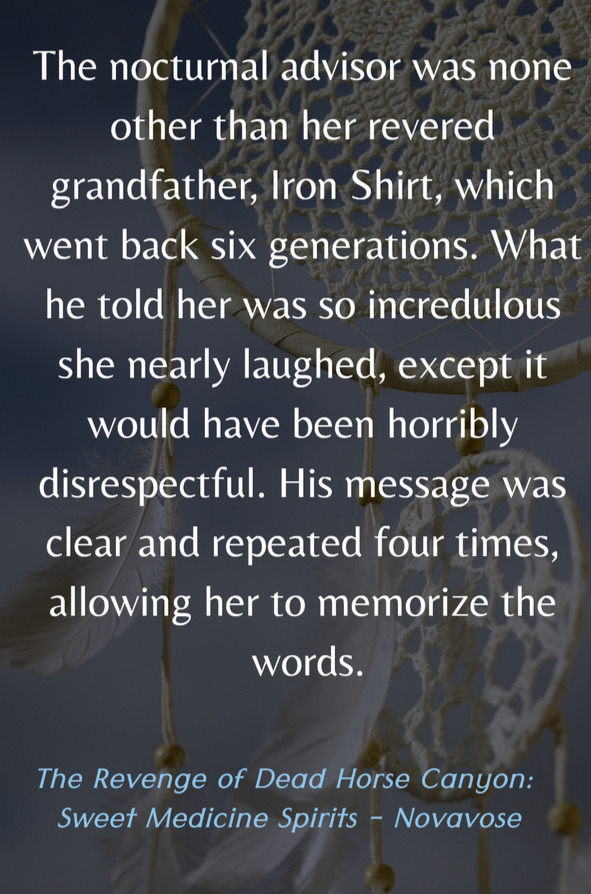
Here’s one teaser from “Revenge of Dead Horse Canyon: Sweet Medicine Spirits – Novavose” where I had absolutely no idea what would happen. The character in question popped up quite late in the book, but she fit perfectly.

If you’d like to get the entire trilogy in a single mega-ebook that also includes some bonus material about that Earth Giving Ceremony, you can pick one up on Amazon here.

Let me know in the comments what you think regarding where stories come from as well as whether you find my stories predictable. Like I say, I know how they’ll end, but rarely if ever know how it comes about.

Pruning a rosebush with a Chainsaw

Waste, fraud, and abuse of federal funds is being exposed like never before. However, if you’ll forgive the cliche, they need to stop throwing the baby out with the bath water.

I worked as a NASA contractor for twenty-one years. I saw a lot of sketchy activities that showed that agency was not immune to corruption. One example I encountered personally was the scheme where someone would come up with an idea, such as a space experiment, satellite, space vehicle, or whatever. The first step in such an endeavor is a concept study. If that passes, then there’s the feasibility study, design study, etc, etc.

I worked on a few of these, which I believed were good ideas. However, just before it would get to the phase where it would actually get built, it would be cancelled. All groundwork was essentially wasted, except, perhaps, if it turned out not to be a good idea after all and thus applied to a future project.   What shocked me, however, was to find out in many cases the intent was never to build it.

Rather, it was to line the pockets of people who’d retired (or in some cases, been fired) from NASA  (i.e., their fishing buddies) who’d become highly paid consultants. The “Good ol’ boy” system at its best. It was demoralizing enough to work hard on such a study, be enthusiastic for its potential, then have it cancelled. It was even more painful to find out it was never intended to come to fruition, but no more than a high tech boondoggle.

I witnessed too many civil servants whose only work-related activity comprised thinking up busy work for contractors. They loved what they called “metrics,” i.e., an attempt to measure our productivity. Of course we could have done more real, meaningful work, if we weren’t figuring out ways to measure it and report it in a way they could understand it. Most had no clue what we did, so how could they possibly manage it? There were numerous times when we kept the Space Shuttle program running just fine when the civil servants were gone because of one of those budget situation government shutdowns.

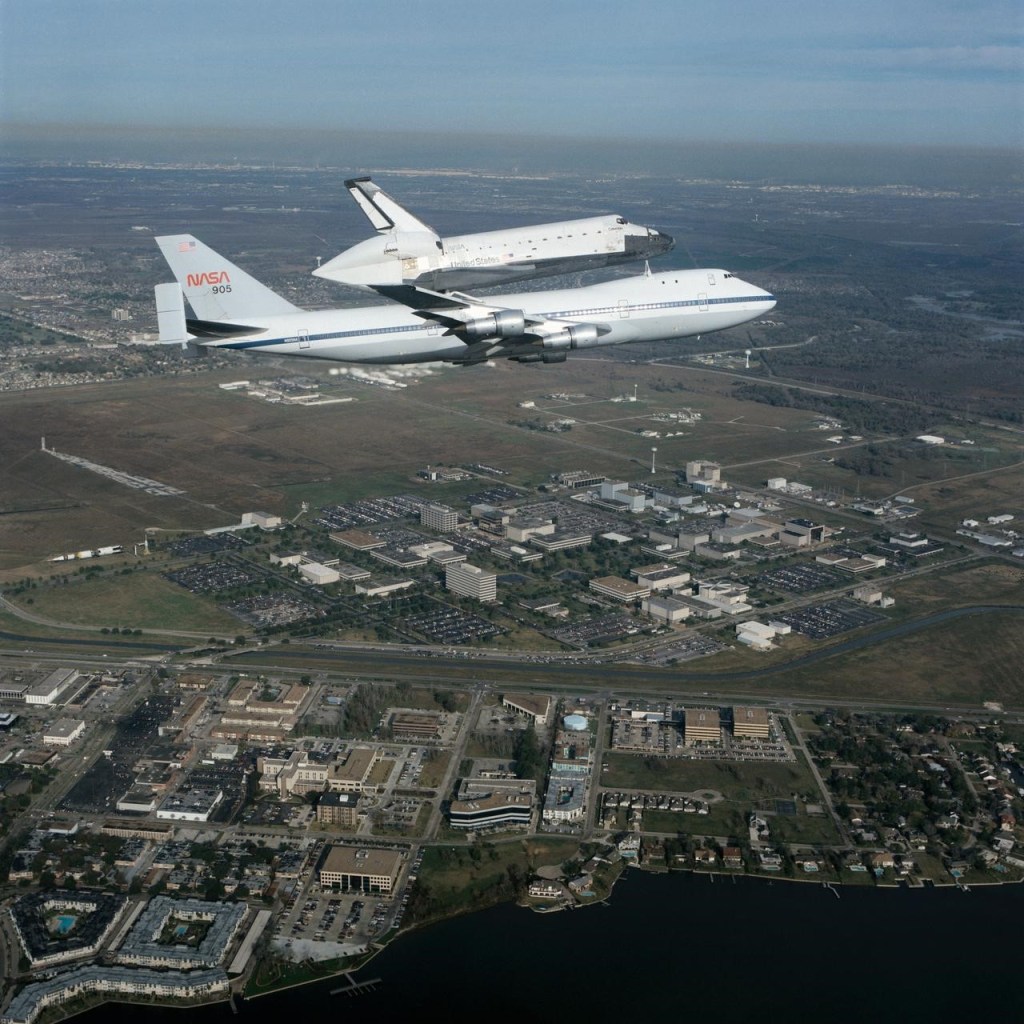
 Air-to-air view of Columbia, OV-102, atop SCA NASA 905 flying over JSC site
NASA ID: S90-55294
S90-55294 (19 Dec. 1990) — Johnson Space Center employees and neighbors on the ground didn’t get quite this closeup of a view of the Dec. 19 1990 flyover of the Space Shuttle Columbia mounted piggyback atop NASA’s Shuttle Carrier Aircraft (SCA–NASA 905). However, hundreds were able to spot it as it passed nearby en route to Florida from California following the successful STS-35 mission. Almost the entire 1625-acre site of the Johnson Space Center is visible in the background, along with a number of businesses and residences in the nearby municipality of Nassau Bay. The air-to-air photograph was taken by Pete Stanley of JSC’s Image Services Division who was a passenger in a T-38 jet aircraft.

Another thing I observed was referred to as “Empire Building.” Civil Servants got promotions based on how many people reported to them. They would claim to need more people than there was work for, just to inflate their numbers. As a contractor manager, I’d be told to hire more engineers when the ones I had barely stayed busy.

Yes, that’s the way it was, in an agency highly admired, especially our youth, even aspired to work for–I know, because I was one of them. I got a physics degree at the age of 39 so I could work there. Sadly, I came away disappointed in many things I saw as an insider, especially the safety area where we knew all the dirty little secrets of why missions failed, inevitable when engineers were ignored by upper management.

Did NASA do some amazing things? Unquestionably! Did I have some wonderful experiences while I was there? Absolutely!

That picture above? I saw that from the ground and it was awesome. But this does not mean that there isn’t a lot of waste that needs to be eliminated. Since I retired in 2009, much has happened already with the retirement of the Space Shuttle Program and availability of commercial rockets.

I could go on and on with examples, but that is not the purpose of this blog. I simply wanted to make a point that what the Department of Government Efficiency (DOGE) is doing is needed and in many respects a very good thing. I recently heard indirectly from someone who works at the Federal Reserve that only about 6% of Federal employees report to an office daily.

What? Really?

More fallout, I suppose, from the COVID-19 debacle, which allowed people to work from home. As a former NASA contractor manager I was well aware that only a small handful of my personnel could be trusted to be productive working from home.

You Don’t Prune a Rosebush with a Chainsaw

However, that said, I believe DOGE may be  figuratively pruning a rose bush with a chainsaw. Some of these agencies may be totally worthless, saving the taxpayers from paying for frivolous and even criminal activities, which is desperately needed. But we must remember, for the most part, the majority of agencies had something beneficial for at least some segment of the populace at their core when they were created.

Rebuilding the U.S. economy, creating jobs, and being self-sufficient as a country, especially when it comes to energy, make sense. But I don’t agree with decimating our forests, public lands or environment. Agencies should be pruned carefully with lopping shears at worst, trimmers at best.

For example, laying off Forest Rangers and those who watch over our National Parks, both the wildlife and visitors from around the world, is ill-thought-out. These individuals serve the citizenry! These are not the slackers! C’mon!

It’s my opinion that we need to keep a close eye on what’s being eliminated and speak up when they’re ill-advised for the damage they’ll do. As a senior citizen I have a perspective that those making such decisions may not have. Audit them all, definitely, and cut back as warranted. But let’s bring some finesse into the process before causing irreparable damage.

For example, a petition landed in my email inbox recently about the Environmental Protection Act being totally ignored. You can find it here.

I love nature and wildlife. That’s why I live in the boonies where I can look out my office window and see everything from rabbits, squirrels, and chipmunks to wild turkeys, deer, foxes, and even fisher cats, which I never heard of before moving to Western New York State. True, some are a threat to our livestock, but that’s another story. Trees, diverse vegetation, and wildlife feed my soul.

While the land immediately around me is privately owned, I shudder to think if it were Federal land and some logging company came in and stripped the mountainsides bare. That not only impacts the aesthetics, but the wildlife that calls that forest home.

Same goes for oil exploration. Having lived in Texas for 35 years, I know enough about that industry to recognize how dirty and dangerous it is. Essential, yes. But it could be done in a safer, more discriminatory manner so as to cause less damage. Fracking threatens water supplies with toxic chemicals and has been proven to cause earthquakes. Do we really want our National Parks subjected to that?

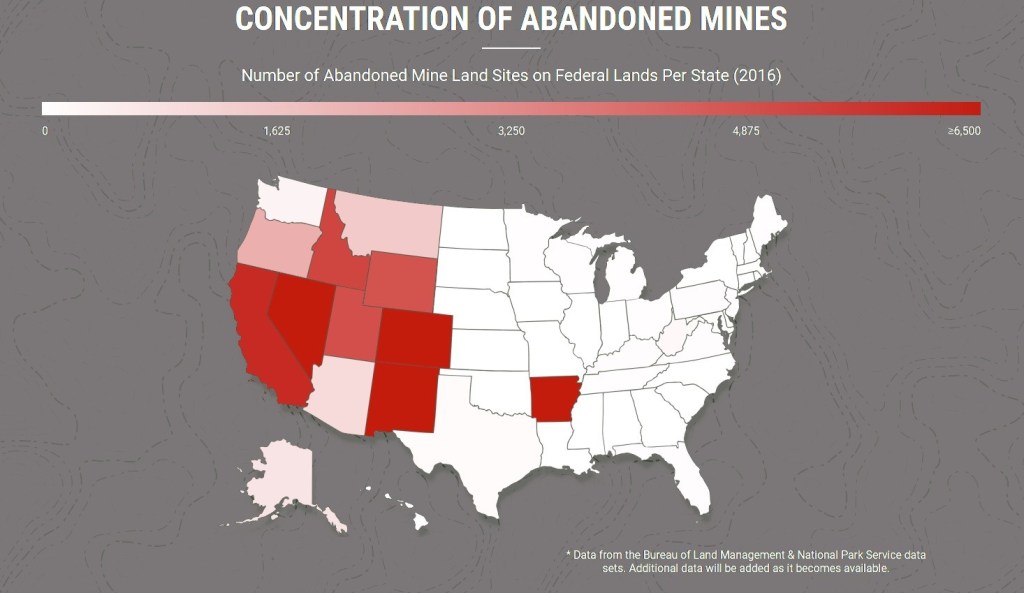
In the 19th Century mining activity in the Rocky Mountains caused considerable damage. These corporations do not care about the mess they leave behind, only profits. Some regulations are essential, which should be enforced with integrity, not bribes, and involve fines that are painful enough to motivate compliance. When I was writing The Curse of Dead Horse Canyon Trilogy my research made me aware of how bad that century-old situation was as well as oil exploration, both situations making it into the plot of the story.

I highly recommend Robin Wall Kimmerer’s “Braiding Sweetgrass” for more perspectives on that issue. You can see my review of this beautifully written book here.

Harming Vulnerable First Americans

Eliminating the Department of Education is another issue. While some research indicates the USA is not “dead last” but 8th out of 41 countries, in 2022, the U.S. ranked 16th in science, ninth in reading, and 34th in math. Not particularly stellar, to say the least.

Having had six children go through public schools, I’m well aware of the flaws in that system, too, e.g. using our children as test subjects (no pun intended) without our consent. Lunacy such as “New Math” and various other indulgences, like not teaching phonetics, and other “experiments” which deprive our youth of a decent education. This has gone on for decades, even predates the Department of Education, much less the “No child left behind” edict, which had its pros and cons as well.

The system, with or without the Department of Education, is deeply flawed. Indeed, they shot themselves in the foot when they started demanding all school districts incorporate the reigning political party’s “woke” agenda and various other idiotologies [not a typo] to which a vast majority of the population objected as proven by the 2024 election results.

Again, rather than throwing the Department of Education away like last year’s test scores, why not fix it? Our “throwaway” mentality should not relate to matters that affect human lives. Granted, sometimes fixing something, whether it’s your car or washing machine, is less cost-effective than buying a new one. But unless an agency is thoroughly corrupt to the core, you don’t delete it without closer examination regarding whether any part of it is worth salvaging.

One useful function of the Department of Education relates strongly to financial aid to poor districts. Its loss will be particularly hard on Native Americans. To quote from a recent email sent out by Native American College Fund president, Cheryl Crazy Bull:

“The Department of Education was established by Congress, and it can only be dismantled by Congress. House Republicans reintroduced H.R. 899, (https://www.congress.gov/bill/119th-congress/house-bill/899/text) a one-line bill, “The Department of Education shall terminate on December 31, 2026.”

We must raise our voice and let our representatives know that this bill cannot pass.

What you may not realize is that the Department of Education’s main role is financial. Dismantling it would disrupt programs that disburse federal student aid, negatively impacting all students that receive student loans and Pell grants. To qualify for a Pell grant, you must show need and the majority of College Fund and Tribal scholars demonstrate that financial need.

The Department of Education also provides federal funding for public schools and the ability to enforce civil rights protections for all students in education, including characteristics like disability, religion, and sex.

Native students are at the center of this attack and will experience tremendous hardships.”

The particulars can be found on the American Indian College Fund website, which also includes other issues that impact Native Americans.

If you don’t know how to contact your representatives, you can find that information here.

This very useful tool also includes your state officials, who often need prodding as well.

Getting rid of corruption is important. Saving taxpayers from enriching crooked politicians is essential. But the government is expected to provide some services. We just need to make our voices heard demanding that it be done in a wiser, more selective and sensitive manner.

In closing, as citizens, what we allow will continue. Whether its waste, fraud, and abuse or cutting things back so brutally and thoughtlessly that we never recover what good there was.

Harmony or Death?

Chief Arvol Looking Horse provided this message to the world back in August 2016. To think when he made these statements he referred to the Earth’s condition as horrible! So much has happened since it’s hard to comprehend. It appears that the consequences have begun since nothing has improved in the past five and a half years.

This video is a little over 16 minutes long. The music is haunting as are many of the images. Pay close attention to the words. The script is written so you can pause the video as needed to read them. Ponder their meaning and implications.

Prophecies declared we were at the crossroads back then. Bear in mind that was before the COVID-19 pandemic of body and spirit. As a result, people worldwide have lost many freedoms they took for granted.

Now we’re on the brink of war.

We were admonished to unite spiritually or be faced with chaos.

We are there.