“For millennia, from Mexico to Montana, women have mounded up the earth and laid these three seeds in the ground, all in the same square foot of soil.” –Robin Wall Kimmerer in Braiding Sweetgrass
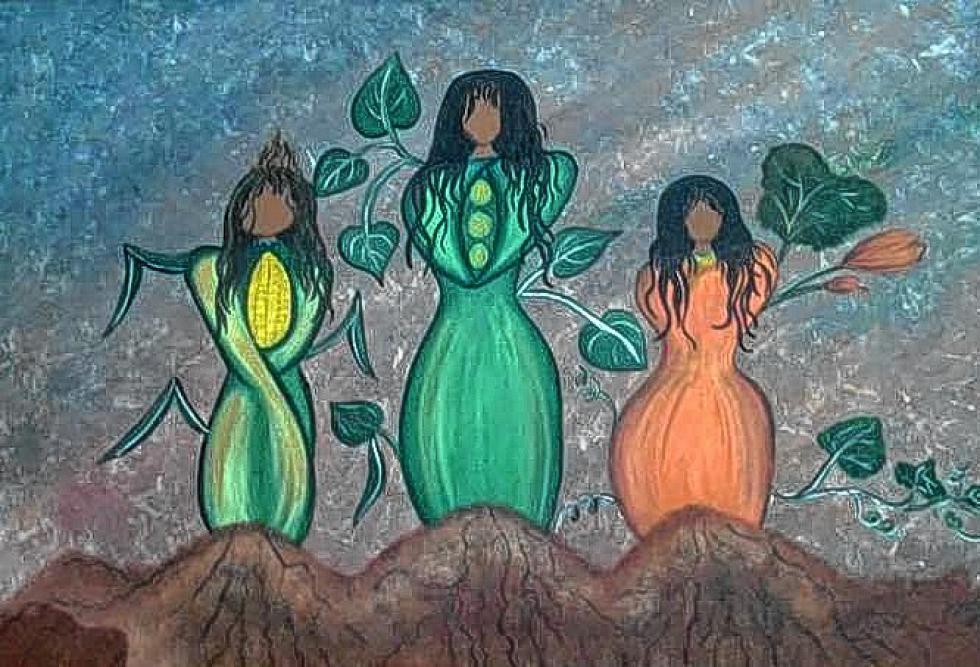
A legend tells of Indigenous people who were suffering from hunger during an exceptionally long winter. One snowy night, three beautiful women came to visit. One was tall, dressed in yellow with long flowing hair, another wore green, and the third wore an orange robe. They sought shelter from the cold and were invited to sit by the fire.
There wasn’t much food, but the family shared what they had with the mysterious visitors. In gratitude for their generosity, the three sisters revealed their true identities as corn, beans, and squash, then gave themselves to the people so they’d never go hungry again.
The true beauty of the story is that the Three Sisters represent far more than three random food crops. They comprise a synergistic garden trio that epitomizes companion planting. Like the legend, this genius method originated with Indigenous people, whose closeness to nature inspired this amazing botanical analogy of reciprocity and cooperation.
“The organic symmetry of forms belongs together; the placement of every leaf, the harmony of shapes speak their message. Respect one another, support one another, bring your gift to the world and receive the gifts of others, and there will be enough for all.”
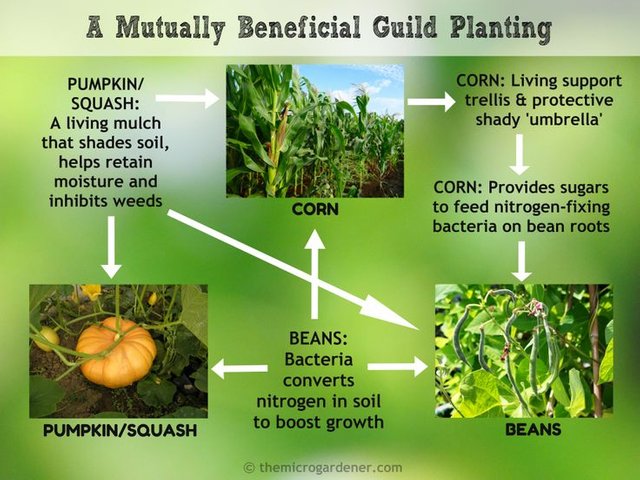
If you’re unfamiliar with gardening, here’s how it works: The corn provides a trellis for the beans to climb while the squash’s huge leaves provide shade that discourages weeds and helps retain moisture in the ground. Furthermore, beans host nitrogen fixing bacteria, which benefits the corn, while the squash’s prickly leaves discourage caterpillars and some insects.
And it gets even better. The trio is nutritionally sound. Corn and beans combine to form a complete protein while squash provides additional vitamins in its carotene-rich flesh. Utilizing mostly vertical space, even a small garden can yield not only a generous harvest, but a reasonably balanced diet as well.
Some add sunflowers , expanding this harmonious group to a quartet. You can find detailed instructions on how to plant the Three Sisters here. The site includes various patterns developed by Indigenous tribes in different geographical areas. Some include sunflowers for yet another dimension of function and beauty. Note you do not plant them all at once, but give the corn a chance to get established, i.e., about four inches tall, before planting the beans to assure it has the strength to support the vines.
Depending on how long the growing season is in your area, it is a bit late to get started, but could be worth a try. With a potential food shortage looming due to the price of fuel, if nothing else use this Native American wisdom to stock up on dried beans, canned corn, and winter squash at the grocery store, even if you can’t grow your own. The trio produces an appealing culinary chorus as well.
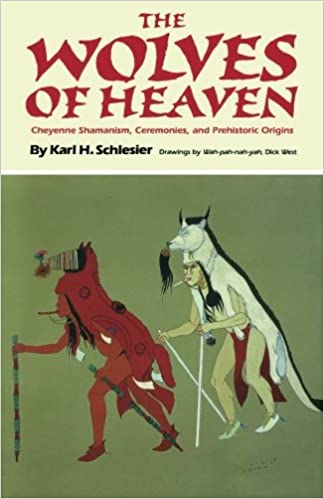
If you’re just learning about the Cheyenne (Tsistsistas), this book is likely to be considerably over your head. I’m glad that I read Book One of Peter J. Powell’s “Sweet Medicine” first, which went into enough detail to make this one a good follow-up, though Powell’s Book Two, which I am currently reading, would have been helpful, too.
The author, Karl Schlesier, is a German anthropologist who did a tremendous job researching the existing body of knowledge on the subject, including that of George Grinnell and Powell, then synthesizing it with his own research to arrive at some interesting and well-founded conclusions.
One thing he establishes is that the Tsistsistas were in the northern Plains from about 500 B.C. to A.D. 800. Their language is in the Algonquian family, which the archaeological record indicates first manifested in North America around 8000 B.C.
So when the Cheyenne claim the land was given to their ancestors thousands of years ago, Schlesier has shown that be true.
In her book “Braiding Sweetgrass,” Robin Kimmerer pointed out what it meant to be indigenous to an area. Those of us like myself who has lived in numerous locations have difficulty relating to this concept. Yet those who are living in the same town or region where their grandparents or other ancestors were born, lived, and are now buried, may comprehend what that means.
If your entire life, as well as that of generations of your family, has been spent in a specific area, there’s a sense of ownership, attachment, and love for the land and all it represents.
I’ve been a “move-in” various times and the “locals” always scope out newcomers with a jaundiced eye. To an outsider this feels somewhat clannish, projects a sense of seniority or even superiority. They may appear friendly, but you know you’ll always be suspect and never make it into the “inner circle.”
I lived in a small town in Northern Utah for 15 years and was always considered a move-in by those whose great-grandparents founded the town in the 19th century. Where I live now in Central Texas has similar vibe. I shudder to think what it would be if they realized that by birth I’m a Yankee! They think I’m from Houston, but even that doesn’t count.
City folk are suspect, too.
Put yourself in the local’s shoes for a moment. First of all, move-ins change things. For example, they may scoop up land for sale by a local farmer who’s decided to retire. None of his family members are interested in agriculture, so he sells for a good price and retires in town. Good news for the farmer. However, for his neighbors and community at large, what happens when the buyer is a developer who proceeds to put in a large tract of new homes complete with a few shopping centers?
Community development leaders in small towns, who are often likewise move-ins, are often guilty of the same thing. Their goal is to build up the economy and make money. They don’t care that they are forever changing the lifestyle of people whose roots go back a century or more. More than once I’ve purposely moved to a rural location only to have it build up over the years, heading toward the environment I purposely left. Currently, Austin, Texas is creeping closer and closer to my Hill Country retreat. I wasn’t born here, but I don’t like it, either.
Now think about the Cheyenne, who’d been given their land by their creator god, Maheo, thousands of years before. Furthermore, the concept of land ownership by indigenous people is entirely foreign. Then one day the white man comes along, tells them they have to leave, and proceeds to call them savages when they fight to keep it.
Thousands of years, folks. Thousands of years.
If some foreigner turned up on your land and told you to leave, what would you do?
So this book validated the fact that the Tsistsistas did indeed occupy the northern Plains, including parts of Montana, North Dakota, and Canada for millennia.
Literally.
The main focus of this book is to describe an ancient ceremony known as the Massaum. Its complexity and production requirements rival any pageant, to say nothing of its symbolism. It’s most basic tenet is that of an earth-giving ceremony, in remembrance of what they were taught by their Creator and how they were told to live. (For comparison, think of how many thousands of times the Christmas Story has been retold in pageants.)
The Tsistsistas summer ceremonial period was timed by the respective heliacal risings of the stars Aldebaran, Sirius, and Rigel. The fifth day of the Massaum began upon Rigel’s rising, a magnificent blue star. The author states, “In the Massaum, the blue star design . . . was painted on the buffalo skull placed on the deep earth on the west side of the wolf lodge and on the faces of [the participants.]“
While he never states it explicitly, my conclusion is that this is the design found on the Cheyenne flag, in this case white on a field of blue, with blue the color associated with Maheo. I found this extremely fascinating because I’d wondered what the symbol’s origin was and this fit beautifully.
It also clearly incorporates the cardinal as well as the four sacred directions (southeast, southwest, northwest, and northeast) tended by the maheyuno, the four sacred guardians of the Universe.
How cool is that? Gives it a lot more depth of meaning, other than an unusual geometric design that’s a bit hard to describe.
The author definitely did his homework and painted a fascinating picture of the Tsistsistas as an ancient culture with rich traditions and ceremonies. From time to time he’d digress into the practices of other tribes, which didn’t necessarily add anything to the Cheyenne story other than the interesting fact that indigenous tribes in Siberia share numerous things in common, suggesting similar origins.
This book is not a light, leisurely read any more than Powell’s “Sweet Medicine” volumes unless you love the scholarly details behind Cheyenne culture. If you’re seriously interested, you won’t be disappointed. For me it’s research material for Dead Horse Canyon Book 3 along with a huge pile of other books. I’m one of those crazy authors who enjoys the research phase as much as weaving it throughout the story itself, with various factoids having a way of enriching the plot. If you’re so inclined, you can find it in paperback on Amazon.
Robin Wall Kemmerer is uniquely qualified to pen this tome. Not only is she a member of the Potawatomi tribe, she also earned a PhD in botany. Her insights from both perspectives are priceless. These pages are filled with thoughts and wisdom entirely different from the white man’s view of life. Rather than being the superior being, Indigenous people see themselves as part of a greater whole.
Everything is alive in some way, whether vegetable, animal, or mineral. When Indigenous people speak of “all my relations” they are not just referring to other humans. The concept of land ownership was incomprehensible to them, making it easy to fall prey to it being virtually stolen. The Creator had given it to the people millennia before. It belonged to everyone.
She recounted the tragic story often told of Indigenous peoples being driven from their land to desolate places no one else wanted. Of children being taken from their parents and sent to government schools where their hair was cut off and mouths washed out with soap if caught speaking their native language. There are two ways to commit genocide–killing the people or eliminating their culture.
Fortunately, in spite of all the damage done and lives lost, their roots were so strong they endured, like a plant seemingly destroyed by a winter freeze. Native American cultures nationwide are becoming revitalized. The contrast between their teachings and the ways of the white man speaks for itself. Their way is to honor the Earth; the white man’s way is to exploit it.
Like the senseless killing of six million bison strictly for their hides and horns, meat left to rot on the prairie.
Their legendary figure, the Windigo, represents this. Per the author, “The more a Windigo eats, the more ravenous it becomes. It shrieks with its craving, its mind a torture of unmet want. Consumed by consumption, it lays waste to humankind.”
When Indigenous people found a natural resource, whether plant, animal, or mineral, they took no more than half, allowing the remainder to multiply and bless them again. Everything was considered a gift from the Earth, whether food or means to build a shelter.
Giving thanks for a gift is part of a civilized life and what they define as the Honorable Harvest.
Have you ever considered that the food you eat gave up its life for you? Plastic-wrapped meat in the supermarket was once a living being. Vegetables as well. What about the trees that gave their lives for the paper products you use so thoughtlessly?
This book had a profound effect on me and how I see the world. It was both inspiring and heartbreaking. So much damage has been done to the Earth through greed and the Windigo mentality there are no easy answers.
Those who promote restoring the environment are often not honorable in their intent. Technologies that harness wind and solar power exploit the Earth in other ways, through the materials required to construct them. The “Great Reset” proposes tenets that may sound good, i.e. “you’ll own nothing but you’ll be happy,” but depriving people of their freedom and in some cases their lives, is likewise deeply flawed. Again it’s about putting power into the hands of a few. UN Agenda 21 explains how this massive societal change is to be accomplished and it’s horrifying to anyone who understands the implications.
Hard times are coming, as both Christian and Native American prophets have foretold for centuries. This book contains much of what must be (re)learned if we are to survive. I find it interesting that this book was first published in 2013, yet now is a best seller.
Clearly its time has come.
You can pick up a copy on Amazon, where it’s also available as an audiobook.
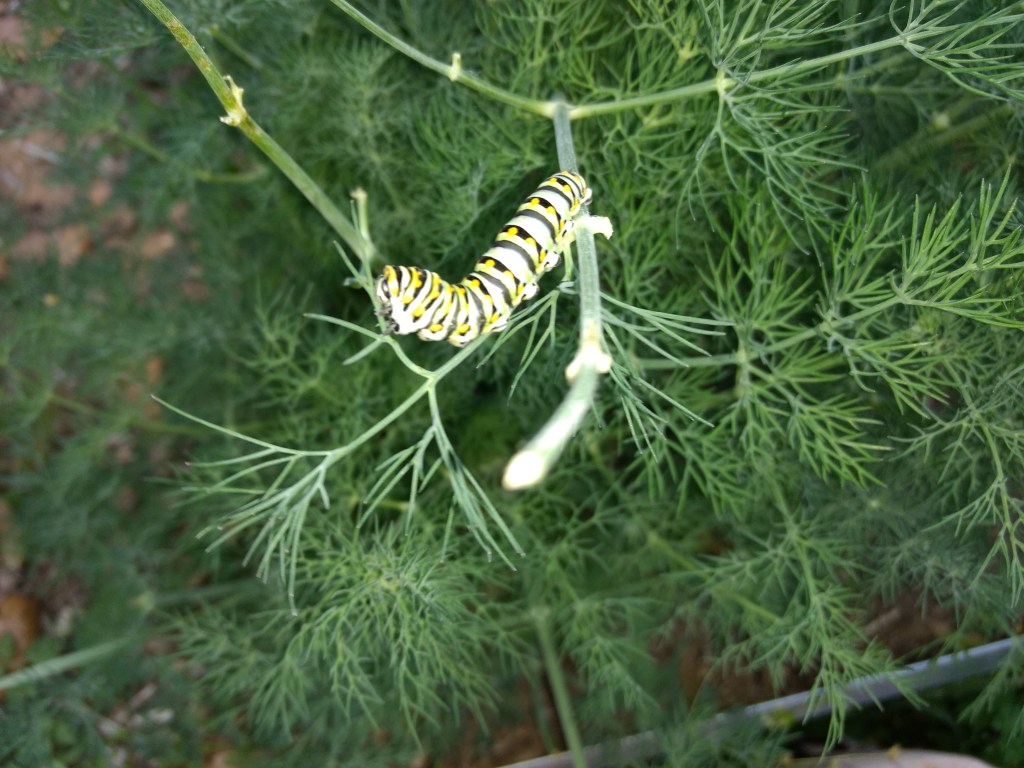
Dill is one of my favorite herbs. When a friend of mine saw this caterpillar munching on it, he was surprised I didn’t have a problem with it. Why? Because that little guy or girl (sorry, it didn’t tell me how s/he identifies) will eventually become an absolutely beautiful black swallowtail butterfly!
And better yet, it will be a pollinator! Which is something I need in my garden, since there aren’t many bees these days.
This one is far from alone. At last count, I saw about 9 of them on that same plant. I’ll pick some dill and put it in the freezer for now, then plant more after these hungry caterpillars metamorphose to their final winged stage.
I must admit, I was not as compassionate toward the harlequin beetles devastating my broccoli, pretty though they may be. But they were not going to give anything back, either!
It’s all about reciprocity.
I’m really impressed with the Native American philosophy that we should give something back for every thing we consume. In Robin Wall Kimmerer’s book, “Braiding Sweetgrass,” she points that out in great detail over many chapters. She mentions how Native Americans would only harvest half of what they found in the wild, leaving some to continue to grow and provide, while also leaving an offering.
Gratitude has been identified as the emotion most closely linked to happiness. Is that what’s wrong with unhappy people today, not appreciating what they have? Never being satisfied, always obsessing on wanting more?
I’m grateful for the butterfly pupae who will grow up to assure my squash, tomatoes, melons, and other veggies bear as they’re supposed to. Sacrificing a little dill seems a small price to pay.
Not everyone believes in prophecy. Of course, the test of a true prophet versus someone with a vivid imagination is whether or not their predictions come true. In many cases, the speaker does not live long enough to see whether it does or not, but if others recorded what they said, in due time the truth will be known.
Native Americans have run the gamut of emotions from outrage to grief toward the white man’s life style and attitude toward Mother Earth. According to the Holy Bible, man was given “dominion” over the Earth. A word that suggests he could do as he pleased with all it contains and justifies exploiting it for his own gain.
However, in view of the current state of the planet, was that an accurate translation of the Creator’s intent?
Much was edited out of that sacred tome because it didn’t fit the understanding of the day. Ancient Roman emperors twisted Christ’s teachings to suit their own designs. One translation of the Bible that is often quoted, and even considered among the best, was commissioned by King James of England and published in 1611.
The front plates states, “Translated out of the original tongues: and with the former translations diligently compared and revised by His Majesty’s special command.”
I don’t know about you, but it’s pretty hard to believe British attitudes didn’t creep in, intentionally or otherwise, to reflect his royal view of the world, which, incidentally, included worldwide colonization. Some books of the original Bible were deleted, such as The Book of Enoch, because so much of its content was either offensive, fried their brains, or didn’t make sense.
What if the word translated as “dominion” actually meant “responsibility?” The implications are huge. Do you have dominion over your children or responsibility for them? Does man have dominion over Earth’s resources or responsibility for them? If you’re a parent, how did you feel when you gave your child an expensive gift that they subsequently trashed?
The consensus among Native Americans is that we are responsible for the planet and everything on it, including each other. “All my relations” refers beyond immediate and extended human family to all “two-leggeds” as well as every plant, animal, and mineral.
We all came from Mother Earth. We are all related.
Hopi religious elders Thomas Banyacya and Grandfather David Monongye have interpreted ancient prophesies in the following video. Bear in mind the first part was recorded in the 1970s, the latter portion in 1993. More details are available on YouTube. Some predictions you’ll recognize as being fulfilled in the years following when this was recorded. Sometimes the language is quaint as they try to explain things for which there were no words in their native language.
To quote the video, “We are at a crossroads. One path leads to destruction. The other is living together in harmony with nature.”
It appears we took a wrong turn somewhere.
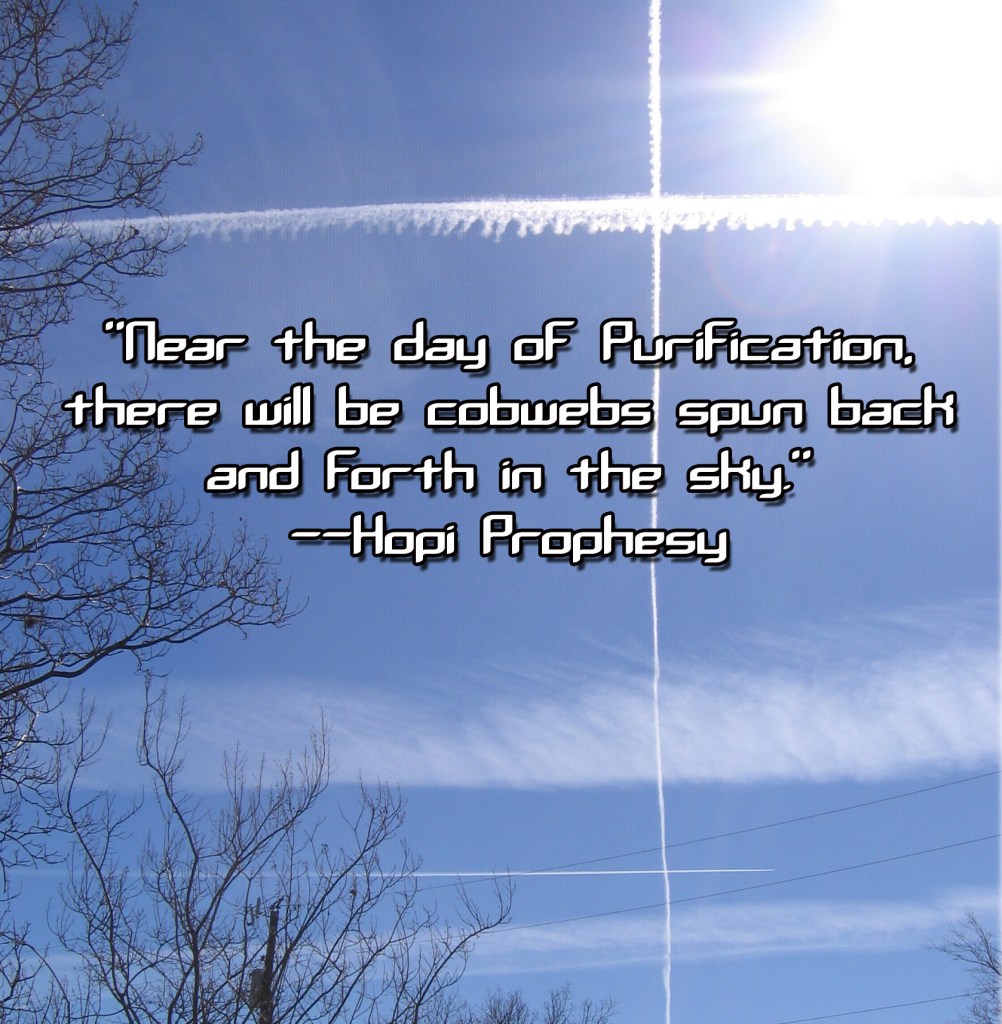
P.S. If you don’t know what the “cobwebs” refer to, research “geo-engineering” and/or “chemtrails,” the ultimate violation of the Earth Mother.
The purpose of words is to convey meaning. How they’re spelled, how they sound differs tremendously. Sometimes they convey the same meaning, such as for a cat or dog. Others are unique and can’t be translated into another language, especially if they’re based on cultural context.
When immigrants come to a country, they assimilate better if they learn the host language. This is not simply a matter of getting along better in society. It integrates them into the culture. America became a “melting pot” as immigrants came from a multitude of foreign nations, then were united in a common language, i.e. English, even if they maintained their ethnic traditions.
When Europeans came to the American continent they encountered indigenous peoples whose languages were entirely foreign. While there’s a similarity in etymology and syntax among Latin-based languages (English, Spanish, French, Portuguese, Italian, etc.), those spoken by Native Americans (which were several) had no similarities to European languages. Their culture and society were so different, many words common to Europeans didn’t even exist in theirs and vice versa.
Most of our thoughts comprise words. A person’s vocabulary determines their ability to think and comprehend the world around them. Without applicable words, unfamiliar concepts cannot exist. Emotions, however, exist beyond words. If you see someone laughing or crying, you know they’re feeling something.
Europeans took possession of this country in a less than friendly manner. Eventually, indigenous people became the “Indian Problem.” They refused to cooperate by giving up the land gifted to them by the Creator, a.k.a. Great Spirit. After numerous wars, massacres, and ugly confrontations, those that remained were herded off to reservations. As if that wasn’t bad enough, their children were taken and sent to government boarding schools where they were “reprogrammed.” This comprised cutting their hair, dressing them in “civilized” clothing, and forbidding them from speaking their native tongue. Being caught doing so resulted in their mouth being washing out with soap.
This was not a benevolent gesture to help Native Americans assimilate into European/American society. The intent was to annihilate their culture, identity, and beliefs, an insidious form of virtual genocide. A slight improvement, I suppose, over edicts from the Vatican that gave early explorers and colonists permission to kill them or make them their slaves.
Imagine forcing new immigrants to give up their language and customs. As “guests” in this country, it could almost be justified, a condition of habitation that promotes unity. Instead, just about any document they may need to read is available in their own language at taxpayer expense. Yet, quite the opposite was done to indigenous peoples who were here first.
If you have a difficult time relating to this, consider hoards of Chinese soldiers swarming our borders and forcing us to abandon our way of life, including our language, and adapt to theirs or die.
As intended, indigenous languages began to disappear. Fortunately, some survived. Ironically, helping the current younger generations to learn their native tongue is now a function of the very schools who originally forbade them from speaking it.
Why should they care? Because that is who they are. Culture, ceremonies, and their collective philosophy of life is embedded in their language. They have words with no English analog. Even in English, certain things have different meaning. For example, “All my relations” to a Native American includes all living things as well as the Earth herself. “Turtle Island” is not only this continent, but embodies their creation story.
Why should we care if their culture is lost? Because it’s in the world’s best interest for it to be revitalized. Assimilating it may be the only thing that can save us from ourselves in this war-torn, polluted, technology-dependent world.
This short video (less that 3 minutes) contains the 10 Commandments of Native Americans. As you listen, consider they initially welcomed Europeans to their land. They only became aggressive when the Founding Fathers and those who followed didn’t want to share this country with its original inhabitants.
I am reading “Braiding Sweetgrass” by Robin Wall Kimmerer, a citizen of the Potawatomi tribe. The author is not only a Native American–in addition, she has a PhD in botany and is a decorated professor at SUNY. The book’s subtitle is “Indigenous Wisdom, Scientific Knowledge, and the Teachings of Plants.” Those nine words don’t even come close to describing the insightful treasures it contains.
In one section she compared the Pledge of Allegiance (noting how Native Americans tend to choke on the phrase “liberty and justice for all”) to the Thanksgiving Address, known as the “Words That Come Before All Else.” The author describes it as the “ancient order of protocol [that] sets gratitude as the highest priority. The gratitude is directed straight to the ones who share their gifts with the world.”
The origin is with the Onondaga, a member of the Haudenosaunee (Iroquois) Confederacy, whose constitution was a model for our own. It’s a shame we didn’t adopt their other values as well. Consider how it begins:
Today we have gathered and when we look upon the faces around us we see that the cycles of life continue. We have been given the duty to live in balance and harmony with each other and all living things. So now let us bring our minds together as one as we give greetings and thanks to each other as People. Now our minds are one.
Consider, if you will, how the USA might be a different country today if every session of Congress opened with that phrase. Would toxic partisanism be tearing this country to shreds? It continues:
We are thankful to our Mother the Earth, for she gives us everything that we need for life. She supports our feet as we walk about upon her. It gives us joy that she still continues to care for us, just as she has from the beginning of time. To our Mother, we send thanksgiving, love and respect. Now our minds are one.
Would we treat our planet with more respect if everyone began each day thanking the Earth? Would we drench our Earth Mother in pollution? Would we strip-mine her resources?
We give thanks to all of the waters of the world for quenching our thirst, for providing strength and nurturing life for all beings. We know its power in many forms–waterfalls and rain, mists and streams, rivers and oceans, snow and ice. We are grateful that the waters are still here and meeting their responsibility to the rest of Creation. Can we agree that water is important to our lives and bring our minds together as one to send greetings and thanks to the Water? Now our minds are one.
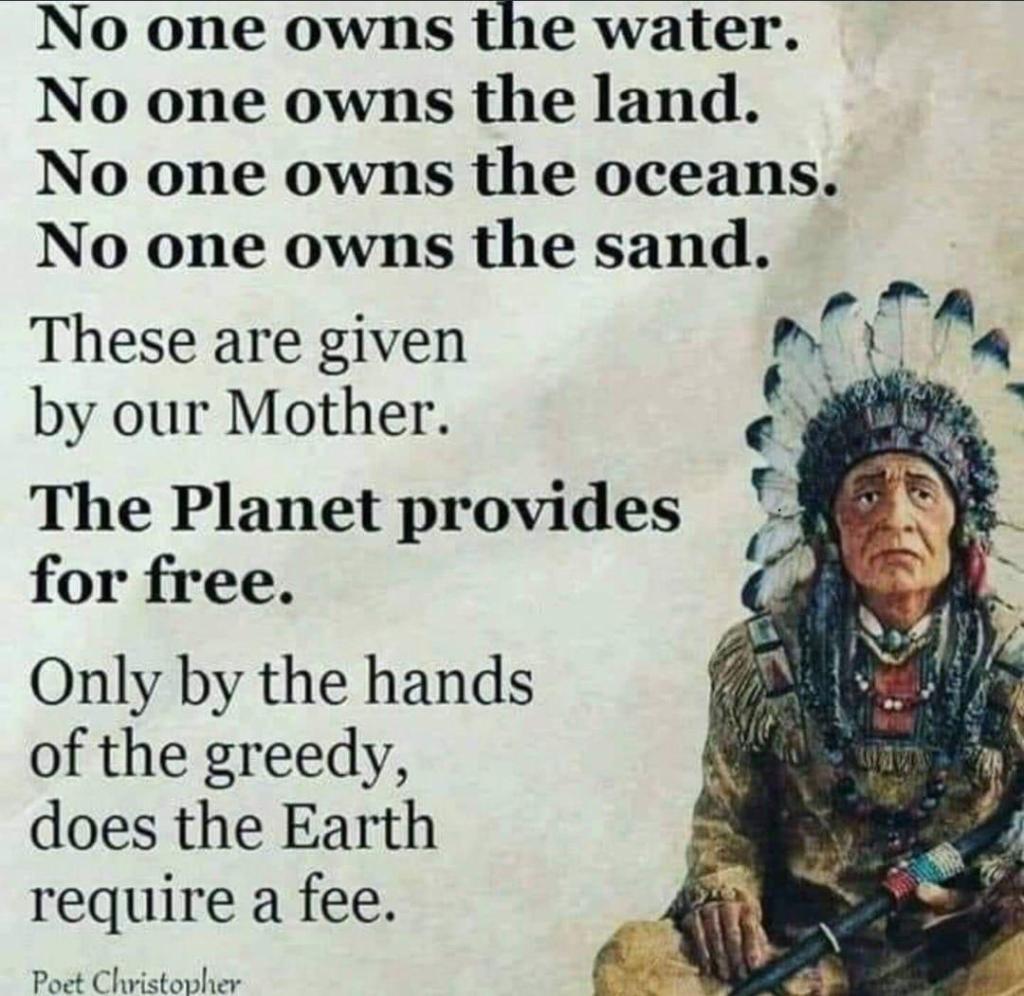
Native American prophecy declared a century or more ago that the day would come when people would have to buy water. The possibility seemed ludicrous. Yet here we are. Who would dare drink directly from even the remotest mountain stream?
The Thanksgiving Address continues to include all of nature: The Fish life in the water…the Food Plants…Medicine Herbs…the trees…animal life…the birds…the Four Winds…the Thunder Beings…our oldest Grandmother, the Moon…the enlightened teachers…the Creator.
I invite you to read this beautiful testament in its entirety at the end of this post.
Then consider that the people who created this literary work of love and respect were referred to as savages, simply because they fought to keep their ancestral lands. Thousands of women and children were massacred by the military. Treaties were broken by the U.S. Government as a matter of course, “the Indian problem” ultimately solved by forcing them to remote reservations on uninhabitable land. Their languages and customs were outlawed, their children stolen, and “re-educated” in boarding schools where their hair was cut off and their mouths washed with soap for speaking their own tongue. Even today the poorest counties in this supposed “great” country are found on reservations.
Where would we be today if the white man had assimilated their way of life, if our minds had become one? Modern peace chiefs have gone before Congress and the United Nations, warning them where the world is heading to no avail.
Meanwhile, indigenous prophecies relative to the fate of this nation are being fulfilled before our eyes. Their accuracy is startling.
How different it could have been if our minds had been one.
Chief Arvol Looking Horse provided this message to the world back in August 2016. To think when he made these statements he referred to the Earth’s condition as horrible! So much has happened since it’s hard to comprehend. It appears that the consequences have begun since nothing has improved in the past five and a half years.
This video is a little over 16 minutes long. The music is haunting as are many of the images. Pay close attention to the words. The script is written so you can pause the video as needed to read them. Ponder their meaning and implications.
Prophecies declared we were at the crossroads back then. Bear in mind that was before the COVID-19 pandemic of body and spirit. As a result, people worldwide have lost many freedoms they took for granted.
Now we’re on the brink of war.
We were admonished to unite spiritually or be faced with chaos.
The world is upside down. This is not a surprise to Native Americans. As Chief Oren Lyons said, “Two hundred years of prophecies and they’re here.” He explains it so much better than I can in this short six-minute video.
Future blogs on this site will include other videos from various chiefs who will explain what those prophecies are.
What is magic? A figment of your imagination? Superstition? Illusion? Folklore? Sleight of hand? Myth?
The Dead Horse Canyon series includes what one reviewer referred to as “a smidgen of the paranomal.” That undoubtedly refers to the main character, Charlie Littlewolf, seeking answers he can’t find anywhere else by returning to his Northern Cheyenne culture and the world of the Grandfather Spirits. Rituals involving the sweat lodge ceremony and sacred red pipe open up other dimensions that expand his consciousness. The indigenous belief in panpsychism, i.e. that everything has a form of consciousness, lays the foundation for a connection to all beings, including the Earth.
Of course, all of this defies the post-enlightenment view of the world:
If you can’t prove it using the scientific method in a laboratory, it’s not real.
Or is it?
If you’re a person who thinks, “I’ll believe it when I see it,” others will counsel you, “You’ll see it when you believe it.”
Entering such a world requires effort fueled by a huge dose of faith.
If you’re skeptical about psychic phenomena, something that’s been looked down upon by “rationale” people for hundreds of years, you might be interested to know that at least one scientist is investigating such things using the scientific method.
That man is Dr. Dean Radin and you can learn about some of his research and progress in this area in this video.
“You’re telepathic and don’t even know it–Scientific proof of Clairvoyance”
I’ve read two of his books, “The Conscious Universe” and “Entangled Minds” and am looking forward to his latest, “Real Magic.”
If you’re already a believer (or perhaps open-minded enough to entertain such a concept), then I recommend reading, “The Making of a Healer: Teachings of My Oneida Grandmother” by Russell FourEagles. He explains this world. It’s among my Top 5 “Life Changing” reads. Here’s what I said about it in my blog back in 2019:
I hardly know where to start expressing my impressions of this book. Let’s just say that it is clearly in my list of the Top Ten Most Influential Books I’ve ever read. I was actually sad when I finished it, yet know this is one of the few books that I will read many times.
Probably the most powerful message I received was the highly spiritual nature of indigenous American teachings. Interestingly enough, it comprised everything included in my own beliefs, which I’ve collected from various sources. These include organized religions, my own experiences, scientific research, meditation, as well as the teachings of various yogis and motivational speakers. It was clearly a revelation to find my own belief system, which I’ve assembled over a lifetime, expressed in a single book.
The philosophies expressed are nothing short of profound and beautiful. The respect for Mother Earth and all her creatures, including those of other cultures, is such a powerful concept that has been blatantly ignored by western cultures. Living in harmony is essential to our health and well-being. The concept of the “heart box” where we store and build up the various hurts, disappointments, and traumas of our lifetime rang true. The Oneida Fire Ceremony used to clear those issues is one I’d heard variations of before and it works.
Bottom line, we must live with an attitude of love, not fear. The author’s personal experiences illustrate these principles in a humble and powerful way, from being taught these things by his grandmother, to being a soldier in Vietnam, to becoming an inspired healer.
If you’re looking for some genuine inspiration that dates back hundreds, possibly thousands of years, then read this book. If you need to know what actions you can take to rid yourself of old issues lurking in your subconscious that you want to release, then read this book. If you want a touch of wisdom that has been lost, yet is exactly what the world needs today, then read this book.
I can’t praise it highly enough. If you’re looking for answers, it’s highly likely you will find them here. You can pick up a copy on Amazon here.
There’s an entire world out there that most people are oblivious to. That’s why the world is in the sorry state it is today. It’s time to listen to indigenous people who have known how to live correctly for thousands of years, yet been shoved aside as primitive savages by European settlers who thought they knew better.
Considering the present state of the world, clearly they were mistaken.









 The Curse of Dead Horse Canyon