In Honor of Native American Heritage Day, November 28, 2025
Wars are often caused by fear. Even when conquest is the intent, there is still an element of fear behind it. In may be deeply buried in the subconscious, but it is there. It’s part of history that the white man has done everything possible to eliminate Indigenous people. This was clearly the intent of the Manifest Destiny era of western expansion of the United States when Native tribes were in the way. Had the tribes united against this invasion, they may have been able to prevail. But infighting among them made unification, even for their survival, impossible.
While given lip service as “sovereign nations” and even recognizing the strength of treaties in the constitution, nonetheless all the original occupants of what is now the United States retained was roughly 56.2 million acres (Bureau of Indian Affairs) which equals 87,800 square miles out of a total of 3.794 million square miles, or about 2.3%.
Those that weren’t killed or forcibly anglicized through brutal boarding schools were driven to these reservations. The definition of a “reservation” in Carl Waldman’s “Encyclopedia of Native American Tribes” states: A tract of land set aside historically by the federal government or state government for Indians. Reservations originally served as a kind of prison for Indians, who were not permitted to leave them. Nowadays, reservations are tribally held lands, protected by the government, where Indians are free to come and go as they choose.
So back to the original premise, before I went off on one of my usual tangents: What were they afraid of?
I believe they were afraid of their inherent wisdom and connection with the Earth. Rather than belabor the sorry history of this country’s relationship with Indigenous people, let’s skip to the present time and the renewed attention to Hopi Prophesies concerning the end of the 4th world.
In her book, “Star Ancestors: Extraterrestrial Contact in the Native American Tradition,” Nancy Redstar states: Spiritual wisdom keepers around the world have recognized signs that were predicted by the ancient prophecies. These signs have signified the Time Keepers that they must now speak their closely held sacred knowledge concerning our origin from the stars; the influence of visitation on the formation of culture, tradition, and ceremony; and the imminent return of our Star Guardians.
The following video explains much of what the Hopi prophesy contains and definitely worth listening for 23 minutes.
Whether or not December 2025 is the turning point as implied by the video is a moot point. Timing in prophesy is difficult, but knowing what to look for is helpful– “Signs in the heavens,” if you will.
Speaking of which, it’s interest to note that astrologically there are numerous changes occurring amongst the planets that likewise bode toward major change. The outer planets move slowly and they are all in the process of changing their zodiacal sign. It has been said that such a condition in the heavens has not been seen for 10,000 years.
Being a bit longer than western civilization has endured leaves us woefully ignorant of what happened back then.
This statement from Chief Dan Katchongva of the Sun Clan Hopi Sovereign Nation, (also found in Redstar’s book) explains why we might want to pay attention to the Hopi: The Hopi were survivors of another world that was destroyed. Therefore, Hopi were here first and made four migrations–North, South, East, and West–claiming all the land for the Great Spirit, as commanded by Massau, and for the True White Brother who will bring on Purification Day.
Others are not as confident as the video’s narrator that this transition will proceed peacefully. Thomas Benyaca states in Redstar’s book: Then you people must understand that the only way we can slow the cleansing and its terrible disasters is for the uniting of the Indian people to occur first.
This statement makes me smile as the author with Pete Risingsun of the Curse of Dead Horse Canyon Trilogy. The final volume of the saga depicts that very thing, unification of Native people, as they arrive on the cusp of prophesy. If you’re curious about a fictitious rendition of various Native American prophesies you would probably enjoy the story. While you may be tempted to skip to the third book, and if you’re really impatient, to the last chapter or so, reading the entire saga starting with the first book is highly recommended. Context is important regarding what precipitated the end result, which will also enhance your reading enjoyment. Let’s just say that a corrupt government gets what it deserves.
Troy Lang, another Native American quoted by Redstar, wisely states: The White race can choose two paths–the Black Road of Destruction or the Red Road of Spirit. The sacred circle cannot be complete as long as one of the race colors thinks it is the boss of all the colors.
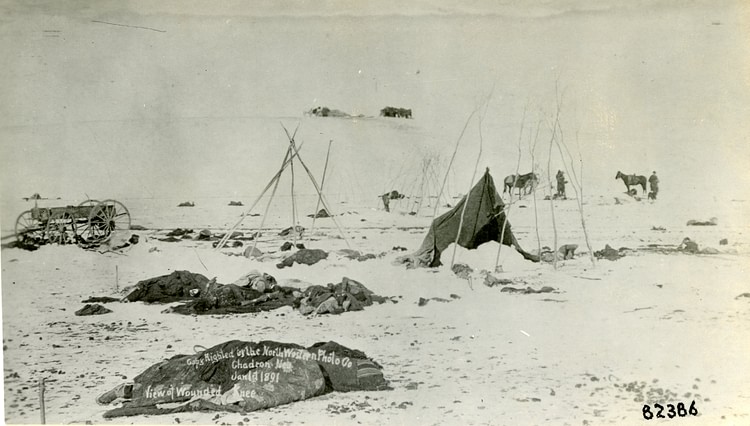
Remains of Lakota Sioux people and horses lying dead in the snow. (Library of Congress)
Introduction
Most people have heard of Wounded Knee and know it relates somehow to Native Americans without knowing the details. As the cliché states, the devil is in the details, so here is what you probably don’t know but need to about what happened that day in December 1890.
I am posting this in response to the news Defense Secretary Pete Hegseth announced recently that 20 soldiers involved in what happened at Wounded Knee would keep their military honors. Those soldiers include Mosheim Feaster, who was awarded for “extraordinary gallantry,” Jacob Trautman, who “killed a hostile Indian at close quarters,” and John Gresham, who “voluntarily led a party into a ravine to dislodge Sioux Indians concealed therein.”
Please read what follows, then consider what restoring those honors really says about our country.
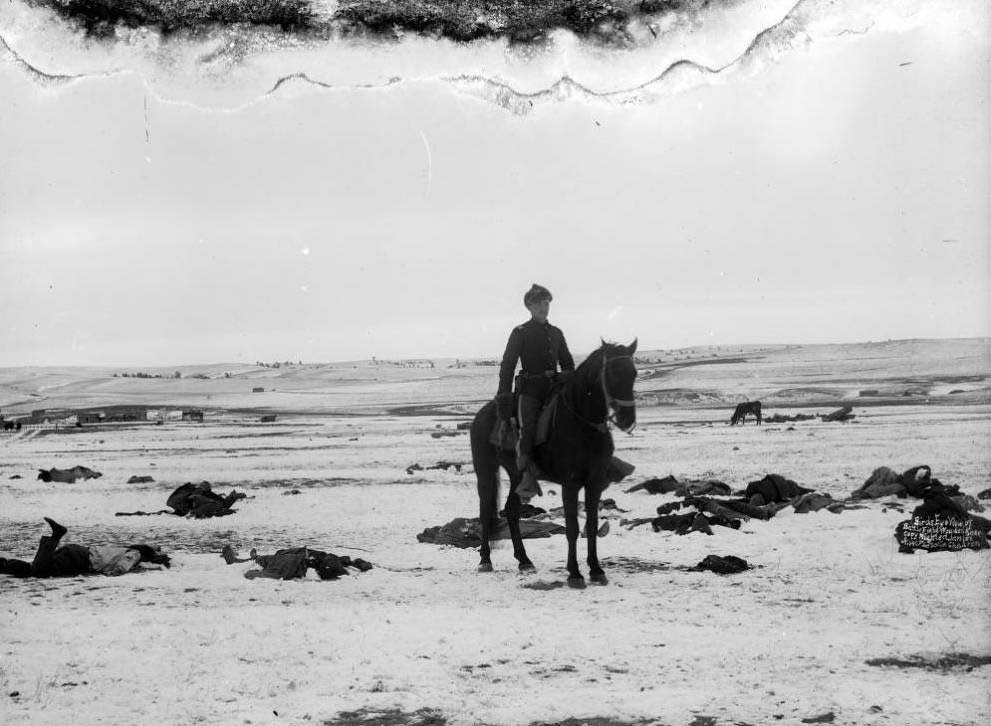
Burial of the dead at the Battle of Wounded Knee, S.D. U.S. Army soldiers observing as Lakota dead are buried in a trench. (Library of Congress)
It Wasn’t a Battle
First of all, if you’ve heard it was a battle, you are sadly mistaken. It was a massacre. As many as 300 mostly unarmed men, women, children, and babies were gunned down by the U.S. Army under the command of Colonel James Forsyth. This ended the so-called Indian Wars. The story behind the 1890 massacre is long, deep, and complex, but I will do my best to condense it to the highlights.
Back in 1888 a Northern Paiute from Nevada named Wovoka had a vision during a total eclipse of the Sun. He began sharing what he saw, that the Earth would soon perish, then come alive again in its original, pristine state with lush prairie grass and herds of buffalo, which Native people as well as their dead would inherit for their eternal existence free from suffering.
Remains of Lakota & horses after Wounded Knee massacre. (Library of Congress)
The conditions to receive this great blessing included living harmoniously and honestly, cleansing themselves often in body, mind and spirit, and shunning the ways of the whites, especially alcohol. They were told not to mourn the dead because they would be resurrected. Prayers, meditation, singing praises to the Great Spirit, and especially dancing, were taught as well as the charge to lay down their weapons and no longer fight, with each other or the white man.
A great gathering with representatives from many tribes occurred at Walker Lake, Nevada, where a Holy Man taught them these principles of peace that Wovoka promoted, along with a specific dance, song, and prayer. It was originally known as the Dance of Peace.
But like most religions, even those of divine origin, original teachings and directives were changed and perverted by those seeking power. In this case, it was Sitting Bull and others, who had not been to Walker Lake to hear its intended purpose, but interpreted the teachings to indicate victory over the white man and restoration of their lands. It’s entire meaning and purpose were twisted and it became known as the Ghost Dance.
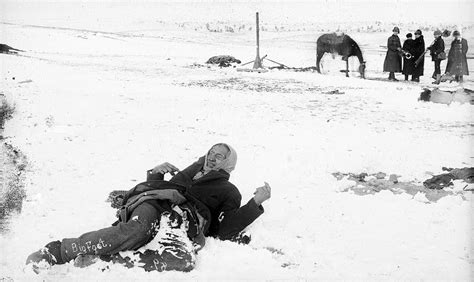
Remains of Chief Spotted Elk following massacre. (Library of Congress)
While many tribes continued to perform the dance according to its original peaceful intent, some adopted Sitting Bull’s new interpretation as a victory dance. As word reached the U.S. Government, they feared a massive Indian uprising, and in response outlawed the dance in November 1890 and sent out troops to enforce the edict.
Kicking Bear and Short Bull, who had both been at the gathering at Walker Lake, led their followers to the northwest corner of the Pine Ridge Reservation. They invited Sitting Bull, perhaps to explain to him the dance’s original purpose. Before Sitting Bull could leave, however, he was arrested by Indian police. A scuffle resulted in which Sitting Bull was killed as well as seven of his warriors.
Spotted Elk, a.k.a. Big Foot, and his followers were on their way to Pine Ridge as well at the behest of Red Cloud, a proponent of peace, hoping to restore tranquility. General Miles sent the Seventh Cavalry under Major S.M. Whitside to intercept them, finally locating them to the southwest at Porcupine Creek, about 30 miles east of Pine Ridge.
The Indians offered no resistance and were told to set up camp for the night about five miles westward at Wounded Knee Creek. Colonel James Forsyth arrived, took command from Whitside and ordered his guards to place four Hotchkiss guns in position around the camp. There were about 500 soldiers and 350 Indians, 230 of which were women and children (67%).
On the morning of December 29, 1890, the soldiers came into the Indian camp to gather all firearms. While some Indians were aware of the dance’s true nature, some saw it as Sitting Bull had, and wanted to resist. Spotted Elk urged nonviolence, but when one of the soldiers attempted to roughly disarm a deaf Indian by the name of Black Coyote, the rifle discharged.
Other guns immediately echoed the first shot. As the Indians ran for cover, soldiers began firing the Hotchkiss artillery, pursuing some who fled and killing them.
Dick Fool Bull, a child at the time, was an eyewitness. He was traveling with his parents and uncle to join the others at Wounded Knee, but delayed. (The following account was recorded by Richard Erdoes and included in his book American Indian Myths and Legends.)
It was cold and snowing. It wasn’t a happy ride, all the grown-ups were worried. Then the soldiers stopped us. They had big fur coats on, bear coats. They were warm and we were freezing. I remember wishing I had such a coat. They told us to go no further, to stop and make a camp right there. They told the same thing to everybody who came, by foot, or horse, or buggy. So there was a camp, but little to eat and little firewood, and the soldiers made a ring around us and let nobody leave.
Then suddenly there was a strange noise, maybe four, five miles away, like the tearing of a big blanket, the biggest blanket in the world. As soon as he heart it, Old Unc burst into tears. My old ma started to keen as for the dead, and people were running around, weeping, acting crazy.
I asked Old Unc, “Why is everybody crying?”
He said, “They are killing them, they are killing our people over there.”
My father said, “That noise–that’s not the ordinary soldier guns. These are the big wagon guns which tear people to bits–into little pieces!” I could not understand it, but everybody was weeping, and I wept, too…The next day, we passed by there. Old Unc said: “You children might as well see it; look and remember.”
There were dead people all over, mostly women and children, in a ravine…people were frozen, lying there in all kinds of postures, their motion frozen, too. The soldiers, who were stacking up bodies like firewood, did not like us passing by. They told us to leave there, double-quick or else. Old Unc said: ‘We’d better do what they say right now, or we’ll lie there too.’
So we went on toward Pine Ridge, but I had seen. I had seen a dead mother with a dead baby sucking at her breast. The little baby had on a tiny beaded cap with the design of the American flag.
Then, adding insult to injury, starting in 1927 the federal government sponsored the carving of four presidents’ faces on Mount Rushmore in the Black Hills, sacred land to many tribes to this day, for which they fought with everything they had to retain. Furthermore, it was originally given them, then taken back in typical “Indian Giver” fashion when gold was discovered.
There are credible reports that the Holy Man who taught the gathering of Native Americans at Walker Lake was none other than Jesus Christ. Whether or not you choose to believe that is up to you, but clearly the teachings reflected what Jesus taught.
Yet it was supposed “Christians” who slaughtered these innocents and the Pope authorized it through a Bull. Pete Hegseth professes to be a Christian. What Christians have done in the name of religion should be horrifying to any civilized person, from the Inquisition to the Crusades.
I am a white woman who is about as white as you can get. My maternal heritage goes back to Connecticut in the 1600s. My paternal grandfather came from France, my paternal grandmother was French Canadian. Perhaps somewhere in my genealogy someone married a Native American, but as far as I know, that is not the case. I would be proud if it were.
I have done a wealth of research related to writing the Dead Horse Canyon trilogy with my coauthor, Pete Risingsun. It was a startling revelation “how the West was won.” It’s now obvious to me that we stole this land from its original inhabitants. They have been slaughtered, the target of genocide, treaties repeatedly broken, and promises not kept for hundreds of years. In reality, Indigenous peoples were treated better by the English and French than by the U.S. government. The United States has treated people better who attacked us during World War II than they have those from whom they stole this land.
Let that sink in.
The government even initially denied Native American “birthright citizenship” because, even though they had lived here for thousands of years or longer, it was not yet the United States when they were born.
If I were related to any of those 20 men who received “honors” for their part in the Wounded Knee massacre I’d be ashamed to admit it. I am horrified by what they did to say nothing of outraged that someone who claims to be a civilized person would condone such barbaric, heartless actions.
Forsyth was later charged with the killing of innocents, but exonerated. In 1990, Congress declared it a “Tragedy” in a bipartisan resolution. Even Major General Nelson A. Miles, who sent the Seventh Cavalry to intercept those heading for the gathering as noted earlier, condemned the Wounded Knee incident as “the most abominable military blunder and a horrible massacre of women and children.”
And yet, over a century later, our current Secretary of War wants to honor them.
What despicable human being could possibly see anything honorable in what happened that day? In the Post-WW II Nuremberg trials the allies rejected “I was only following orders” as a defense for war crimes. The Nuremberg Charter specifically said that acting under orders was not enough to free you of responsibility — it might only be considered when determining punishment.
Principle IV of the Nuremberg Principles states, “The fact that a person acted pursuant to order of his Government or of a superior does not relieve him from responsibility under international law, provided a moral choice was in fact possible to him.”
It appears that what is considered immoral action by Nuremberg standards today was okay in 1890 thanks to the Pope.
What is wrong with this picture?
It’s my opinion that Hegseth represents the worst of the white man’s world and epitomizes the “Manifest Destiny” mentality, the very reason that people of color see whites as the enemy.
Have we not learned anything or evolved beyond barbarism in a hundred years?
If this is how war crimes are judged today by the Secretary of War, in full violation of the Nuremberg Principles, then Hegseth should be impeached at least, preferably ousted, for leveling such an insult on people who have suffered enough over the past five hundred years. As far as I’m concerned, the blood of the victims at Wounded Knee is on his hands every bit as much as Forsyth, Miles, and all the others.
If you agree, please comment below, forward this blog, and notify your congressional representatives of your opinion on this matter.
Photo Credits: Library of Congress
References
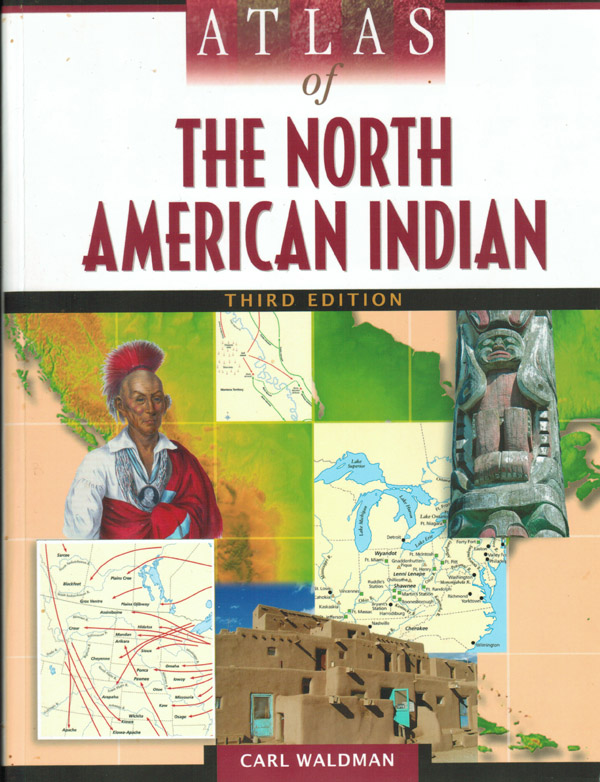
Waldman, Carl, Atlas of the North American Indian, (c) 2009, Infobase Publishing
Brinkerhoff, Val, The Remnant Awakens, (c) 2018 by the author
Erdoes, Richard and Ortiz, Alfonso, editors, American Indian Myths and Legends, “The Ghost Dance at Wounded Knee” as told by Dick Fool Bull in the 1960s and recorded by Richard Erdoes, (c) 1984
I tumbled down that particular rabbit hole upon reading, “How to Truly Own your Land: Land Patents” by Ashley Rocks, Kenneth Plaster, and Gwendolyn Morris. More on that later. Since writing the Dead Horse Canyon trilogy with my coauthor, Pete Risingsun, I now filter many issues through what I’ve learned about how “trustworthy” the United States has been regarding Native Americans.
Right. I can hear you laughing already.
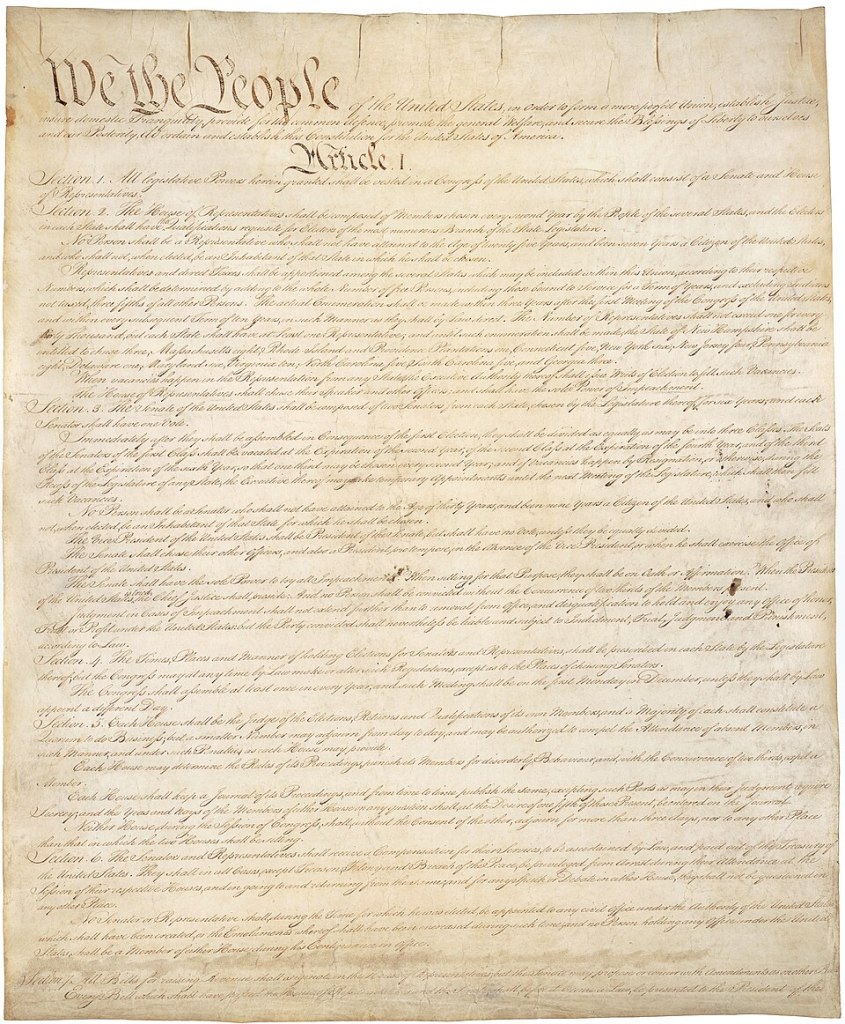
That book about land patents started with Article VI of the U.S. Constitution which states:
“This Constitution, and the Laws of the United States which shall be made in Pursuance thereof; and all Treaties made, or which shall be made, under the Authority of the United States, shall be the supreme Law of the Land; and the Judges in every State shall be bound thereby, any Thing in the Constitution or Laws of any State to the Contrary notwithstanding.”
And that is where I fell down the rabbit hole.
If treaties represent the supreme law of the land, how did Native Americans lose so much of theirs? No Constitutional amendments exist that pertain to Article VI.
So what happened?
Brace yourself for a brief history lesson to illustrate how convoluted that simple question’s answer tends to be. Then we’ll get into how this affects you as a home or property owner.
Consider that the Constitution was ratified September 17, 1787, over a hundred-fifty years after the Pilgrims arrived in 1620. Per Carl Waldman’s “Atlas of the North American Indian,” during the Colonial period, the English, French, and Dutch recognized the sovereignty of Indian nations and negotiated a plethora of treaties. Their intent was mostly to legitimize their own land purchases, claim colonial powers, and establish trade agreements. (p. 236)
Following the American Revolution, it’s easy to guess what happened to those early treaties. Like an incoming hostile landlord, the U.S. Government assumed control with a new set of conditions. Years later, Article I, Section 10 of the Constitution specifically banned states from entering into any treaty or alliance, implying previous ones were of little effect.
From 1781 to 1789 the Articles of Confederation prevailed as the rule of law. The United States’ intent with treaties was typically to legalize the right of conquest.
In a similar manner, Native Americans were not initially granted “birth right citizenship” in spite of Section 1 of the 14th Amendment, ratified in July 1868. Why? Because they were not born in the official United States. Furthermore, reservations were under Indian jurisdiction and therefore were deemed not to qualify.
During the 1850s, numerous treaties were negotiated with Indian tribes, i.e. 52 from 1853 to 1856 alone. Treaties as policy ended with a negotiated agreement between the federal government and the Nez Perce in 1867, the last of some 370 treaties! (Waldman, p. 237) Furthermore, numerous agreements made between tribes and supposed government representatives that failed to be ratified by Congress fell through the cracks while Native Americans signed them in good faith, often not even knowing what they contained.
Is it any wonder Native Americans accused the white man of “speaking with a forked tongue?”
In 1871 an act of Congress officially impeded further treaties. Supposedly, treaty obligations were not invalidated, but Indians were now subject to unilateral laws of Congress and presidential rulings. (Waldeman, p. 237)
Blackfoot said, “What we say to them, and what they said to us, was “Good.” We said “Yes, yes,” to it; but it is not in the treaty….When we were in council at Laramie we asked whether we might eat the buffalo for a long time. They said yes. That is not in the treaty. We told them we wanted a big country. They said we should have it; and that is not in the treaty. They promised us plenty of goods, and food for forty years–plenty for all the Crows to eat; but that is not in the treaty….”
Of course it wasn’t, since two years before, as stated earlier, Congress impeded further treaties.
Get the picture?
Do you really think the government holds any of its citizens in higher regard than First Nation Americans?
Which brings us to the book that started this tangent.
If you think you own your home or land, think again. While those who came to the New World in the 17th Century did so for freedom and the opportunity to own land versus a feudal system, over the years that has been corrupted like everything else the Founding Fathers intended, reverting back to what they supposedly left behind.
This book is essential reading for anyone who thinks they own their land. You most likely hold an equitable interest title or deed, but do not hold full title to the land. Don’t believe me? Fail to make your mortgage payments or pay your property taxes and see what happens.
If you held what is known as an allodial title, the land would be yours. Period. You would not owe homage to some financial institution or government authority to retain it. It would be yours. Forever.
So why don’t you own your land? This relatively short book of 83 pages describes all the particulars, of which the average person is entirely unaware.
It is possible to obtain a Land Patent, or allodial title, but it involves a complicated process and a lot of research, tracing your property’s ownership history back to its origins as a land grant with an allodial title. While this book is not intended as legal advice, it does give you plenty of information to help you along that convoluted path.
I’m definitely interested in getting an allodial title to my existing land. My property taxes are horrible and nothing would please me more than to be situated to avoid them.
You can get a copy of this eye-opening book on Amazon. It’s a bit pricey for a skinny paperback, but the information it contains could save orders of magnitude more should allodial title be achieved.
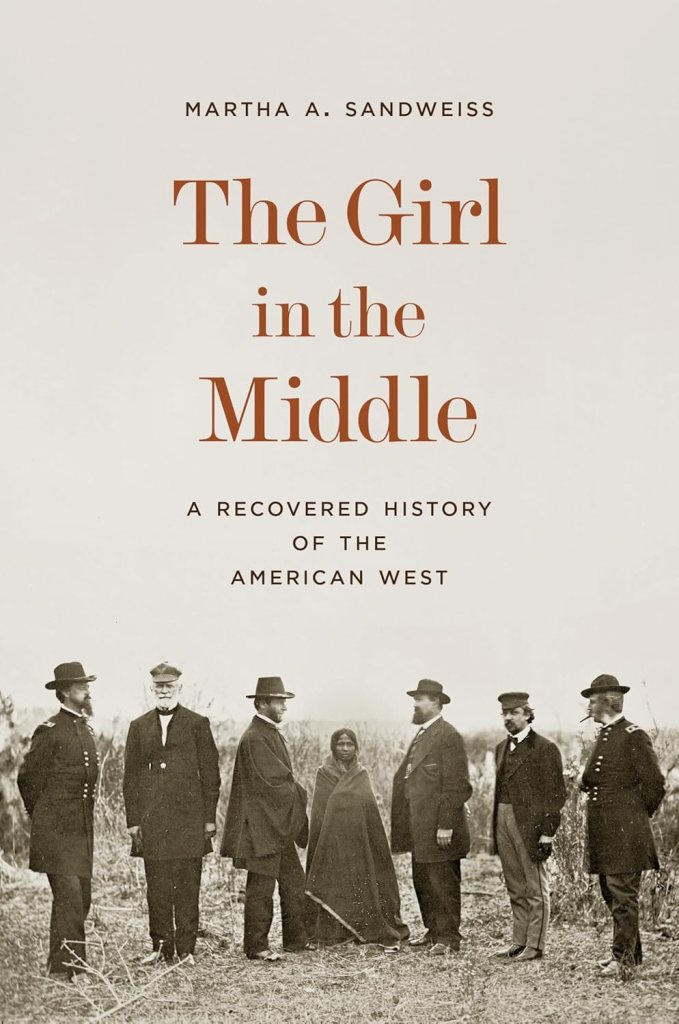
Review of “The Girl in the Middle: A Recovered History of the American West” by Martha Sandweiss
A magnificent must-read for aficionados of the West’s colorful history
When I saw this book’s haunting cover, I knew I had to find out what was inside. I’m astounded by the wealth of research done by the author and what she uncovered, revealing who and what those six men were as well why they were gathered at that place and time. Sandweiss includes the photographer and even succeeds in identifying the lone Native American girl, whose name was not included in the photo’s caption.
Be aware that every incident included in the text is documented in fifty-seven pages of “Notes.”
Wow.
What an incredible quest! One accomplished through scrutinizing government records of official actions, census records, newspaper articles, wills, land records, and personal interviews with the progeny of those involved.
The men in the photo are General William S. Harney; Senator John B. Henderson; John B. Sanborn; Samuel F. Tappan; Nathaniel G. Taylor; Alfred Howe Terry. The photographer is Alexander Gardner, famous for his documentation of the Civil War as well as portraits of President Abraham Lincoln, General William T. Sherman, and other dignitaries. The girl is Sophie Mousseau.
Looking at it journalistically, let’s use the standard who, what, when, where, and why.
Who: The men are members of the federal Peace Commission.
What: Meet with a multitude of Native American tribes.
When: It’s 1868, the nation still recovering from the Civil War.
Where: Fort Laramie, Wyoming Territory
Why: To work out treaties and agreements with the Native Americans
Not a simple task, to be sure.
Within the pages of this amazing tome lie details not found anywhere else about who each of those men were besides soldiers, politicians and activists. Not their public persona: their angels and demons, opinions, political sway, family, and in some cases, criminal records.
Their negotiations with the various tribes is detailed as well.
This is not some dry, impersonal chronology that makes your eyes glaze over like you encountered in high school. It’s an intimate look at not only these men and the circumstances that brought them there, but a glimpse of the true condition the United States (which was still in the process of forming) and the challenges faced by the government.
Besides the challenge of integrating the slaves freed following the Civil War into society, they had troubles galore related to the settlement of the West and working out agreements with the Native Americans. Don’t forget that the nation was also loaded with immigrants, with everyone trying to find their place in the adolescent nation.
You may have heard of the Sand Creek Massacre and Wounded Knee, but what about Blue Water Creek? If you believe like I do that this land was deliberately stolen from its original inhabitants, (who were not considered citizens until 1924 because they were not born in the United States), you will learn even more of the sordid details.
At least some of the Peace Commissioners (obviously not the military members) were actually pretty objective and fair, acknowledging the many gripes the Native Americans had as legitimate. The report even pointed out conflicting values by stating, “If the lands of the white man are taken, civilization justifies him in resisting the invader. Civilization does more than this: it brands him as a coward and slave if he submits to the wrong.” Conversely, “If the savage resists, civilization, with the ten commandments in one hand and the sword in the other, demands his immediate extermination.” While the commissioners didn’t want Indians to disrupt the settlement of the West, they doubted “the purity and genuineness of that civilization which reaches its ends by falsehood and violence, and dispenses blessings that spring from violated rights.” (p. 159)
I was aware that the Black Hills were very much stolen. The Fort Laramie Treaty of 1868, which promised the area to the Lakotas in perpetuity, was nullified by the so-called Agreement of 1877 and redrew the boundaries of the Great Sioux Reservation to exclude the Black Hills.
Why? To open it up to white settlement and the pursuit of gold while also ending the military defense of Lakota treaty rights.
Originally, that reservation was around sixty million acres. But the 1877 agreement (signed by only about 10% of Lakota men versus the required 75% according to an 1868 treaty), returned most of the Black Hills to the United States. The new reservation was now slightly less than twenty-two million acres, a 63% reduction.
In 1892 the Lakota began demanding compensation. Petitions and protests persisted for roughly 60 years until 1980, when the Supreme Court ruled in their favor, stating that the 1877 federal seizure of the land was done in bad faith without the proper consent from the adult men of the tribe. It awarded the tribe $17.1 million in damages, plus interest from 1877, for a total of roughly $106 million.
That may sound as if the issue is resolved. It’s not. The tribe refuses to take the money, which with accruing interest, would now be around $1.5 billion. Why? Some leaders say it would represent relinquishing their claim to the land–a price too high.
Since then the Seven Council Fires of the Great Sioux Nation has resorted to purchasing parcels of land from private ranchers. The Interior Department now hold that land in trust to be governed by the same laws that govern other trust land in Indian Country.” (p. 273)
Did you know the U.S. Government had a program that accepted “Indian Depredation Claims” from people who had suffered property damage from Indian raids and other incidents? Some of those claims took decades to settle, typical of government programs to this day. Some things never change.
So what about the girl, Sophie Mousseau?
It turns out that Sophie was “in the middle” in another respect as well. Her mother was Yellow Woman, a Oglala Lakota. Her father was Magloire Alexis Mousseau, a French Canadian.
Indeed, Sophie went on to marry and have children with two different white husbands. In censuses and other records it was common for individuals to show up as white in one document and native in another.
This was another situation that arose with its own set of complications, the matter of mixed breed individuals who were often not accepted by either culture. Furthermore, there were Indians who behaved like whites, and whites who behaved like Indians. Some of this came about when reservations were broken up via allotment programs, where many stepped in to grab land, which further reduced the size of reservations.
We think the times we live in now are complicated, but this books demonstrates that the 19th Century was loaded with challenges, some of which we still face today.
If you’re a history buff interested in the growing pains of the American West, many of which still remain as various aches and pains, I cannot recommend this book highly enough. Maybe the detail will be too much for some, but getting to know the people in this iconic photo brings it to life like never before. It was heartening to find out that the Peace Commission did recognize many of the injustices perpetrated against Native People. However, Congress didn’t agree and thus ignored its recommendations as they pleased.
As stated before, Pete Risingsun and I did a lot of research writing the Dead Horse Canyon Saga, but it was nothing compared to what was done to create this amazing book. You can find it on Amazon here.
Have you ever wondered how Pete Risingsun, a Northern Cheyenne elder living on the tribe’s reservation in southeastern Montana, and Marcha Fox, a science fiction author living in Texas, became coauthors? If so, you’ll want to read the article published by the staff of Soaring Eagle, the charitable organization that supports the Heritage Living Center for Northern Cheyenne elders where Pete resides. You can find it in the Spring edition on their website here. That organization was key to facilitating this incredible partnership that has produced three award-winning novels over the past five years.
Pete and Marcha have never met face-to-face and he does not even have a computer! Phone calls, texting, and snail mail were the vehicles used to communicate, collaborate, and produce over 1400 pages of an incredible three-volume story.
The response to the article was great, as shown by a significant increase in book sales. Of particular interest was a letter, which you can see below, that was sent to Soaring Eagle by a woman who read the newsletter and as a result purchased and read the three books.
The biggest challenge for most authors, especially those that are self-published, is finding their audience. The Dead Horse Canyon Saga is unique, making this even more difficult since it doesn’t fit a single genre. However, with multiple story themes including a government conspiracy, murder, a detailed glimpse at Cheyenne history and ceremony, deep bonds of family and friendship, to say nothing of Charlie Littlewolf’s transformational journey back to his roots, there is something for everyone.
So far the three volumes have captured a total of 13 awards. This includes 5-stars and glowing reviews from Readers’ Favorite for each book, along with prestigious Book Excellence Awards.
Fans of the Longmire series (Craig Johnson’s books as well as the TV series) or the Leaphorn and Chee stories by Tony Hillerman and continued by his daughter, Anne, (novels and the Dark Winds TV series) are likely to enjoy these books. Dead Horse Canyon takes an even deeper dive into native culture and history with characters the reviewer from The Book Commentary described as “lovable,” while an Amazon reviewer of the third book described them as “Characters you will fall in love with. Characters you will fantasize horrible death wishes for with fingers crossed. And sleepless nights as you read it.“
It’s been said, “Do not to judge a book by its cover.” Just in case this is an issue, new covers are coming the end of June! Stay tuned!
Pete Risingsun, my coauthor, and I did a vast amount of research when we wrote “The Curse of Dead Horse Canyon” trilogy. The depiction of the Cheyenne culture is accurate. The history referred to in the stories really happened, save that which was clearly made-up, though even that was feasible. Abandoned mines definitely are a pollution issue. The astrology is actual for the time and place and characters involved, which is weird and another blog in itself.
But if there was one thing that was made up it was the source of the conspiracy, i.e., the Pearson Underground Residence Facility (PURF).
Or was it?
My jaw dropped when a friend sent me this article about just that, such a facility on an even grander scale than I have in our novel! Check it out here.
The article in The New York Post linked above opens with the following paragraph, “The federal government has secretly spent trillions building an elaborate network of subterranean ‘cities’ where the rich and powerful can shelter during a ‘near-extinction event,’ a former Bush White House official sensationally claimed.”
Much of its source and, if you’ll excuse the expression “from the horse’s mouth,” can be found in this short video (12 minutes) where Elizabeth Austin Fitts, who served as the assistant secretary of Housing and Urban Development for Housing between 1989 and 1990, talks about it on Tucker Carson’s podcast.
While I knew there were plenty of underground bases (because the History Channel says so, right?) which made PURF credible, I had no idea it was even worse than I imagined!
So if anyone out there thinks that part of the story is a stretch, bear in mind that they have actually spent even more, by several orders of magnitude, than I have noted in the books. We’re talking TRILLIONS whereas in the story it was BILLIONS.
The money probably came from those “magic money machines” the DOGE team found, right? The actual corruption coming out these days makes my fictitious situation pale by comparison.
While Pete and I were writing these books I was amazed by how many actual situations–historical and otherwise–fit perfectly. Particularly, as we researched Cheyenne ceremonies, much came out that drove and further defined the storyline. I didn’t know anything about the Massaum as the Earth Giving Ceremony, the meeting of Indigenous leaders at Walker Lake, Nevada, or any number of other things when I conceived this story. I knew how it would end but I had no idea how.
As I look back, I can’t help but wonder where this story came from? Mine and Pete’s imagination? I may have mentioned this before, but I’m what they call a “pantser,” not a “plotter.” In other words, I write “by the seat of my pants.”
I start with a very general idea/theme in mind. I populate it with characters and turn them loose. I’m more of a scribe than an author making the story up. I simply watch what they do and write it down. My characters repeatedly get themselves into scrapes where I have absolutely no idea how they’ll get out.
But they do. Usually in some way I never dreamed of.
Did I channel these books rather than make them up?
I think most of us can agree there are other dimensions out there. Psychic phenomena are very real and no doubt operate in some other reality beyond what we can currently detect. Did these stories actually take place in one of them?
I had much the same experience while writing the Star Trails Tetralogy, especially in “The Terra Debacle: Prisoners at Area 51″ in developing the science behind a telepathic walking plant.
One of the reasons I love research is all the amazing, serendipitous factoids I uncover that fit and often drive the plot and action. It’s as if the story is already out there, just waiting for some writer’s muse to whisper it in their ear.
I must say, not knowing what will happen makes writing as much fun as reading. I like to think that if it has me in suspense that such will be conveyed to my readers as well.
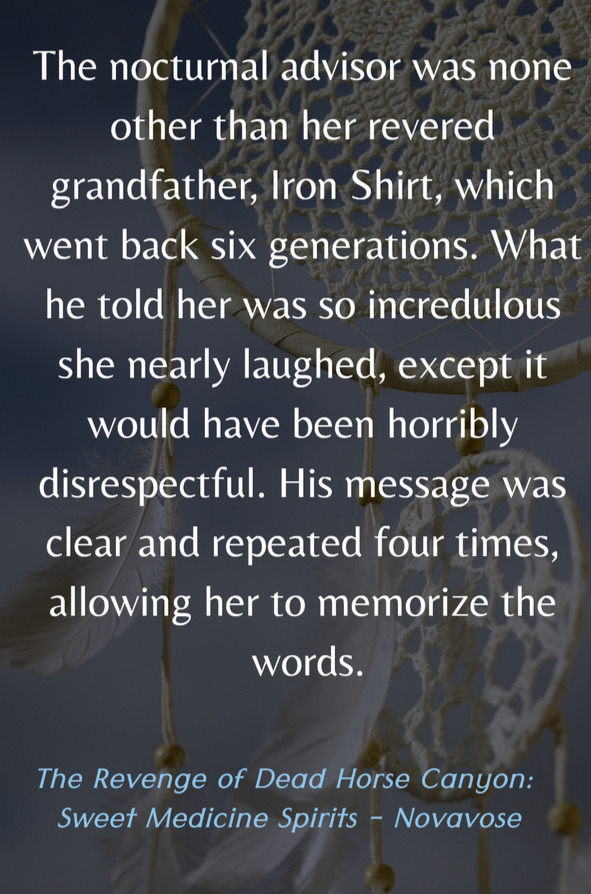
Here’s one teaser from “Revenge of Dead Horse Canyon: Sweet Medicine Spirits – Novavose” where I had absolutely no idea what would happen. The character in question popped up quite late in the book, but she fit perfectly.
If you’d like to get the entire trilogy in a single mega-ebook that also includes some bonus material about that Earth Giving Ceremony, you can pick one up on Amazon here.
Let me know in the comments what you think regarding where stories come from as well as whether you find my stories predictable. Like I say, I know how they’ll end, but rarely if ever know how it comes about.
Join me in standing with Native communities in their grief and anger over their stolen sisters and children. This MMIW Awareness Day, we remember all those who were never found and those who live with trauma and without the peace that justice can bring. I stand with Native communities in calling for reform and action from local and national governments and law enforcement so we can all work together towards #NoMoreStolenSisters.
For more information about Missing and Murdered Indigenous Women, follow Native Hope.
Watch the dramatization of an actual incident in the video below for further insights into this heartbreaking situation.
Missing and murdered indigenous women and girls (MMIWG) is but another critical issue that never makes it to the news. This is even more likely if you don’t live in one of the states most highly affected such as Arizona, New Mexico, Oklahoma, Montana, and various others. Major highways known for drug and human trafficking often cross remote areas of Indian reservations, conditions that make the victims easy prey.
The following is a direct excerpt from the Native Hope website that sums up much of the issue:
What People Get Wrong
Stereotypes of Native Americans Perpetuate Injustice
Due to the lack of tribal jurisdiction beyond reservation borders, Urban Indians receive less than adequate assistance when a loved one goes missing. America has written a stereotypical narrative for its First People:
They are lazy, drug addicts, and alcoholics who rely on the government to survive.”
Moreover, this modern stereotype was created through acts of colonization and cultural assimilation. Pre-colonization, Native societies traditionally revered and honored the sacredness of women. Women held positions of authority and did a large portion of labor within their camps, but the European colonists with patriarchal views took the women as slaves to the men. Soon, Native women had been victims of rape, violence, and submission. This mistreatment can be traced throughout America’s history. Natives were viewed as “savages.”
In Andrea Smith’s paper “Not an Indian Tradition: The Sexual Colonization of Native Peoples,” she explores the connection between sexual violence and colonialism in the lives of Native people in the United States. Smith reveals that Natives were viewed as “dirty” for their lack of clothing which in the minds of the colonists made them “polluted with sexual sin.” They were seen as less-than-human—therefore, “rapable.”
Now, when a Native woman is reported missing, these negative stereotypes hinder the search process. Law enforcement tends to turn a blind eye, fail to take the report seriously, and do little to assist. The media rarely picks up on the story and if they do, there is normally a negative spin on the story making the victim seem at fault.
The following video further explains this tragic situation. It points out that too many agencies can be responsible due to blurry lines between jurisdictions, creating cracks for cases to fall through. Lack of resources coupled with the absence of accurate data is also a major problem. Sadly, most deaths are attributed to “exposure.”
Tomorrow, May 5, is MMIWG Awareness Day. You can support the effort by spreading the word and wearing red.
May 5th is MMIW Day, a day to raise awareness for the widespread anger and sadness in First Nation communities because of the missing and murdered women and children in their communities. A red hand over the mouth has become the symbol of a growing movement toward awareness, accountability, and advocacy. The red hand represents the silence of the media, law enforcement and government agencies on this issue, as well as the oppression and subjugation of Native women throughout history. Join Native Communities on May 5th by wearing red and raising awareness in the call for #NoMoreStolenSisters.
This is something few know about other than those directly effected by it. The following video will give you a closer look.
Shocking and another way Native Americans have been marginalized and discounted. Awareness is key to officials taking action. Pray that the focus on ending human trafficking will focus on this issue which has been a reality for indigenous people for decades.
Waste, fraud, and abuse of federal funds is being exposed like never before. However, if you’ll forgive the cliche, they need to stop throwing the baby out with the bath water.
I worked as a NASA contractor for twenty-one years. I saw a lot of sketchy activities that showed that agency was not immune to corruption. One example I encountered personally was the scheme where someone would come up with an idea, such as a space experiment, satellite, space vehicle, or whatever. The first step in such an endeavor is a concept study. If that passes, then there’s the feasibility study, design study, etc, etc.
I worked on a few of these, which I believed were good ideas. However, just before it would get to the phase where it would actually get built, it would be cancelled. All groundwork was essentially wasted, except, perhaps, if it turned out not to be a good idea after all and thus applied to a future project. What shocked me, however, was to find out in many cases the intent was never to build it.
Rather, it was to line the pockets of people who’d retired (or in some cases, been fired) from NASA (i.e., their fishing buddies) who’d become highly paid consultants. The “Good ol’ boy” system at its best. It was demoralizing enough to work hard on such a study, be enthusiastic for its potential, then have it cancelled. It was even more painful to find out it was never intended to come to fruition, but no more than a high tech boondoggle.
I witnessed too many civil servants whose only work-related activity comprised thinking up busy work for contractors. They loved what they called “metrics,” i.e., an attempt to measure our productivity. Of course we could have done more real, meaningful work, if we weren’t figuring out ways to measure it and report it in a way they could understand it. Most had no clue what we did, so how could they possibly manage it? There were numerous times when we kept the Space Shuttle program running just fine when the civil servants were gone because of one of those budget situation government shutdowns.
Air-to-air view of Columbia, OV-102, atop SCA NASA 905 flying over JSC site NASA ID: S90-55294 S90-55294 (19 Dec. 1990) — Johnson Space Center employees and neighbors on the ground didn’t get quite this closeup of a view of the Dec. 19 1990 flyover of the Space Shuttle Columbia mounted piggyback atop NASA’s Shuttle Carrier Aircraft (SCA–NASA 905). However, hundreds were able to spot it as it passed nearby en route to Florida from California following the successful STS-35 mission. Almost the entire 1625-acre site of the Johnson Space Center is visible in the background, along with a number of businesses and residences in the nearby municipality of Nassau Bay. The air-to-air photograph was taken by Pete Stanley of JSC’s Image Services Division who was a passenger in a T-38 jet aircraft.
Another thing I observed was referred to as “Empire Building.” Civil Servants got promotions based on how many people reported to them. They would claim to need more people than there was work for, just to inflate their numbers. As a contractor manager, I’d be told to hire more engineers when the ones I had barely stayed busy.
Yes, that’s the way it was, in an agency highly admired, especially our youth, even aspired to work for–I know, because I was one of them. I got a physics degree at the age of 39 so I could work there. Sadly, I came away disappointed in many things I saw as an insider, especially the safety area where we knew all the dirty little secrets of why missions failed, inevitable when engineers were ignored by upper management.
Did NASA do some amazing things? Unquestionably! Did I have some wonderful experiences while I was there? Absolutely!
That picture above? I saw that from the ground and it was awesome. But this does not mean that there isn’t a lot of waste that needs to be eliminated. Since I retired in 2009, much has happened already with the retirement of the Space Shuttle Program and availability of commercial rockets.
I could go on and on with examples, but that is not the purpose of this blog. I simply wanted to make a point that what the Department of Government Efficiency (DOGE) is doing is needed and in many respects a very good thing. I recently heard indirectly from someone who works at the Federal Reserve that only about 6% of Federal employees report to an office daily.
What? Really?
More fallout, I suppose, from the COVID-19 debacle, which allowed people to work from home. As a former NASA contractor manager I was well aware that only a small handful of my personnel could be trusted to be productive working from home.
You Don’t Prune a Rosebush with a Chainsaw
However, that said, I believe DOGE may be figuratively pruning a rose bush with a chainsaw. Some of these agencies may be totally worthless, saving the taxpayers from paying for frivolous and even criminal activities, which is desperately needed. But we must remember, for the most part, the majority of agencies had something beneficial for at least some segment of the populace at their core when they were created.
Rebuilding the U.S. economy, creating jobs, and being self-sufficient as a country, especially when it comes to energy, make sense. But I don’t agree with decimating our forests, public lands or environment. Agencies should be pruned carefully with lopping shears at worst, trimmers at best.
For example, laying off Forest Rangers and those who watch over our National Parks, both the wildlife and visitors from around the world, is ill-thought-out. These individuals serve the citizenry! These are not the slackers! C’mon!
It’s my opinion that we need to keep a close eye on what’s being eliminated and speak up when they’re ill-advised for the damage they’ll do. As a senior citizen I have a perspective that those making such decisions may not have. Audit them all, definitely, and cut back as warranted. But let’s bring some finesse into the process before causing irreparable damage.
For example, a petition landed in my email inbox recently about the Environmental Protection Act being totally ignored. You can find it here.
I love nature and wildlife. That’s why I live in the boonies where I can look out my office window and see everything from rabbits, squirrels, and chipmunks to wild turkeys, deer, foxes, and even fisher cats, which I never heard of before moving to Western New York State. True, some are a threat to our livestock, but that’s another story. Trees, diverse vegetation, and wildlife feed my soul.
While the land immediately around me is privately owned, I shudder to think if it were Federal land and some logging company came in and stripped the mountainsides bare. That not only impacts the aesthetics, but the wildlife that calls that forest home.
Same goes for oil exploration. Having lived in Texas for 35 years, I know enough about that industry to recognize how dirty and dangerous it is. Essential, yes. But it could be done in a safer, more discriminatory manner so as to cause less damage. Fracking threatens water supplies with toxic chemicals and has been proven to cause earthquakes. Do we really want our National Parks subjected to that?
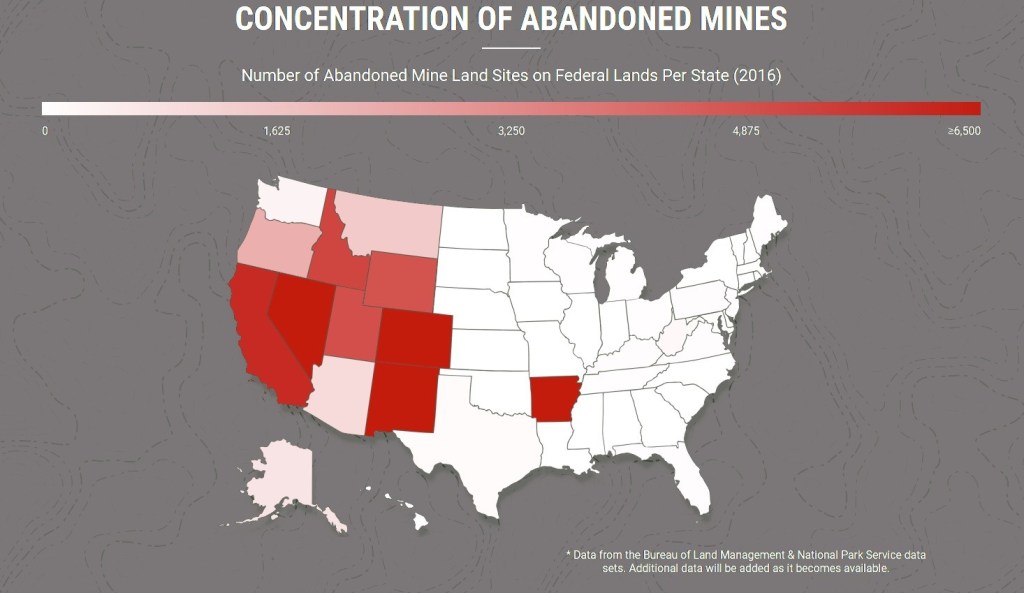
In the 19th Century mining activity in the Rocky Mountains caused considerable damage. These corporations do not care about the mess they leave behind, only profits. Some regulations are essential, which should be enforced with integrity, not bribes, and involve fines that are painful enough to motivate compliance. When I was writing The Curse of Dead Horse Canyon Trilogy my research made me aware of how bad that century-old situation was as well as oil exploration, both situations making it into the plot of the story.
I highly recommend Robin Wall Kimmerer’s “Braiding Sweetgrass” for more perspectives on that issue. You can see my review of this beautifully written book here.
Harming Vulnerable First Americans
Eliminating the Department of Education is another issue. While some research indicates the USA is not “dead last” but 8th out of 41 countries, in 2022, the U.S. ranked 16th in science, ninth in reading, and 34th in math. Not particularly stellar, to say the least.
Having had six children go through public schools, I’m well aware of the flaws in that system, too, e.g. using our children as test subjects (no pun intended) without our consent. Lunacy such as “New Math” and various other indulgences, like not teaching phonetics, and other “experiments” which deprive our youth of a decent education. This has gone on for decades, even predates the Department of Education, much less the “No child left behind” edict, which had its pros and cons as well.
The system, with or without the Department of Education, is deeply flawed. Indeed, they shot themselves in the foot when they started demanding all school districts incorporate the reigning political party’s “woke” agenda and various other idiotologies [not a typo] to which a vast majority of the population objected as proven by the 2024 election results.
Again, rather than throwing the Department of Education away like last year’s test scores, why not fix it? Our “throwaway” mentality should not relate to matters that affect human lives. Granted, sometimes fixing something, whether it’s your car or washing machine, is less cost-effective than buying a new one. But unless an agency is thoroughly corrupt to the core, you don’t delete it without closer examination regarding whether any part of it is worth salvaging.
One useful function of the Department of Education relates strongly to financial aid to poor districts. Its loss will be particularly hard on Native Americans. To quote from a recent email sent out by Native American College Fund president, Cheryl Crazy Bull:
We must raise our voice and let our representatives know that this bill cannot pass.
What you may not realize is that the Department of Education’s main role is financial. Dismantling it would disrupt programs that disburse federal student aid, negatively impacting all students that receive student loans and Pell grants. To qualify for a Pell grant, you must show need and the majority of College Fund and Tribal scholars demonstrate that financial need.
The Department of Education also provides federal funding for public schools and the ability to enforce civil rights protections for all students in education, including characteristics like disability, religion, and sex.
Native students are at the center of this attack and will experience tremendous hardships.”
If you don’t know how to contact your representatives, you can find that information here.
This very useful tool also includes your state officials, who often need prodding as well.
Getting rid of corruption is important. Saving taxpayers from enriching crooked politicians is essential. But the government is expected to provide some services. We just need to make our voices heard demanding that it be done in a wiser, more selective and sensitive manner.
In closing, as citizens, what we allow will continue. Whether its waste, fraud, and abuse or cutting things back so brutally and thoughtlessly that we never recover what good there was.

















 The Curse of Dead Horse Canyon