Confessions of a Life-Long Bibliophile

The True Loves of My Life

As an only child, books were important. Fortunately, my mother read to me as a young child such that I could read by the time I went to school. I was reading chapter books by 3rd grade, maybe sooner. My early favorites were animal stories by authors like Paul Gallico, who wrote “The Abandoned,” my favorite book for many years, perhaps for all time. Robert Lawson, author of “The Tough Winter” was another favorite.

I remember going to the Peekskill New York Public Library in my home town and coming home with a huge stack of books, especially in the summer.

While still in elementary school I discovered Nancy Drew Mysteries. I would save my allowance to buy the latest release and had them all, which were usually read more than once. As a teen my favorite was “The Catcher in the Rye” by J.D. Salinger. I remember reading on a city bus and coming to a part that made me laugh out loud, earning odd looks from my fellow passengers.

As a working adult, I had to give up certain authors because they kept me up all night: Michael Crichton, Tom Clancy, John Grisham, to name a few.

Home at Last!

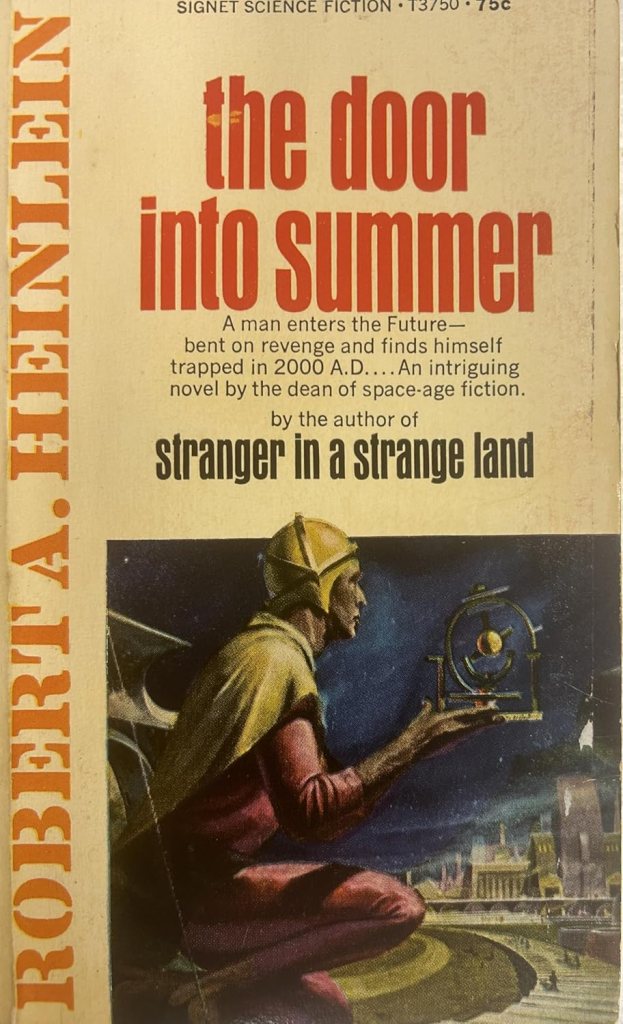
Somewhere along the line I discovered science fiction. The classics by Jules Verne such as “Journey to the Center of the Earth” and H.G. Wells’ “The Time Machine” were my first discovery, followed by Isaac Asimov and Robert A. Heinlein, the latter my all-time favorite, especially “The Door Into Summer” and “A Stranger in a Strange Land,” where the word “grok” originated, for those of you who didn’t know.
I scratched out my first science fiction story in 6th grade on yellow lined paper about the planet our teacher hailed from.  Not much of a plot, but my classmates found it entertaining. Not surprisingly, an avid reader like myself aspired to be an author when I grew up, more specifically a science fiction author.

One thing that always frustrated me was that science fiction books had very little actual science in them, probably why I favored Heinlein, who was an aeronautical engineer whose fiction started the “hard science fiction” sub-genre.

As a perfectionist, I wanted to learn more about science so that when I wrote my stories they would contain the scientific explanations I craved as a youth. Thus, at 35 I returned to school to earn a bachelor’s degree in physics from Utah State University, followed by a 21 year career at NASA’s Johnson Space Center in Houston, Texas.

We’re told to “Write what you know,” right?

My first science fiction novel, “The Capture of Phaethon,” about an asteroid collision with Earth was written while I was in college. It won me a scholarship as well as First Place Honor in a state competition. Maybe someday I’ll get it published. For now, the manuscript is in a box in the basement. Writing Phaethon was when I discovered the mysterious serendipity associated with creating fiction.

That’s all it is, right? Fiction? Something made up in your head?

My fictitious asteroid was named Phaethon, after the son of Apollo who crashed his father’s chariot into the Sun. Imagine my shock when doing research in the USU library’s NASA section that I found an asteroid by that name had recently been discovered! OMG! Later I discovered its usefulness in astrology, where it often indicates a “crash and burn” situation, figuratively or literally.

Heaven on Earth

The first time I set foot inside a library it felt like I was in Heaven. How it feels within the walls of a building lined with thousands upon thousands of books is as unique as it is indescribable. Every cell senses the knowledge and secrets that await, stirring my soul.

That could be why I often spend as much time researching a book as I do writing it, sometimes more. As much as I love my Kindle, for research it has to be a print book. I dog-ear pages, highlight, and leave sticky-notes galore.  When I encounter a used book like that, it tells me someone was really into its content, which is what any author hopes for.

When I wrote the Star Trails Tetralogy I incorporated science and technology problems into the plot. These were books I wanted to read as a youth but couldn’t find. I even created a Compendium with additional information for readers, teachers, and home-schoolers.

Star Trails books were popular in a charter school in Utah among young nerds like I was. I had the privilege of talking to those students a few years ago, which was so much fun. I know of at least one middle school science teacher in Florida who has my books in her classroom for extra credit reading. 

My favorite review for these books is the one where my writing was compared to Robert A. Heinlein. Imagine that! I have no idea how many children may have been inspired by them, but it’s good to know of at least a few.

Shifting Genres

The Curse of Dead Horse Canyon” saga started as a cozy mystery, but my propensity for research quickly led to a far deeper and darker story. My characters got out of hand, as usual, and suddenly I had a main character who was Cheyenne, a culture about which I knew nothing. My encounters with Native Americans was limited, and primarily with the Navajo. Research and serendipity delivered coauthor, Pete Risingsun, who kept the cultural elements on target, to say nothing of the story itself and additional research we did together.

The Reader’s Favorite review for the second book, “Return to Dead Horse Canyon: Grandfather Spirits” noted, to our delight, that “The depth of ethnology packed into both novels is meticulously researched and beautifully detailed. Fox and Risingsun are a dream team with this saga.”

Serendipity was alive and well writing that saga, especially how beautifully ancient ceremonies dove-tailed with the plot as if I’d known about them all along.

What will be lost?

Besides a book’s creative or intellectual content, to me it’s a physical thing. I love how they feel and smell, whether it’s fresh ink newly off the press or a musty antique over a hundred years old. Ebooks just didn’t feel that satisfying. I was grateful when self-publishing a paperback was an option, making it possible to hold my first print book, “Beyond the Hidden Sky,” in my hands and flip through the pages.

However, to me, a real book is a cloth-bound hardback with a dust jacket.

And this past June that dream was finally realized when all three books of the “Dead Horse Canyon” saga were released as hardbacks, laminated covers on Amazon, and real books with a cloth cover and dust jacket available through Ingram and found on Barnes and Noble, Books-A-Million (BAM), and numerous other booksellers’ websites.

Everything is being digitized, which is convenient, but I shudder to think that my generation of Baby Boomers may be the last to embrace physical, print books. The expense and storage involved versus the option of digitizing everything leaves no other choice.

Given that, how many will grow up without the joy of holding a brand new release from their favorite author in their hands, much less an autographed copy? Or never know the awe and expectation amid the imposed silence found within a massive library? While the words may be the same, there’s an essence found only from a tome in tangible form. When they’re my age will they miss their first smart phone the way I treasure the memory of those beloved books?

Or maybe that’s just me, an admitted bibliophile, who loves the print medium as much for its physical presence as what lies within. Digital formats that could disappear with a power surge or a few key strokes just aren’t the same. (Probably a thought my children will express loudly when I die and they have to deal with my many bookshelves full, only one of which you see at the top of the page.)

And how much easier might it be to pull the plug on books with content found offensive or declared “wrong” by someone in authority? Where would we be as a civilization without old tablets, scrolls, and other records?

To a bonafide bibliophile like myself digitizing books reeks of sacrilege. If you agree, be sure to buy a physical book once in awhile. Preferably a new one, so the author sees even a few dollars of benefit from it.

Epilogue
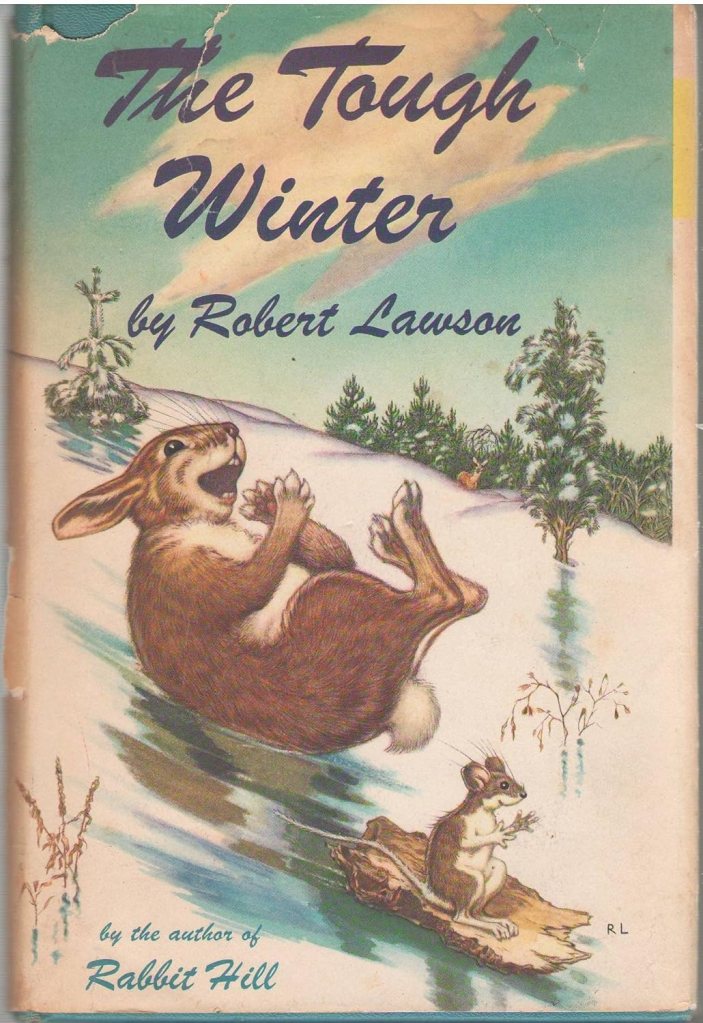
When I saw “The Abandoned” and “The Tough Winter” were still available on Amazon I literally cried. The book cover for “The Tough Winter” looks exactly like the book I had as a child. I ordered “The Abandoned,” planning to read it again, then leave it as my favorite book from my childhood to whomever wants such an anachronism when I die.  

This trip down memory lane led me to discover my reading list for the remainder of this year. Revisiting those favorites from the perspective of a septuagenarian should be interesting.

What books did you love from the time you could read? What made them special? Would you like to hold them again as you would hug a dear friend you hadn’t seen for years?

And that, no doubt, is why I simply had to order a physical copy of “The Abandoned.”

Co-Author Matchmaking

Have you ever wondered how Pete Risingsun, a Northern Cheyenne elder living on the tribe’s reservation in southeastern Montana, and Marcha Fox, a science fiction author living in Texas, became coauthors? If so, you’ll want to read the article published by the staff of Soaring Eagle, the charitable organization that supports the Heritage Living Center for Northern Cheyenne elders where Pete resides. You can find it in the Spring edition on their website here. That organization was key to facilitating this incredible partnership that has produced three award-winning novels over the past five years.

Pete and Marcha have never met face-to-face and he does not even have a computer! Phone calls, texting, and snail mail were the vehicles used to communicate, collaborate, and produce over 1400 pages of an incredible three-volume story.

The response to the article was great, as shown by a significant increase in book sales. Of particular interest was a letter, which you can see below, that was sent to Soaring Eagle by a woman who read the newsletter and as a result purchased and read the three books.

The biggest challenge for most authors, especially those that are self-published, is finding their audience. The Dead Horse Canyon Saga is unique, making this even more difficult since it doesn’t fit a single genre. However, with multiple story themes including a government conspiracy, murder, a detailed glimpse at Cheyenne history and ceremony, deep bonds of family and friendship, to say nothing of Charlie Littlewolf’s transformational journey back to his roots, there is something for everyone.

So far the three volumes have captured a total of 13 awards. This includes 5-stars and glowing reviews from Readers’ Favorite for each book, along with prestigious Book Excellence Awards.

Fans of the Longmire series (Craig Johnson’s books as well as the TV series) or the Leaphorn and Chee stories by Tony Hillerman and continued by his daughter, Anne, (novels and the Dark Winds TV series) are likely to enjoy these books. Dead Horse Canyon takes an even deeper dive into native culture and history with characters the reviewer from The Book Commentary described as “lovable,” while an Amazon reviewer of the third book described them as “Characters you will fall in love with. Characters you will fantasize horrible death wishes for with fingers crossed. And sleepless nights as you read it.

It’s been said, “Do not to judge a book by its cover.” Just in case this is an issue, new covers are coming the end of June! Stay tuned!

You can find the books on Amazon here.

When Life Gets in the Way. . .

I am acutely aware I’ve been a very negligent author for the past several months. Events transpired for both myself and coauthor, Pete Risingsun, that got in the way of our completing the Dead Horse Canyon trilogy on schedule. I apologize to all those who are biting their nails waiting for Book III. Clearly, it did not come out in the spring of 2022 as previously stated on this website!

Rest assured, however, that we are committed to finishing the story. If all goes according to plan (which may be expecting too much of the Universe) we hope to finish it by next summer (2024).

While we have a pretty good idea of what’s going to happen, that often changes once writing it down commences since our characters have minds of their own and don’t always do as they’re told. Furthermore, there are multiple plot threads to weave together in a cohesive way, which takes time and lots of rewriting for it to make sense.

I promise you will not be disappointed or bored! I truly look forward to getting into the story again and interacting with Charlie, Sara, White Wolf, and all the others. They are like extended family to me and I’ve missed them, no matter how weird that may sound to non-authors. (You don’t have to be crazy to be an author, but it helps.)

So what happened?

In a nutshell, events transpired that ultimately drove both Pete and I to different respective homes since the end of 2022. Previously, I was in Texas and he was in Montana. He’s still in Montana, but in a different town.

In my case, last April I finally left the sun-parched and drought-ridden wasteland of Central Texas for my ancestral homeland of New York State. I got out just in time, based on the summer they’ve been having in the Lone Star State. Triple digit temperatures and dead vegetation simply do not resonate with me in a favorable way. Today here in NY we had a “Heat Advisory” when temperatures ventured toward 90 degrees. That would be a cold front in Texas.

Thus, I traded intolerable heat and a barren landscape for what you can see in the picture at the top, which is the view from my office window in my new home.

Moving over 1600 miles is never easy, and for me it was further complicated by unprofessional and downright crooked movers. Thousands of dollars of items were left behind due to not fitting on the truck and several thousand more never made it to NY. I will post the sordid details of that debacle in my personal blog, “Marcha’s Two-Cents’ Worth.”

Getting settled into an 1898 farmhouse in rural Western New York has been very consuming, mentally, physically, and emotionally. However, it has been worth every dime lost and grey hair gained getting here. Even one of my cats, Angel, whom you can see in the picture below watching the front yard for chipmunks, squirrels, and birds, is quite content.

The purpose of this post is to let y’all know (I did bring some Texas with me after living there for 35 years) there will eventually be a Book III. It’s simply delayed, but we will make sure that it is worth waiting for.

An Interview with Author, Pete Risingsun

Q: How did you meet Marcha Fox? You live in Montana and she lives in Texas.

A: I wrote a detailed article about sweet grass, a sacred medicine plant the Cheyenne use in all of our spiritual ceremonies. Marcha read the article in the Soaring Eagle Newsletter, then wrote me a letter and we eventually talked on the phone. She liked the way I wrote the article.


Q: What happened next?

A: We did an interview on the phone. My questions were:

  1. Why are you writing a book about Native Americans?
  2. What made you decide on a Cheyenne character?
  3. How do you want this book written?
  4. Will I be paid for my work?

She called back the next day and said, “I want the book written accurately so when another Cheyenne reads the book they will not be offended.”

After that, she received an A for the first three questions and an A+ for the fourth question.

I told her I had to read her book first to determine if I could help her. She assured me it would be easy.

I read her draft of The Curse of Dead Horse Canyon. I told myself, “Wow. If you decide to help Marcha you are going to change Charlie Littlewolf into a traditional Cheyenne. You will make him a Cheyenne medicine man and warrior and the grandson of an honored and respected medicine man.” I pondered it for a week, thinking it could help my grandson’s college fund.


Q: What convinced you to coauthor with Marcha?

 A. Well, I felt confident that I could help. My question was how we would accomplish telling the story.

I began to understand she needed a Cheyenne medicine man to be a main character in the story. Still I had no answer on how. Then I knew: Ask the grandfather spirits for guidance.

I went to the sweat lodge alone and entered. I called the spirits and waited a long time before they came. The grandfather spirits spoke the truth to me. “You help this woman, she wants to do good things for our Cheyenne people. Tell her your story, only in the spirit of truth. You cannot do this for money, you will fail. Grandson, you have been chosen by Maheo to speak for your people.”

I then had a purpose to tell my story for my people. I went home feeling happy. I thanked the grandfather spirits for their guidance with wisdom and became the coauthor.


Q. You are from two entirely different cultures. Did you experience any challenges because of the cultural differences?

A. The greatest challenge was communicating the details of our Cheyenne spiritual ceremonies. The ceremonial sweat lodge requires detail and protocol. Ceremonial sweat lodge keepers have completed their vows for many ceremonies to earn their right to be a lodge keeper. So therefore they have high expectations of individuals who enter to focus on the purpose and protocol for the ceremonial sweat.

The Sacred Mountain fasting ceremony requires four days and nights on a buffalo robe with a sacred red pipe and the guidance of a painter who earned their right to guide you to complete your vow to fast at the sacred mountain.

The fasting ceremony requires a year of preparation with family support to set up camp and be there when your painter brings you down. Your vow is a commitment to fast without water and food for four days and nights for a purpose.

I came to understand and realize that I had not explained to Marcha who, what, why and how a medicine man became who he is. A medicine man inherits his medicine from his grandfather from a lifetime of teachings. A medicine man has great spirit powers with Cheyenne medicine to heal and clean people of their wounds, illnesses, curses, and call back lost spirits.

I realized how important it was for me to explain and continue to clarify my communications when the main character in the story was to become a medicine man.

We then were able to begin transforming Littlewolf into the grandson of Eaglefeathers, a true medicine man with great spirit powers.


Q. What agreement did you and Marcha have as authors of “The Curse of Dead Horse Canyon?”

A. We did not agree on a plan, we just did it. Marcha offered to hire me as a subject matter expert and sent a payment in good faith. We did the hourly rate arrangement for a short time. I then offered the Cheyenne way. I told her, “I will help you write your story and when we are done you can give me a gift of your choice, to show what my work meant to you.”

Cheyennes gift a nice comfortable blanket. So we decided to do this, since Marcha felt this was fair. My grandfather spirits said for me to tell my story in the spirit of truth for my people and not for money. We became a team of good faith to tell a great story.


Learn more about Pete on his author page here.