Progress requires change. As new truths become evident, old ones fade away. Sometimes it’s a good thing; others, not so much.
Consider the period in history known as The Enlightenment.
It’s hard to miss the irony of what “being enlightened” meant in the 17th Century versus what it means now.
When it was proven conclusively that the solar system was heliocentric, not geocentric, it unlocked new doors of scientific knowledge. Ecclesiastical authorities trembled, called out for professing a truth that simply wasn’t. Placing Galileo under house arrest did not change the facts, only made the powers-that-be ultimately look like fools, their credibility and power decimated.
Was this progress?
In some respects, yes.
In others, not so much.
Slammed by this undeniable revelation, the faithful stumbled over the rubble left behind. Sadly, this placed the realm of the spirit under scrutiny as well. It was undetectable and thus unable to be proven in the lab. Besides, it was part of the domain of those who’d erroneously insisted upon a geocentric universe. Astrology, which is based on an Earth-centered view of the heavens, was tossed aside as well.
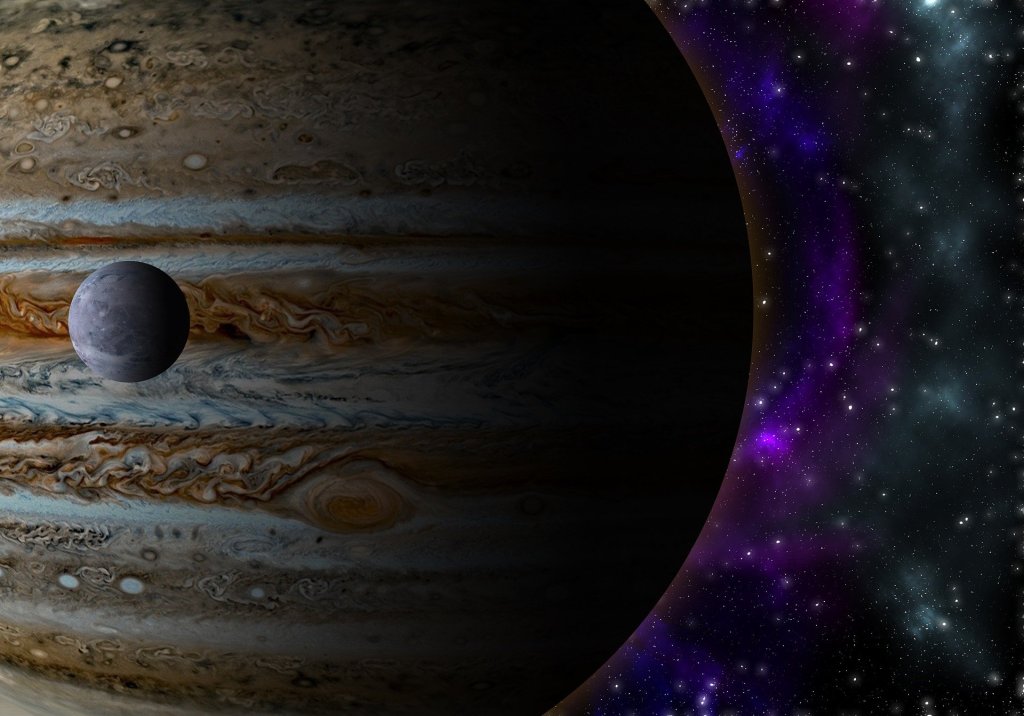
When Galileo observed Jupiter’s moons through his telescope, he realized it was possible for heavenly bodies to revolve around something besides the Earth, ripping the concept of a geocentric universe to shreds.
Replacing the concept of God or the Great Spirit with math was a bold and incredibly reckless step, making scientists no less arrogant than the Church.
Skeptics rail against prayer and any connection to things of the spirit, their mien no different than that of the bishops, cardinals, and popes who once proclaimed the Earth orbited the Sun.
The Enlightenment is largely responsible for where we are today as a planet, for good or ill. Maybe it’s time to take a step back and rediscover what was lost when telescopes and space probes replaced the wonder and beauty of the night sky. Likewise, our connection to each other as well as every plant, animal, and mineral that comprises our Earth Mother. Beyond that, hasn’t science itself told us we are all made of “star stuff,” comprised of elements produced in the stars?
Limiting “truth” to those things that can be proven scientifically denies the many magnificent things that remain just beyond our reach.
The place from which we came and where we’ll eventually return has yet to be detected by scientific instruments. One of the things I love about quantum theory is that it’s the most likely place where all these strange and wonderful unexplainable things could easily reside and thus reconcile the argument between science and religion once and for all. What exactly is the role of consciousness? Do thoughts become things? Does it interact with matter?
Isn’t that what our spirit and body do? Every single day?
Science has yet to provide an answer.
Those in tune with a higher realm are familiar with other ways of knowing.
Fortunately, the flawed concept that the only world that officially exists is the physical one didn’t reach indigenous people. Now they have the opportunity to teach us those things that they wisely retained, in spite of “modern civilization” trying to beat it out of them. After centuries of bad press, the wisdom of ancient ways and beliefs is finally being recognized, honored, and revered.
At long last a select few are embracing the untarnished wisdom of those who have always known the answers before modern man became smart enough to even know the questions. Only when this wisdom is incorporated into mankind’s heart and soul will we be able to handle today’s technology in a constructive way.
And therein lies the irony, that absorbing this spiritual knowledge and perceiving this magnificent unseen realm is called–
–enlightenment.
A somehow tragic illustration of the Circle of Life.
It’s time to retrace our steps, taking with us what we’ve gained while gathering up those things that were left behind along the way.
Picture credits: Pixabay (Ancient key: Konstantin Krasinkov; Jupiter: Randy Cardoso Garcia; Crazy Horse Memorial: Rudi Nockewel; Heavenly Light: Gerd Altmann)
a. A circle divided into four parts, each of a different color representing Earth’s four races.
b. A large circular structure oriented with the four cardinal directions defined by stones that was used anciently as a calendar.
c. A complex philosophy that promotes self-reflection, personal growth, and spiritual progression.
d. All of the above.
2. Where can you find ancient medicine wheels?
a. Lovell, Wyoming
b. South Dakota and Wyoming
c. Montana, Alberta, and Saskatchewan.
d. All of the above
3. How old is the medicine wheel?
a. 20,000 years
b. 7,000 years
c. 300 – 800 years
d. Unknown
4. What are medicine wheels used for?
a. A calendar.
b. Institute peace and understanding.
c. Personal introspection, meditation, and personal growth.
d. All of the above.
ANSWERS
1. What is the medicine wheel?
Answer: d – All of the above.
a. Many tribes define it as a circle equally divided into four sections of different colors, i.e. black, white, yellow, and red, which represent the four races of man.
b. Pictured above, the most famous physical medicine wheel and type site for such configurations in North America is at an elevation of 9,642 feet in the Bighorn Mountains in Lovell, Wyoming. It’s 75 feet in diameter and comprises a roughly circular alignment of rocks and cairns. Within the primary circle lie 28 rows of stones that extend out radially from a central cairn.
c. The medicine wheel is both an archaeo-astronomical entity with ancient roots supported by archeological evidence and a philosophical one for personal growth and spirituality intended to strengthen a community, one individual at a time.
2. Where can you find ancient medicine wheels?
Answer: d – All of the above.
Between 70 – 150 ancient medicine wheels have been identified in South Dakota, Wyoming, Montana, Alberta, and Saskatchewan.
3. How old is the Medicine Wheel?
Answer: d – Unknown
Some sources indicate that the Lovell Medicine Wheel is part of a much larger complex of archeological sites and traditional use areas that indicate 7000 years of Native American occupation. Others estimate it was built between 300 – 800 years ago.
The modern medicine wheel philosophy proclaimed by Sun Bear and Wabun Wind (see references below) originated in the early 1970s.
4. What is the Medicine Wheel used for?
Answer: d – All of the above.
a. Calendar
There are 28 “spokes” in the Medicine Wheel, which coincide with the Moon’s cycle of approximately 28 days. Some stones align with the Sun’s rising and setting on the equinoxes and solstices, marking the seasons.
At different times in the 20th Century archaeoastronomer, Jack Eddy and astronomer, Jack Robinson, independently determined that some of the stones aligned with the heliacal rise of certain stars. These served to divide the seasons into months.
The dawn or heliacal rising of a specific star pinpoints a date exactly. This is the day a star is first seen, just before its extinguished by dawn, after it has been hidden by the Sun’s light for an entire season. If you’re familiar with astronomy, you know that certain stars are only visible specific times of the years. Others never set, such as Polaris, a.k.a. the North Star, and the constellations such as Ursa Major and Minor which include the Big and Little Dipper, that surround it. They are always visible, but they rotate around Polaris and thus change positions during the year.
b. Institute peace and understanding.
The estimate of the medicine wheels’ age of between 300 – 800 years old coincides with the 15th Century AD when Native American nations were in a state of constant war with each other.
At that time a great Iroquois Chief later known as Hiawatha urged the tribes to cease killing their brothers and formed a great alliance known as the Confederation of Nations, which proclaimed Indian peoples were more alike than different, in spite of speaking different dialects. Their basic belief systems and traditions were similar.
The Medicine Wheel became part of this commonality and was decorated in special symbols, colors, and stones, to let people entering the tribe know about its tribal members. The wheel instructed individuals on their strengths and weaknesses as well as what they needed to learn and share with others. Each was expected to work on themselves, or leave the tribe. Within a few generations, people lost the concept of blame and anger which resulted in the longest peace in modern history of 150 – 200 years.
c. Personal introspection, meditation, and personal growth.
The medicine wheel has interpretations that are similar to those espoused by Western Astrology. Sun Bear (Ojibwa), whose visions revitalized the medicine wheel for this purpose, claimed, “We attribute any similarities between the Medicine Wheel and astrology or any other way of self-knowledge to the fact that all truths come from the same source.” (The Medicine Wheel: Earth Astrology, p. xix).
Similar to an astrological natal chart, a person’s birth date determines their location within the medicine wheel. That placement is associated with a special moon, power animal, healing plant, color and mineral. As a person progresses through life and experiences challenges, answers and inspiration can come from “visiting” other locations on the wheel and meditating upon the qualities they need to learn and grow.
The Navajo (Diné) have a rich tradition of starlore that maintains everything is connected. The stars above, the Earth below, and every plant, animal, and human. All are an integral part of nature and the Creator’s greater whole.
To Diné, the night sky is a sacred place. One does not speak of sacred things casually. Talk of the stars only takes place between October and February in Winter Stories, told when bears, insects, and plant life are resting. The only exception is limited discussion around the summer solstice
Starlore has been passed on through oral tradition and differs slightly from region to region. Such knowledge is mostly held my elders and medicine men. Certain parts of the sky relate to healing and societal messages, such as the importance of family. Many parts of the sky are too sacred for discussion among the uninitiated.
The Big Dipper, Casseopeia and Polaris are known to the Diné as one constellation known as Náhookǫs. It is perceived as a male warrior (Big Dipper) facing his female companion (Cassopeia) with the central fire (Polaris) between them. These circumpolar stars remain in the sky all year and represent the eternal nature of the family. During the course of the year, the Big Dipper portion changes orientation as it revolves around Polaris, its position indicative of the seasons.
Waxing Crescent Moon
The Pleiades are known as Dilyéhé, which translates as “seed-like sparkles.” Their appearance in early May on the western horizon indicates the time to plant crops. When they disappear later in June, it’s considering too late to plant and still harvest before the first frost. Orion is known as Átsé Ets’ózí, a young, strong warrior responsible for protecting his family and people.
His association with Átsé Etsoh (Scorpio) has an amusing story behind it. These two constellations are never seen in the night sky at the same time. Their story declares the wise admonition that a mother-in-law and son-in-law should not see one another in daily life. A traditional Navajo mother-in-law might even wear a bell to warn that she is in the area. How much easier would life be if that were the case in all cultures?
Predawn is an important time that’s considered the beginning of a new day, not midnight as it is for western cultures. The Navajo month begins with the first sliver of a crescent moon. The young moon, combined with the first star or constellation seen in the eastern predawn light in the days following, indicate the beginning of a new month.
More delightful information accompanied by beautiful illustrations can be found in “Sharing the Skies: Navajo Astronomy” by Nancy C. Maryboy, PhD and David Begay, PhD available from the Southwest Indian Foundation here as well as on their website www.sharingtheskies.com.
As a side note, astronomy plays an important role in “The Curse of Dead Horse Canyon: Cheyenne Spirits.” It was something Charlie and Bryan shared as teens and helps solve the mystery.
“Powwow” (Photo by Laura Hamilton courtesy Pixabay)
According to USA Today, if you live in Alabama, Alaska, Hawaii, Idaho, Maine, Michigan, Minnesota, New Mexico, North Carolina, Oklahoma, Oregon, South Dakota, Vermont and Wisconsin – plus the District of Columbia and more than 130 cities, then you observe Indigenous Peoples Day instead of (or in addition to) Columbus Day. To the others, including the U.S. government, it’s still Columbus Day.
When I went to the post office in my small Texas town to mail some books on that day it was closed. I mentioned this to a friend, but referred to it as Indigenous People Day. His response was a crack about revisionists. That got me thinking.
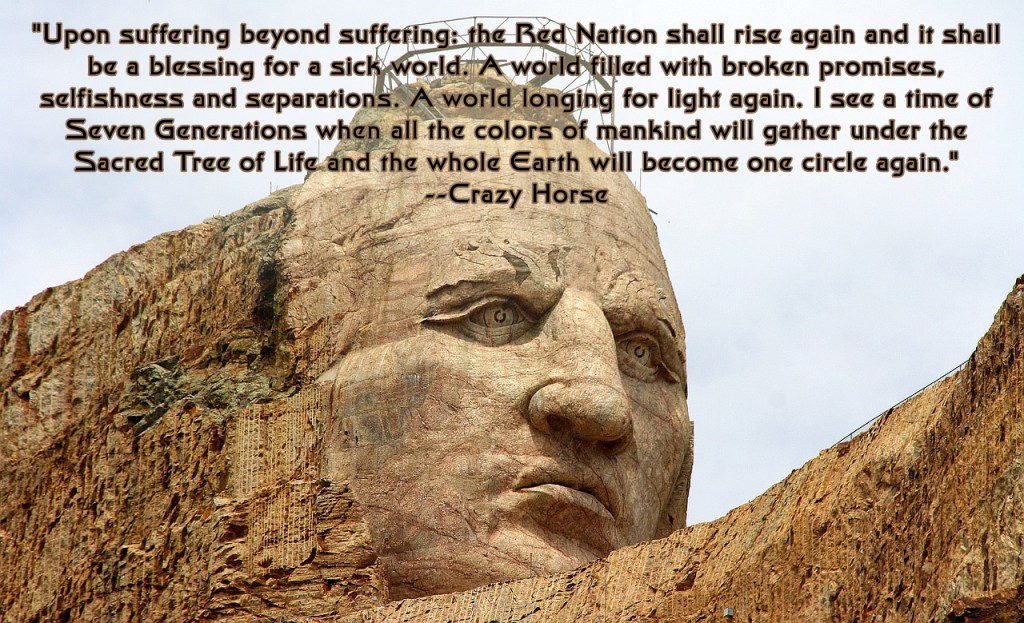
There’s been a lot of ruckus this year about discrimination, racism, and the darker side of United States history. Destroying national monuments and tearing down statues because some group finds them offensive as part of a violent protest of the past reflected in the present displays generations of anger and righteous indignation.
But it doesn’t change a thing.
Most law-abiding white people see only violence, disrespect, and lawlessness.
They don’t get the concept of generations of visceral resentment.
“Those who fail to learn from history are doomed to repeat it.”
It’s important to consider the context of those times. With 20:20 hindsight it’s easy to see how events and situations that were acceptable centuries ago are now recognized as barbaric and reeking of white supremacy.
More often than not, this is a factual statement.
By today’s standards they were wrong.
Please pause a moment to watch the following video of Marlon Brando saying it far more eloquently than I ever could.
When I was in school many decades ago history class provided biased information. Any journalist knows that a story must contain who, what, when, where, why, and how. Back then history textbooks left out a critical element:
WHY!
We were taught to regurgitate events and dates, perhaps the location, but that was it. BORING! Furthermore, we were not taught to think about what happened, much less why, but simply to accept it as fact.
Fact?
Let’s talk about facts.
History books failed to mention that Native People were here first, had no understanding of the principle of property ownership, often held higher moral and spiritual values than their conquerors, and were defending territory given to them centuries before by the Great Spirit.
We had one side, that of the victors. The Baby Boomer generation grew up thinking Native Americans were savages who were simply in the way. This was further reinforced by movies and westerns on TV to say nothing of backyard games of cowboys and Indians.
History books failed to mention that Native People were here first, had no understanding of the principle of property ownership, often held higher moral and spiritual values than their conquerors, and were defending territory given to them centuries before by the Great Spirit.
Can you begin to see how offensive a holiday celebrating Columbus’ “discovery” of American would be to First Americans after generations of oppression in the supposed “land of the free and the brave?”
At the time of westward expansion–Manifest Destiny, if you will–these atrocities reflected the prevailing attitudes of the western world. The deeds and behavior now recognized as evil were considered normal, even heroic. And sadly, still are, in some parts of the world.
Fort Robinson Massacre
In many cases, Native American cultures were more advanced back then than the United States is today. Granted some were barbaric by western standards, such as the Maya and Aztec, but it’s important to remember that we invaded their land. Most tribes in North America were far more peaceful.
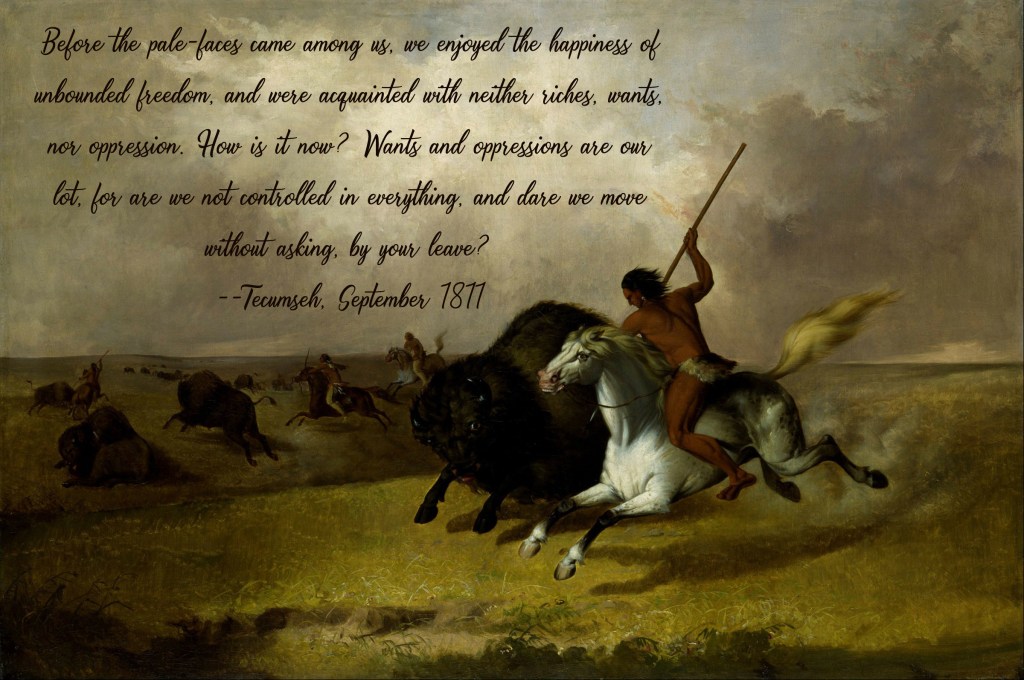
Treaties with First Americans were (and still are) broken as a matter of course. Chiefs would sign a document in good faith, often having no idea what it said, only to have what they thought was agreed upon never occur because Congress refused to ratify it. As far as they were concerned they had agreed to its terms and couldn’t understand why the white men who signed the document didn’t have the proper authority to guarantee their side of the agreement.
And it’s obvious that when indigenous people refused to give away their country, then genocide became the logical alternative.
Did you know that the Pope granted explorers permission to kill or enslave indigenous people? To the Catholic Church’s credit, this opinion eventually switched to missionary and education efforts, except the intent initially was to annihilate their culture and Anglicize them by forcing Native Americans to cut their hair and punishing them for speaking their own language. Thankfully, that has changed. Today’s curriculum includes respect for their culture and history as well as retaining their native languages. The private schools today are doing penance for the past, which is more than can be said about anyone else.
Pike’s Peak Goldrush Map
Indigenous people in the United States were murdered and those that remained driven off their land, usually to reservations in locations no one else wanted. At least until gold or silver was discovered, in which case they were driven off again. Many today live in conditions comparable to those of a Third World country.
How is this okay?
Consider this: The USA helped Europe defeat the Nazis in World War II. Our troops decimated Germany in the process, but we helped them rebuild. Adolph Hitler was a vile threat and avowed enemy. We bombed the hell out of them.
Then stepped in after the war and helped them recover! And did the same thing for Japan, who attacked our fleet at Pearl Harbor!
Seriously?
Photo by David Mark (Courtesy Pixabay)
Yet, for First Nation people, from whom we literally stole this country, we do little to nothing. Rather, we continue to steal and desecrate their sacred sites, then hover somewhere between ignoring their situation and the typical narcissistic response of placing the blame on them.
“Sorry, guys. You were in the wrong place at the wrong time.”
How would today’s Americans respond to Chinese hoards swarming their borders? How would you respond? Would you welcome them with open arms? Or defend your country by embracing your 2nd Amendment rights?
Columbus should be remembered. The sea voyage alone at that time was incredible. He led the way for Europeans to be free and escape oppression. Ironically, this came with a price that imposed far worse circumstances on the First Americans, when millions were slaughtered and brushed aside as vermin. Columbus belongs in the history books, but the effect his “discovery” had on the First Americans needs to be told and acknowledged (as well as some of his less than stellar personal deeds).
The USA has a long way to go before they quit being defensive and admit this behavior was antithetical to what was supposed to be a Christian nation espousing “liberty and justice for all.” We must balance the history books and acknowledge the darker side. It takes a big person (or country) to admit when they were wrong. It doesn’t change the past, but it could heal the present and certainly the future.
Meanwhile, the least we should do is eschew Columbus in favor of Indigenous People Day.
It’s not much, but it’s a start.
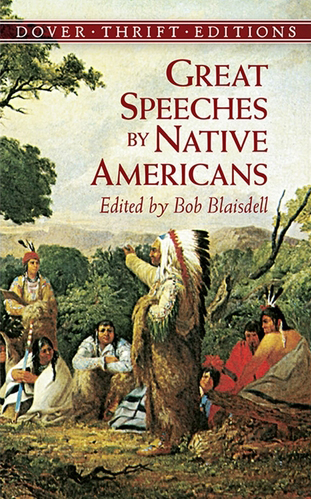
Recommended reading: “Great Speeches by Native Americans” edited by Bob Blaisdell. I suggest you buy it here, from the Southwest Indian Foundation.
Excerpt from “The Curse of Dead Horse Canyon: Cheyenne Spirits.”
“The Enlightenment” era did more to stop people from being enlightened than achieve it. True, when Galileo et al succeeded in disproving the solar system is geocentric, that was a good thing. Some things deserve scientific scrutiny. However, even to this day, hundreds of years later, there are phenomena many have experienced to be true while those blinded by science debunk them.
That attitude has done more to destroy faith and spirituality than Darwin’s Theory of Evolution. It took decades before technology advanced enough to prove Einstein’s Theory of Relativity. Just because it can’t be proven in a lab doesn’t mean it’s not true. Having an open mind is the most scientific thing you can do. My ongoing criticism of skeptics is that they don’t have to prove anything. I think they should have the same standards imposed on them as they expect of others.
Don’t believe astrology works? Prove it.
Don’t believe in telepathy? Prove it.
Don’t believe in past lives? Prove it.
Space Shuttle Columbia Recovery Team, Hemphill, Texas, Spring 2003
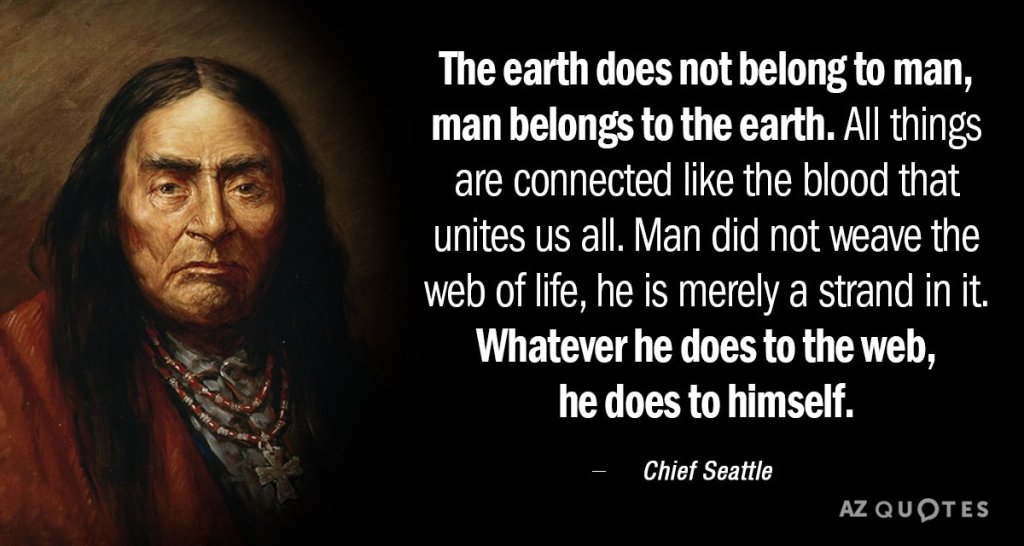
Indigenous people as a rule believe in animism, i.e. that everything has an innate soul. We are all brothers and sisters. Everything and everyone is connected. We all came from the Earth, are part of her, and will return there. Having such beliefs, they’re in tune with their surroundings. Situational awareness at its best. Like the Navajo shown in the picture on the left. We grid-searched the fields outside of Hemphill, Texas together, picking up debris from the space shuttle, Columbia. Men and women who could spot a copperhead sunning on a rock from fifty yards.
Do you have a question? Pay attention. “Ask and ye shall receive” or perhaps, “The truth is out there” are valid principles.
One way Indigenous people find answers is through Spirit Animals. This goes beyond identifying with one particular animal, such as a wolf, lion, bear, mountain lion, etc. Admiring and assimilating the qualities of any animal you encounter can teach you something about
Available at Amazon
yourself or your situation.
How do you know what they are teaching you? Often it’s intuitive, because you’re already looking for an answer. Charlie Littlewolf, the main character in “The Curse of Dead Horse Canyon: Cheyenne Spirits” knows this. Coupled with prayer, fasting, and traditional rituals his grandfather taught him, he’ll find answers.
If you prefer more specific help, an excellent book on the subject is “Spirits of the Earth: A Guide to Native American Nature Symbols, Stories, and Ceremonies.”
The stories in particular are delightfully reminiscent of Aesop’s Fables and most are suitable to read to young children. They explain the traditional meaning of various animals, indigenous archetypes, if you will.
But first you have to pay attention.
Excerpt from “The Curse of Dead Horse Canyon: Cheyenne Spirits.”
Since expanding my awareness to this hidden realm I have encountered numerous valuable insights, from birds in particular. A small flock of sparrows and a single male cardinal at my feeder. Two bald eagles soaring directly above my house. A raven squawking from the top of a phone pole. Hundreds of white pelicans circling above my house as they arrive at their winter home.
What are the odds? Those birds are not out there whenever I happen to look up. We have buzzards galore, but that is not what I have seen when I was pondering an issue. Buzzards, too, have a message, but when they’re out there most the time, there’s far less meaning unless they do something unusual that catches your attention.
How do these animals know when to appear? Pure coincidence? Or, as part of this web of life, are they drawn to us by our asking to provide an answer only they can deliver?
Many would declare such beliefs in the realm of superstition. Have you ever noticed that superstition has the same root as supernatural? The world of the unseen?
There is so much that fails to meet the untrained eye.
Excerpt from “The Curse of Dead Horse Canyon: Cheyenne Spirits.”
Excerpt from “The Curse of Dead Horse Canyon: Cheyenne Spirits.”
As a physicist who’s also a professional astrologer, clearly I’m a bit of an enigma…
A bit?
Probably more like a humongous anomaly.
However, as a novelist, my affinity for the unknown and all things weird and wonderful comes in handy. All my stories have a touch of technology as well as the paranormal and supernatural. Of course in this book, my coauthor, Pete Risingsun, provided plenty of support for Charlie’s experiences as he returns to his culture with its intimate connection to the Earth and its Creator.
I didn’t plan to have a character in the story who was an astrologer. However, rarely do I actually “create” a character. They just show up. And that’s how Patrice came on stage.
While Patrice Renard is a fictitious character, the astrology represented in this story is real. I swear I am not making this up. No one is more astounded than I am. The birth dates of the characters were made up and used with places close to the imaginary ones in the story. How the astrological influences on fictitious characters for the time frame chosen for the story could tie in perfectly with the plot is beyond my comprehension. To be honest, it actually blew my mind.
For those of you who might be astrologers or interested in it, here is the hypothetical Birth Chart for Bryan Reynolds, one of the story’s characters.
In fact, at times when I wasn’t sure what would happen next, all I had to do was refer to the astrological implications of that moment to figure it out. Being a professional astrologer, this was easily done. Ironically, this is one of the few times when my dual career with that of an author has been in my favor.
Many times I have been ridiculed and even ostracized as an author because of the prevailing prejudices in modern society against this ancient art. The most avid debunkers tend to hail from religious and scientific circles.
I live in the “Bible Belt.”
Do the math.
Many years ago as a physicist I set out to disprove it myself. Pardon the cliché, but it’s not exactly rocket science how that turned out.
You astrologers out there will recognize this as a “biwheel.” It comprises Bryan’s chart with the transits for when the accident occurred, which is what Patrice is delineating in the first graphic.
If you think astrology is weird, study some of the speculations associated with quantum theory and entanglement which, to any rational person, are even farther out than us having a relationship with the stars. Even astronomers are the first to admit we’re all made out of “star stuff.” As a physicist I personally think the concept of parallel dimensions where we exist in all of them is ridiculous, regardless of what the math may say. Seriously! I’ll admit to random memories of past lives, but simultaneous existence in more than one dimension? One is enough to handle, thank you very much.
Another irony in this technological age is the renewed interest in energy healing and various other ancient techniques long practiced by medicine men and healers among indigenous people worldwide. The Great Spirit is once again revealing them to those with an honest heart and open mind. And there’s more evidence for that, albeit anecdotal, than most of that supposedly scientific hocus-pocus.
Also of interest in the context of this story is the fact that Indigenous Americans have a form of astrology associated with the Medicine Wheel. While it doesn’t employ the predictive side like Western, Traditional, or Vedic astrology, it delves even deeper into the psyche and seeking inspiration as needed.
Rather than the familiar zodiac signs such as Aries, Taurus, Gemini, etc., the Medicine Wheel includes animal, plant, and mineral totems along with various other analogies, all closely tied to the seasons and nature. The moons associated with the Medicine Wheel line up exactly with those that define the zodiac signs of western astrology, their meaning essentially the same.
Coincidence?
Not in my world.
If you’re interested in reading the story you can get a copy from Amazon here. I’d love to hear what you think.
A. The currency exchange rate between the U.S. and Columbia.
B. Trading Columbian coffee for other commodities.
C. The transference of plants, animals, and diseases among the Americas, Eurasia, and Africa unleashed by Christopher Columbus’s geographical miscalculation.
D. The expressway bridge across the Columbia River that connects Portland, Oregon with Vancouver, Washington.
2. Europeans brought which of the following the New World?
A. White rice, wheat, barley, oats, and rye.
B. Turnips, onions, cabbage, and lettuce.
C. Cutting for fruit trees such as peaches, pears, and apples.
D. All of the above.
3. Indigenous peoples introduced which of the following to European immigrants?
A. Corn, pineapples, and sweet potatoes.
B. Peanuts, tomatoes, cocoa, and papaya.
C. Squash, pumpkins, white potatoes, and avocados.
D. All of the above.
4. Which of the following animals were brought to the Americas by Europeans?
A. Donkeys, goats, and sheep.
B. Chickens and horses.
C. Pigs & cattle.
D. A & C
E. All of the above.
5. Some of the animals brought to American had a negative effect. (TRUE/FALSE)
6. The Europeans also brought birds such as starlings, insects, black rats, and honeybees. (TRUE/FALSE)
7. Which of the following diseases were introduced to the Americas by European explorers?
A. Small pox and measles.
B. Malaria, cholera, and yellow fever.
C. Cholera, thyphus, and bubonic plague.
D. All of the above.
8. Exportation of which of the following plants indigenous to America made colonization viable and profitable due to its popularity in Europe?
A. Potatoes
B. Tobacco
C. Corn
D. Cocoa
ANSWERS
1. What is/was the “Columbian exchange?”
ANSWER C: The transference of plants, animals, and diseases among the Americas, Eurasia, and Africa unleashed by Christopher Columbus’s geographical miscalculation.
2. Europeans brought which of the following the New World?
ANSWER D: All of the above
These items are included in American diets without thought to the fact they were no indigenous to this continent–early settlers brought them here. They brought that with which they were familiar to cultivate and maintain their previous food culture.
3. Indigenous peoples introduced which of the following to European immigrants?
ANSWER D: All of the above
Can you even imagine Italian food without tomatoes? The Swiss without cocoa? The Irish without potatoes? Halloween without pumpkins? Baseball without peanuts? These staples in European and modern American culture all originated on North American soil with Indigenous people.
Potatoes are the 5th most important crop worldwide, surpassed in harvest volume only by its fellow American veggie, corn or maize, then sugarcane, wheat, and rice.
4. Which of the following animals were brought to the Americas by Europeans?
ANSWER E: All of the above
Can you even imagine the Navajo (Diné) without sheep? The Native Americans of the Great Plains–the Lakota (Sioux), Comanche, Cheyenne, and Apache–without horses? The equestrian cultures of the Plains were, in fact, the direct result of the Columbian exchange.
5. Some animals brought to American had a negative effect. (TRUE/FALSE)
ANSWER TRUE: Hernando de Soto brought 13 pigs with him in 1539. Three years later, that number had grown to about 700, which was destabilizing and often destructive to native crops. Not only did they eat some of them, but trampled the rest.
6. The Europeans also brought birds such as starlings, insects, black rats, and honeybees. (TRUE/FALSE)
ANSWER TRUE
Bees may have been intentional, but it’s possible those others were stowaways of some sort on European ships. They certainly could have kept their starlings and black rats to say nothing of non-honey producing insects.
7. Which of the following diseases were introduced to the Americas by European explorers?
ANSWER D: All of the above.
Each of these diseases triggered what is known as a virgin soil epidemic where diseases were unleashed that had never been seen before and to which the Native peoples had no immunity. When smallpox was introduced to the mainland in 1519 it spread through the Mexica (the Mesoamerican people commonly referred to as Aztecs) quickly with devastating consequences.
8. Exportation of which of the following plants indigenous to America made colonization viable and profitable due to its popularity in Europe?
ANSWER B: Tobacco
SOURCE: “Native Peoples of North America”, The Great Courses, presented by Professor Daniel M. Cobb, University of North Carolina at Chapel Hill
1. Kepler, Copernicus, and Galileo were all astrologers first and astronomers second. They studied the planets to obtain more accurate data regarding planetary movement to use in their astrological readings.
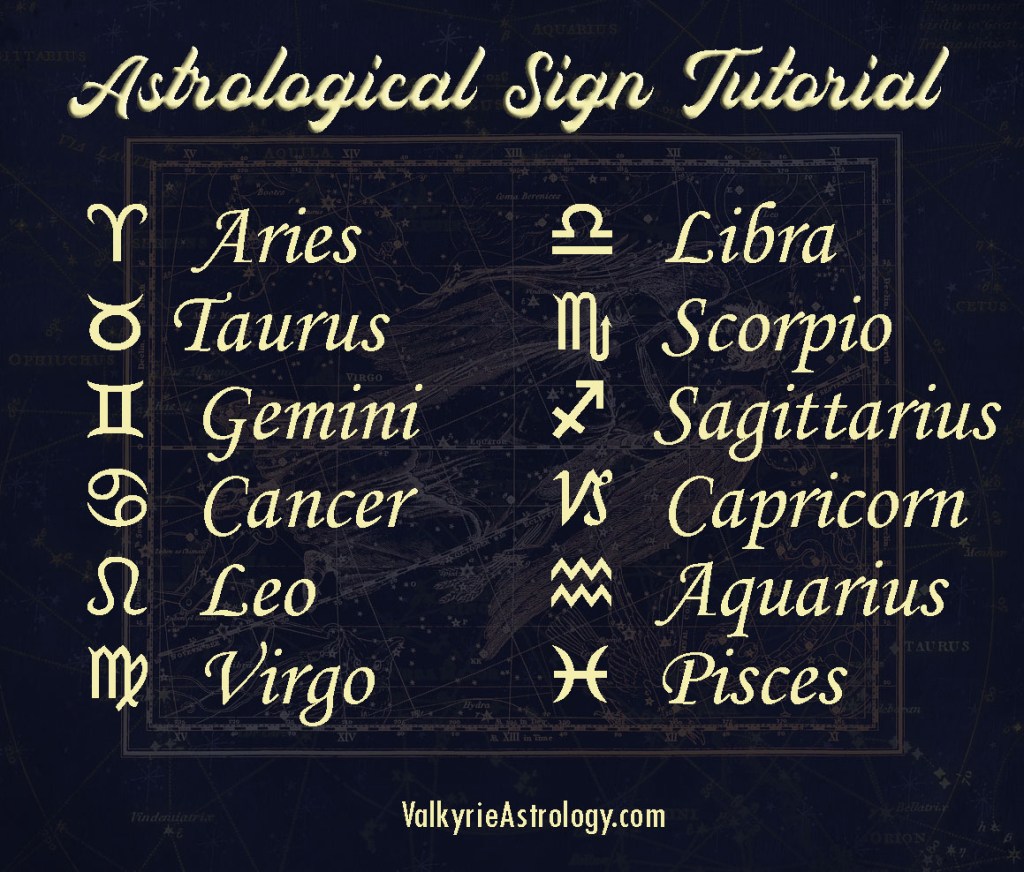
2. Your sun sign does not necessarily reflect the constellation where the Sun was located when you were born. The Tropical Zodiac is aligned with the Earth, not the stars.
3. The equinoxes and solstices reflect the sun’s ingress into what is known in astrology as a Cardinal Sign, or turning point.
Hemisphere
Season
Event
Zodiac Sign Ingress
Northern
Spring
Vernal Equinox
Aries
Southern
Spring
Vernal Equinox
Libra
Northern
Summer
Summer Solstice
Cancer
Southern
Summer
Summer Solstice
Capricorn
Northern
Fall
Autumnal Equinox
Libra
Southern
Fall
Autumnal Equinox
Aries
Northern
Winter
Winter Solstice
Capricorn
Southern
Winter
Winter Solstice
Cancer
Seasons Association with the Zodiac
4. The markings on a globe known as the Tropic of Cancer and Tropic of Capricorn are where the Sun is directly overhead for the respective solstices. The Sun is directly overhead on the equator for the equinoxes.
Earth’s alignment with the Sun creates the seasons.
5. Many Native Americans have sacred sites known as Medicine Wheels where they go to pray and meditate. It has twelve divisions based on the lunar cycle with meanings that line up with those of the Tropical Zodiac used in western astrology.
6. There are several different zodiacs. Western astrologers use the Tropical zodiac described above. Vedic astrologers in India use a sidereal zodiac based on the constellations which is approximately 23 degrees different from the Tropical version. Some use a whole sky zodiac that uses all constellations.
7. Certain cultures interpret the meaning of constellations differently depending on the season.
8. Authority figures from the emperors of the Roman Empire to modern day Popes know astrology works but don’t think their subjects are to be trusted with what it can reveal because they want to maintain control.
9. The Magi’s knowledge of astrology is what led them to the Christ child.
10. Total solar eclipses carry strong astrological implications along their path of visibility. When an eclipse path crosses a country (like the one on August 21, 2017) it portends a country divided.
11. Your sun sign is only one small part of who you are. If you don’t feel as if you “fit” the description it can be explained by the placement of the Moon, ascendant (sign on the eastern horizon when you were born) as well as the planets. Another possibility is a cluster of planets (known as a stellium) in another sign.
12. Mercury and Venus are never more than two zodiac signs away from the Sun. Astrology is geocentric with those two planets between Earth and the Sun, limiting how they are viewed.
Conditions on many Native American reservations resemble Third World countries. Unemployment is high due to their remote location. Educational opportunities are limited. Some live in shacks without electricity or running water. While many have been able to overcome these conditions, there are still too many in need. The COVID19 pandemic has been especially hard on those who struggle to survive in normal times.
If you would like to help, here are some charitable organizations to consider. Some provide food, water, shelter, and other necessities. Others provide quality education for youth from Kindergarten through high school, or in some cases, college tuition assistance. Work to preserve their culture can always use donors as well. Check them out, then follow your heart.
CHARITABLE ORGANIZATIONS THAT ASSIST INDIGENOUS AMERICANS
1. Which of the following benefits did the United States derive from mining activities in the American West?
A. Presented economic opportunities of “striking gold” or other valuable minerals to anyone willing to risk confronting the frontier.
B. Facilitated laws to maintain order as well as to define and document property rights.
C. Influenced the location of state lines along with the vitality and location of cities.
D. Created jobs in all sectors.
E. All of the above.
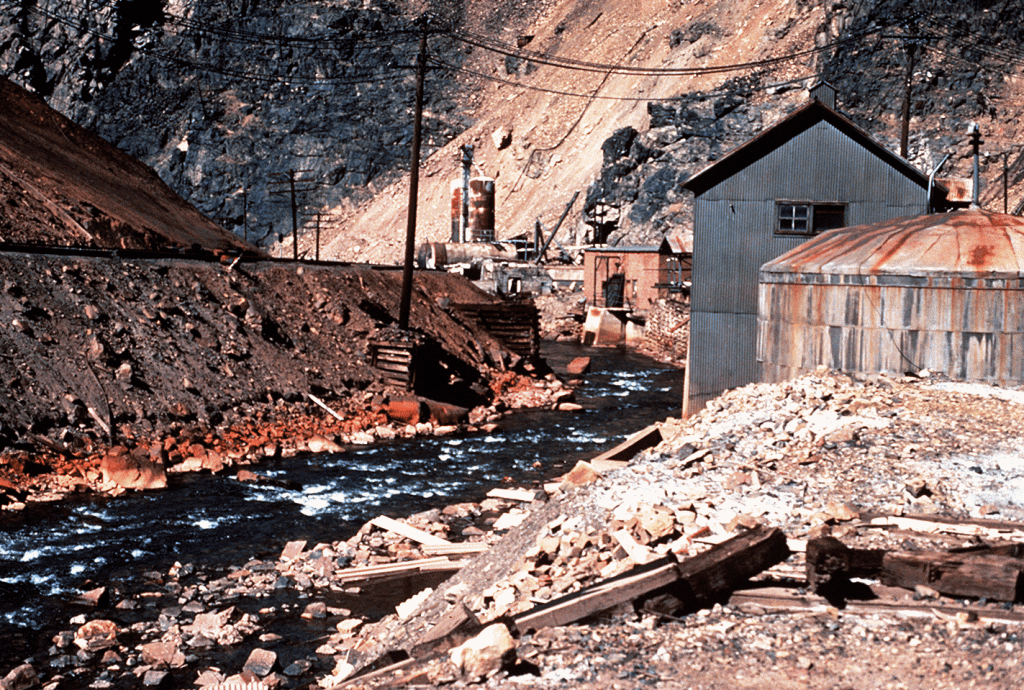
U.S. Geological Survey. Eagle River running through mining area at Gilman zinc mine on Battle Mountain, between Redcliff and Minturn. Eagle County, Colorado. ca. 1980. (Photo courtesy USGS)
2. Which of the following were negative outcomes?
A. Depleted and abandoned mines left scarred terrain no longer suitable for other uses.
B. Abandoned mines left safety and environmental hazards behind such as unprotected mine shafts and toxic tailings.
C. Environmental impact to streams and aquifers from acid mine drainage (AMD)
D. Native Americans were driven from their ancestral homeland to reservations on land no one else wanted.
E. 19th Century miners escaped all responsibility for damage they caused.
F. All of the above.
3. Which of the following chemicals constitute AMD?
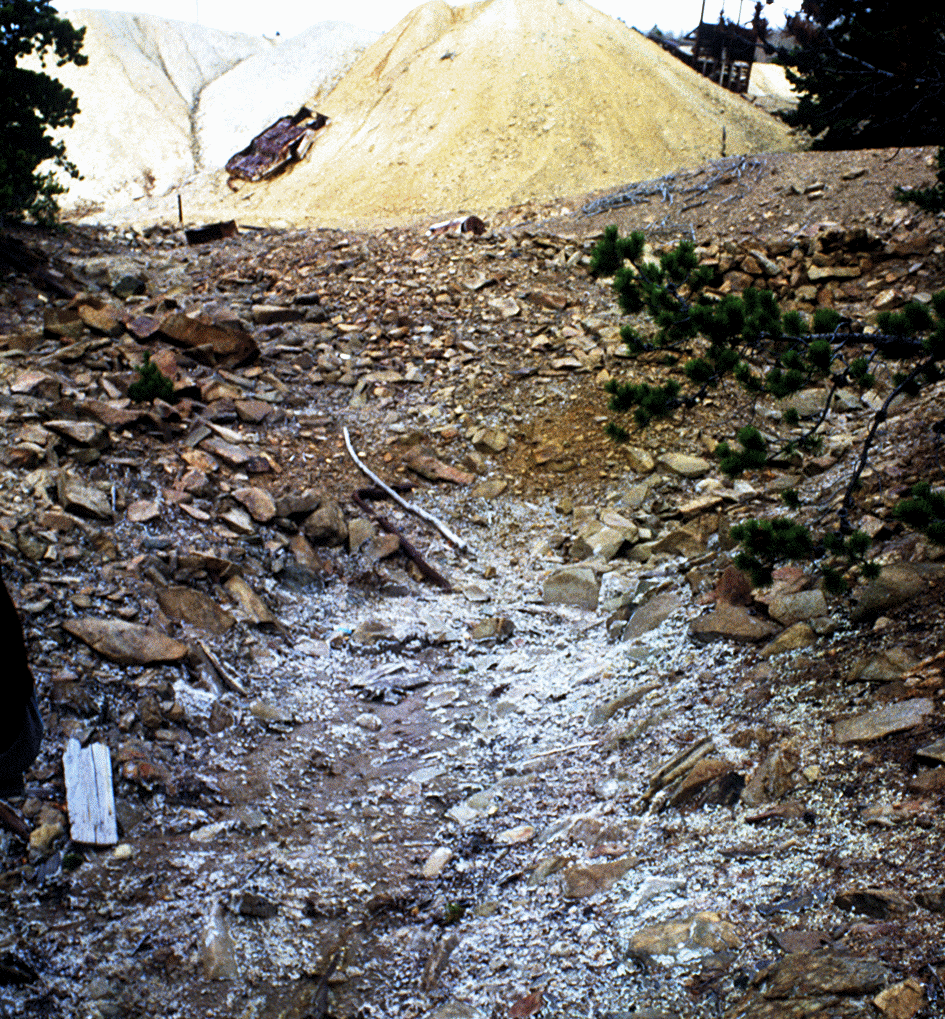
Tailings produced from a gold/silver mine on Quartz Hill, southwest of Central City. Gilpin County, Colorado. October 1992. (Photo courtesy USGS)
A. Zinc, arsenic, and lead
B. Copper, selenium and cadmium
C. Iron, aluminum, and silver
D. A & B
E. All the above.
4. How many abandoned mines are in the west?
A. 8,000 – 10,000
B. 12,000 – 30,000
C. 50,000 – 100,000
D. Over 100,000
5. How much does abandoned mine clean-up cost per site?
Different view of Eagle River running through mining area at Gilman zinc mine on Battle Mountain, between Redcliff and Minturn. Eagle County, Colorado. ca. 1980. (Photo courtesy USGS)
A. $5 million – $10 million
B. $15 million – $20 million
C. $30 million – $40 million
D. As much as $583 million
6. How many miles of Western United States waterways are contaminated by acid mine drainage from abandoned mines?
A. 1,500 miles (5%)
B. 3,000 miles (10%)
C. 12,000 miles (40%)
D. 20,000 miles (67%)
7. Who is responsible for cleaning up old mines?
A. Property owners
B. EPA
C. State environmental agency
D. Volunteers
E. It depends
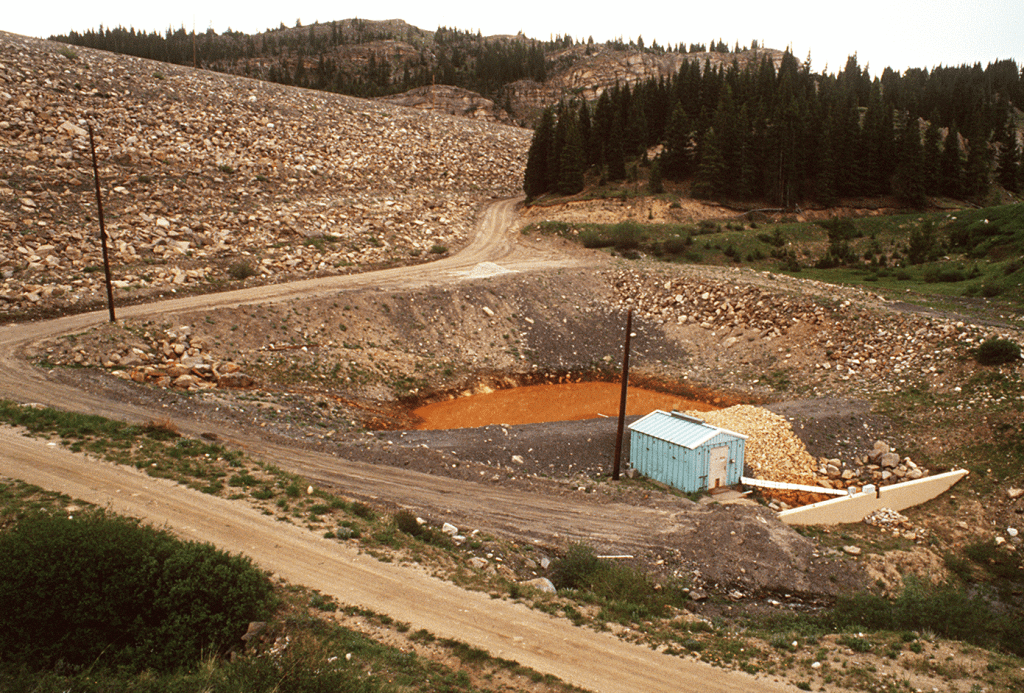
Tailings produced from the Climax porphyry molybdenum deposit. Northwest part of the Climax quad. Lake County, Colorado. July 1992(Photo courtesy USGS)
8. Acid mine drainage is only caused by mining. (TRUE/FALSE)
9. Which of these constitutes how AMD pollutes the environment?
A. Contaminated water drains out mine entrances and tunnels.
B. Rainfall, stream water, and snow melt come into contact with discarded ore and tailings, then enter stream and aquifers.
C. Acidity and metals are released into the environment when oxygen and water react with metal sulfide minerals.
D. All of the above.
Silver Lake Mine and Arrastra Basin; near Silverton. San Juan Mountains. San Juan County, Colorado. August 21, 1980. (Photo courtesy USGS)
10. Which group is most affected by AMD?
A. Humans
B. Aquatic life (fish, frogs, salamanders, etc.)
C. Wildlife
D. All of the above
11. The Clean Water Act helped mitigate the AMD situation. (TRUE/FALSE)
ANSWERS
1. ANSWER E: All of the above.
The California Gold Rush of 1849 inspired thousands to make the difficult passage across the American interior with major rushes in 1859 to the areas that would become Colorado and Nevada. Mining settlements grew into towns and then cities that offered employment in a variety of manufacturing and service industries.
Sneffels mining camp. San Juan Mountains. Ouray County, Colorado. July 16, 1972. (Photo courtesy USGS)
2. ANSWER F: All of the above
The physical and environment damage of abandoned mines goes without saying. The geographical complexities and limitations of treaties related to Indian territory resulted in numerous conflicts. Thus, the U.S. government took possession of many areas of the Northwest, the Rockies, the Great Basin, and the Southwest which ultimately sent native populations to reservations.
3. ANSWER D: Both A & B
Acid mine drainage is water that typically carries unusually high concentrations of dissolved metals such as zinc, arsenic, cadmium, lead, copper, and selenium.
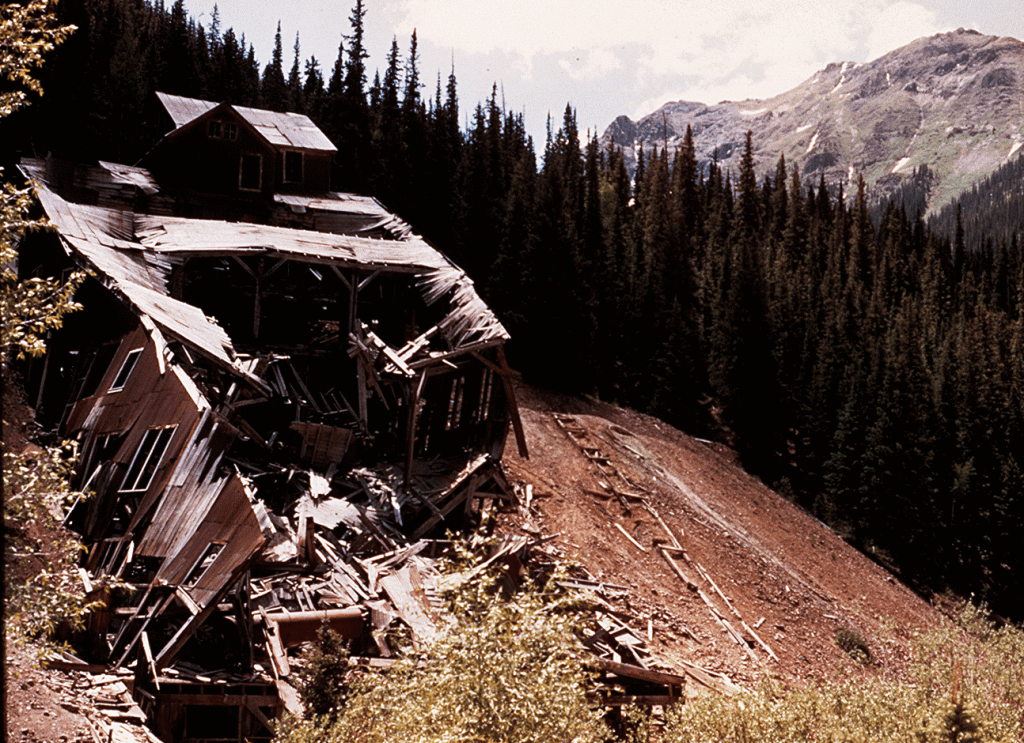
Collapsing mill at old mining town of Middleton. San Juan Mountains. San Juan County, Colorado. June 30, 1972. (Photo courtesy USGS)
4. ANSWER D: Over 100,000
As of May 2019, the Forest Service, BLM, the Park Service, and EPA together identified in their databases at least 140,652 abandoned hardrock mine features—of which over 60 percent are known to pose or may pose physical safety or environmental hazards. Officials from 13 western states also identified from their state databases about 246,000 abandoned hardrock mine features on federal and nonfederal lands within their states, including about 126,000 features that pose physical safety or environmental hazards.
North fork of Clear Creek 5 km down stream from Blackhawk. Reddish color in the stream bed is due to precipitation of iron oxyhydroxides as pH increases. Gilpin County, Colorado, October 1992. (Photo courtesy USGS)
While there may be some overlap between Federal and State databases, officials estimated that there likely are hundreds of thousands of additional abandoned hardrock mine features that they have not yet captured in their databases. Of the 140,652 total features, about 89,000 features are known to pose or may pose a physical safety or environmental hazard, according to information in the federal agencies’ databases. Specifically, agencies confirmed 7,802 features pose a hazard, of which 6,439 pose a physical safety hazard and 1,363 pose an environmental hazard; and identified 81,541 features with an unconfirmed hazard (whereby agency staff had not assessed current conditions in person to confirm the hazard), of which 60,279 may pose a physical safety hazard and 21,262 may pose an environmental hazard.
5. ANSWER D: As much as $583 million
According to EPA documents, sites with environmental hazards can cost hundreds of millions of dollars and take many years to address. For example, as of July 2019, the actual costs at the 25 most expensive mine and mineral processing sites ranged from $50 million to $583 million per site, and EPA had been working on some of the sites for over 20 years. Furthermore, agencies monitor remedies after completion to help ensure that they are achieving the desired results.
6. ANSWER C: 12,000 miles (40%)
The U.S. Bureau of Mines estimated that 12,000 miles of the waterways of the Western United States, or about 40 percent, are contaminated by metals from acid mine drainage, mostly by abandoned mines, while 180,000 acres of lakes and reservoirs are tainted by abandoned mine runoff.
7. ANSWER E: It depends.
Theoretically, the owner of a polluting mine is responsible for the water discharged from it. But regulatory agencies find it impractical to take legal action against the vast majority of private owners. Most unwittingly inherited the problem, and could not begin to pay for remediation. They are, by virtue of having little or no financial means, “judgment-proof ” should someone sue them for environmental violations. Under current legal circumstances these private owners are often inclined to leave their mines alone. Old mines belonging to such private individuals must simply wait for some third party to clean them up.
Agencies, especially those responsible for federal land, use some of their budgets for remediation. These include the National park Service, Office of Surface Mining Reclamation and Enforcement, Forest Surface, Bureau of Land Management and the Environment Protection Agency. (See below)
Federal Expenditures to Address Abandoned Hardrock Mines by Agency, Fiscal Years 2008 through 2017, in Nominal Dollars
8. ANSWER: False
Undisturbed nature can and does generate acidic and metal-laden water without the intervention of miners. In the Animas River watershed in Colorado, much of the metal contamination in the water has been attributed to natural oxidation, or weathering, of the metal sulfide deposits. However, this “background” weathering produces for the most part only aluminum and iron, the other metals having long since leached out over the eons of geological time.
9. ANSWER D: All of the above.
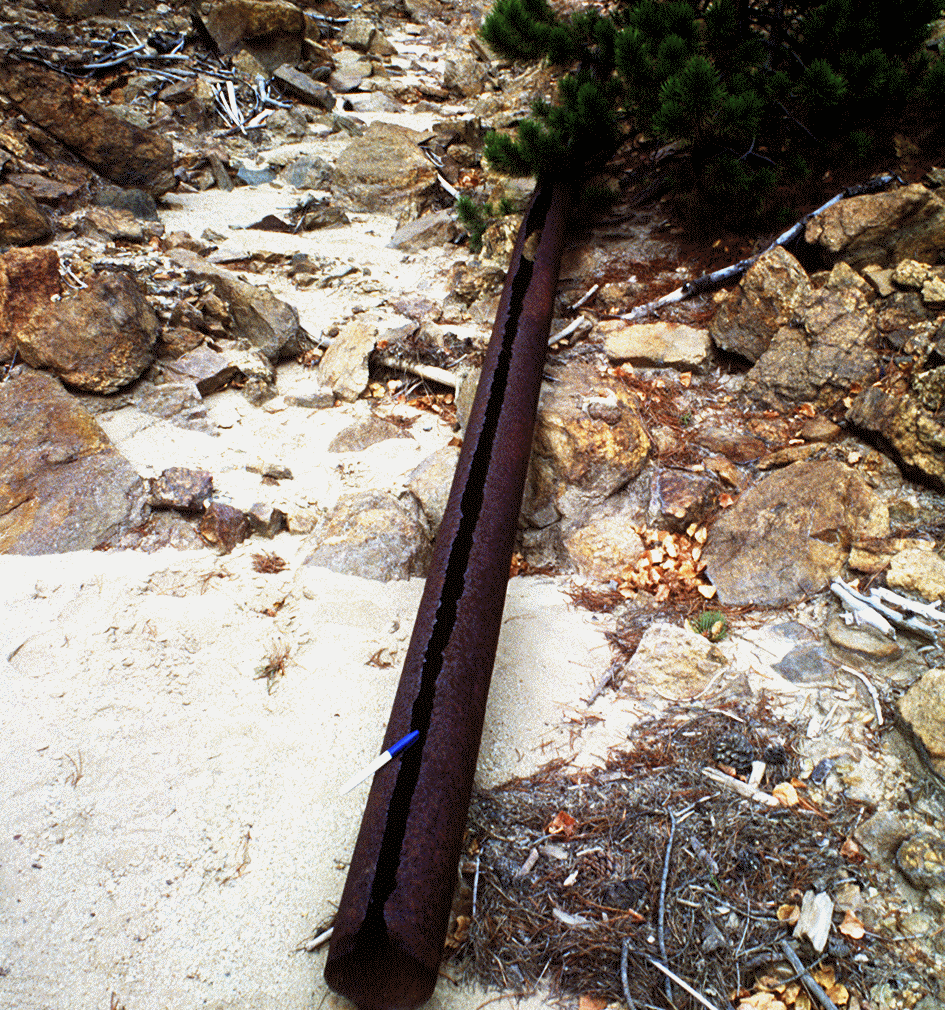
Corroded 6 inch steel pipe caused by acid mine drainage from gold/silver mine on Quartz Hill, southwest of Central City. Gilpin County, Colorado. October 1992. (Photo courtesy USGS)
10. ANSWER B: Aquatic life
While all are affected in one way or another, those damaged the most are aquatic life.
Only some of the dissolved metals in acid mine drainage—cadmium and lead, for example—are potentially harmful to humans. Fish, however, are much more susceptible to the toxicity of these metals. Fish have to live in the water; we only drink about two liters of water a day.
The soluble metals, however, continually pass through and are absorbed by fishes’ gills and gastrointestinal tracts. Add in the metals absorbed from the insects they eat, and it’s not hard to see how fish in AMD-tainted water are highly vulnerable to these lethal poisons. The EPA says that we humans can tolerate copper in our drinking water at concentrations up to 5,000 micrograms per liter of water, but the fish in an alpine stream can tolerate only 65 micrograms per liter.
Severely polluted streams affect all wildlife when it becomes an unsuitable drinking source and can eventually kill vegetation along its banks.
11. ANSWER: False
Surprisingly, the Clean Water Act of 1971 enacted by Congress presents an obstacle for the treatment of acid mine drainage. To clean up polluted water issuing from a mine, you must obtain a Clean Water Act discharge permit (a National Pollutant Discharge Elimination System permit or NPDES). The permit requires that the treatment you undertake will meet Clean Water Act water quality standards, which are very stringent, and that whoever attempts the cleanup will remain responsible for the source of pollution in perpetuity (that could be you!). When a third party—a nonprofit organization, community group, government agency, or corporation—attempts to clean up acid mine drainage coming from an abandoned mine, that third party legally assumes liability for the mine’s discharge.
Another risk to such “Good Samaritans” can come from citizen groups, especially environmentalists, who oppose any laws which allow an exception to or variance from the standards and provisions of the Clean Water Act. Under the law, citizens are allowed to bring a suit to force a mine operator to meet the strict water quality standards laid down by the Clean Water Act. Clearly, the high cost of penalties, remediation of the site, and long-term maintenance are formidable obstacles to any party interested in acid mine remediation.
SOURCES:
1. “Cleaning Up Abandoned Hardrock Mines in the West: Prospecting for a Better Future,” by Patricia Nelson Limerick, Joseph N. Ryan, Timothy R. Brown, and T. Allan Comp; Report from the Center #7, published by the Center of the American West, University of Colorado at Boulder; 2006. http://www.centerwest.org
2. GAO-20-238, Report to the Ranking Member, Subcommittee on Interior, Environment, and Related Agencies, Committee on Appropriations, U.S. Senate; “Abandoned Hard Rock Mines: Information on Number of Mines, Expenditures, and Factors That Limit Efforts to Address Hazards;” March 2020.


















 The Curse of Dead Horse Canyon