Government corruption ignites a 19th Century Cheyenne curse.
Author: Marcha's Two-Cents Worth
I'm a science fiction author of the Star Trails Tetralogy, retired after two decades working at NASA, defected from my physics training to become a professional astrologer, and various other acts of rebellion. More recently, I've teamed with Pete Risingsun in writing "The Curse of Dead Horse Canyon: Cheyenne Spirits" which was released in July 2020 with more to come.
1. Kepler, Copernicus, and Galileo were all astrologers first and astronomers second. They studied the planets to obtain more accurate data regarding planetary movement to use in their astrological readings.
2. Your sun sign does not necessarily reflect the constellation where the Sun was located when you were born. The Tropical Zodiac is aligned with the Earth, not the stars.
3. The equinoxes and solstices reflect the sun’s ingress into what is known in astrology as a Cardinal Sign, or turning point.
Hemisphere
Season
Event
Zodiac Sign Ingress
Northern
Spring
Vernal Equinox
Aries
Southern
Spring
Vernal Equinox
Libra
Northern
Summer
Summer Solstice
Cancer
Southern
Summer
Summer Solstice
Capricorn
Northern
Fall
Autumnal Equinox
Libra
Southern
Fall
Autumnal Equinox
Aries
Northern
Winter
Winter Solstice
Capricorn
Southern
Winter
Winter Solstice
Cancer
Seasons Association with the Zodiac
4. The markings on a globe known as the Tropic of Cancer and Tropic of Capricorn are where the Sun is directly overhead for the respective solstices. The Sun is directly overhead on the equator for the equinoxes.
Earth’s alignment with the Sun creates the seasons.
5. Many Native Americans have sacred sites known as Medicine Wheels where they go to pray and meditate. It has twelve divisions based on the lunar cycle with meanings that line up with those of the Tropical Zodiac used in western astrology.
6. There are several different zodiacs. Western astrologers use the Tropical zodiac described above. Vedic astrologers in India use a sidereal zodiac based on the constellations which is approximately 23 degrees different from the Tropical version. Some use a whole sky zodiac that uses all constellations.
7. Certain cultures interpret the meaning of constellations differently depending on the season.
8. Authority figures from the emperors of the Roman Empire to modern day Popes know astrology works but don’t think their subjects are to be trusted with what it can reveal because they want to maintain control.
9. The Magi’s knowledge of astrology is what led them to the Christ child.
10. Total solar eclipses carry strong astrological implications along their path of visibility. When an eclipse path crosses a country (like the one on August 21, 2017) it portends a country divided.
11. Your sun sign is only one small part of who you are. If you don’t feel as if you “fit” the description it can be explained by the placement of the Moon, ascendant (sign on the eastern horizon when you were born) as well as the planets. Another possibility is a cluster of planets (known as a stellium) in another sign.
12. Mercury and Venus are never more than two zodiac signs away from the Sun. Astrology is geocentric with those two planets between Earth and the Sun, limiting how they are viewed.
Conditions on many Native American reservations resemble Third World countries. Unemployment is high due to their remote location. Educational opportunities are limited. Some live in shacks without electricity or running water. While many have been able to overcome these conditions, there are still too many in need. The COVID19 pandemic has been especially hard on those who struggle to survive in normal times.
If you would like to help, here are some charitable organizations to consider. Some provide food, water, shelter, and other necessities. Others provide quality education for youth from Kindergarten through high school, or in some cases, college tuition assistance. Work to preserve their culture can always use donors as well. Check them out, then follow your heart.
CHARITABLE ORGANIZATIONS THAT ASSIST INDIGENOUS AMERICANS
1. Which of the following benefits did the United States derive from mining activities in the American West?
A. Presented economic opportunities of “striking gold” or other valuable minerals to anyone willing to risk confronting the frontier.
B. Facilitated laws to maintain order as well as to define and document property rights.
C. Influenced the location of state lines along with the vitality and location of cities.
D. Created jobs in all sectors.
E. All of the above.
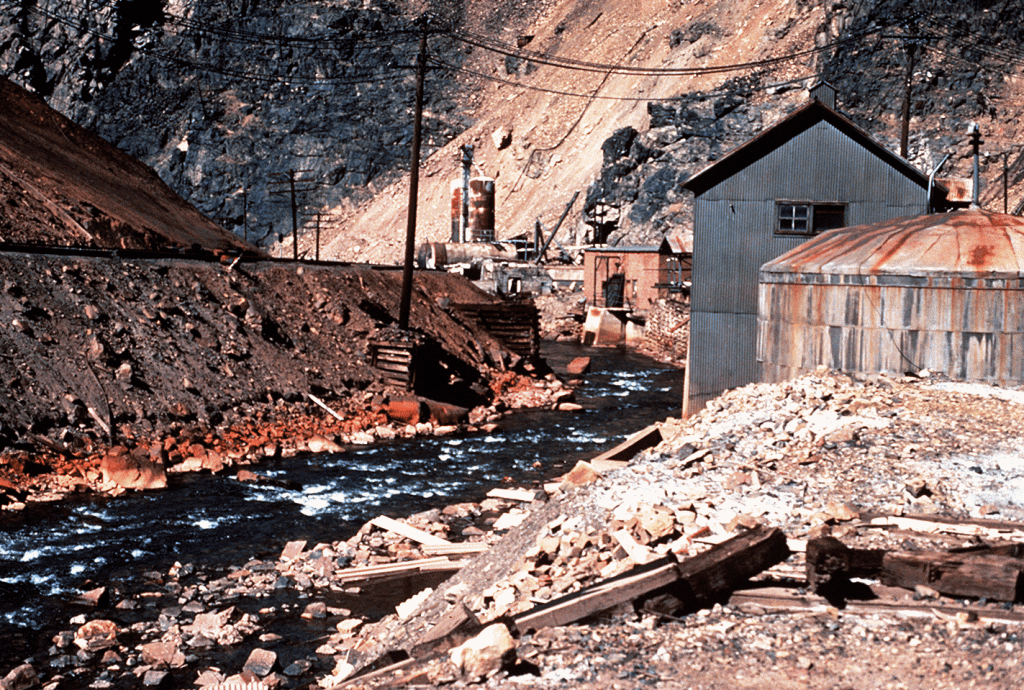
U.S. Geological Survey. Eagle River running through mining area at Gilman zinc mine on Battle Mountain, between Redcliff and Minturn. Eagle County, Colorado. ca. 1980. (Photo courtesy USGS)
2. Which of the following were negative outcomes?
A. Depleted and abandoned mines left scarred terrain no longer suitable for other uses.
B. Abandoned mines left safety and environmental hazards behind such as unprotected mine shafts and toxic tailings.
C. Environmental impact to streams and aquifers from acid mine drainage (AMD)
D. Native Americans were driven from their ancestral homeland to reservations on land no one else wanted.
E. 19th Century miners escaped all responsibility for damage they caused.
F. All of the above.
3. Which of the following chemicals constitute AMD?
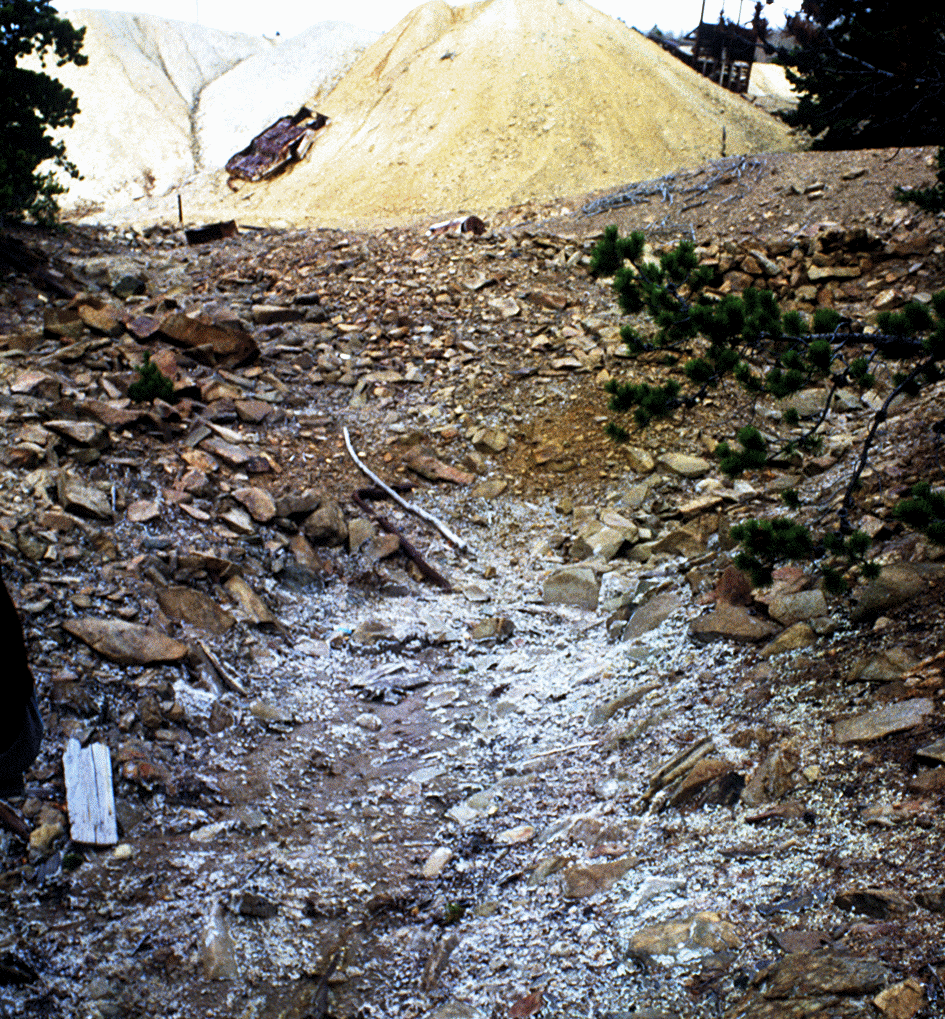
Tailings produced from a gold/silver mine on Quartz Hill, southwest of Central City. Gilpin County, Colorado. October 1992. (Photo courtesy USGS)
A. Zinc, arsenic, and lead
B. Copper, selenium and cadmium
C. Iron, aluminum, and silver
D. A & B
E. All the above.
4. How many abandoned mines are in the west?
A. 8,000 – 10,000
B. 12,000 – 30,000
C. 50,000 – 100,000
D. Over 100,000
5. How much does abandoned mine clean-up cost per site?
Different view of Eagle River running through mining area at Gilman zinc mine on Battle Mountain, between Redcliff and Minturn. Eagle County, Colorado. ca. 1980. (Photo courtesy USGS)
A. $5 million – $10 million
B. $15 million – $20 million
C. $30 million – $40 million
D. As much as $583 million
6. How many miles of Western United States waterways are contaminated by acid mine drainage from abandoned mines?
A. 1,500 miles (5%)
B. 3,000 miles (10%)
C. 12,000 miles (40%)
D. 20,000 miles (67%)
7. Who is responsible for cleaning up old mines?
A. Property owners
B. EPA
C. State environmental agency
D. Volunteers
E. It depends
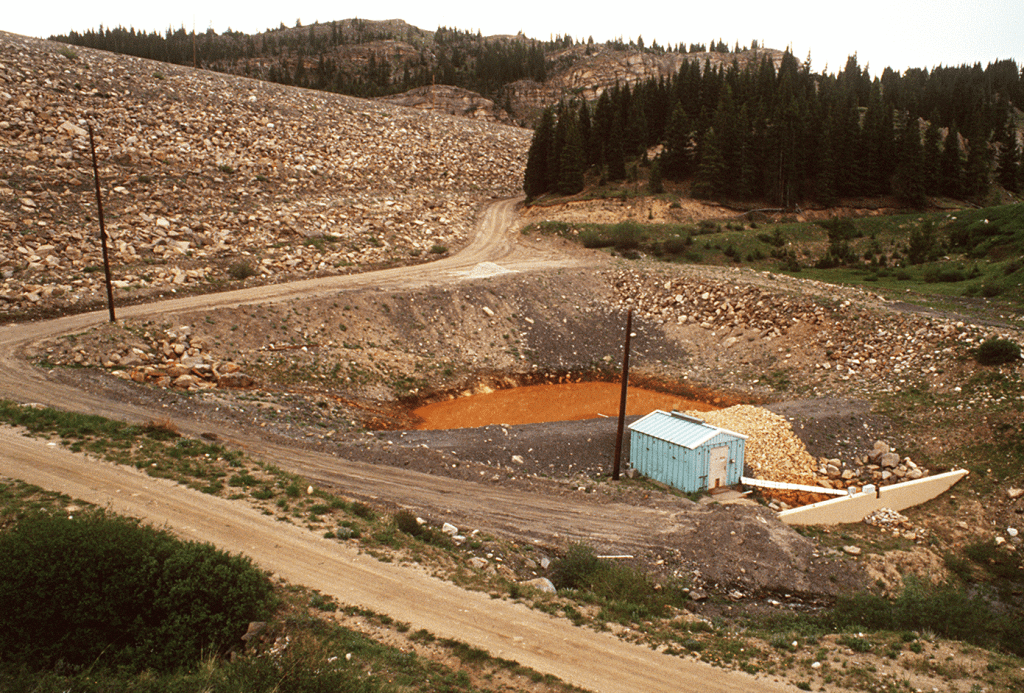
Tailings produced from the Climax porphyry molybdenum deposit. Northwest part of the Climax quad. Lake County, Colorado. July 1992(Photo courtesy USGS)
8. Acid mine drainage is only caused by mining. (TRUE/FALSE)
9. Which of these constitutes how AMD pollutes the environment?
A. Contaminated water drains out mine entrances and tunnels.
B. Rainfall, stream water, and snow melt come into contact with discarded ore and tailings, then enter stream and aquifers.
C. Acidity and metals are released into the environment when oxygen and water react with metal sulfide minerals.
D. All of the above.
Silver Lake Mine and Arrastra Basin; near Silverton. San Juan Mountains. San Juan County, Colorado. August 21, 1980. (Photo courtesy USGS)
10. Which group is most affected by AMD?
A. Humans
B. Aquatic life (fish, frogs, salamanders, etc.)
C. Wildlife
D. All of the above
11. The Clean Water Act helped mitigate the AMD situation. (TRUE/FALSE)
ANSWERS
1. ANSWER E: All of the above.
The California Gold Rush of 1849 inspired thousands to make the difficult passage across the American interior with major rushes in 1859 to the areas that would become Colorado and Nevada. Mining settlements grew into towns and then cities that offered employment in a variety of manufacturing and service industries.
Sneffels mining camp. San Juan Mountains. Ouray County, Colorado. July 16, 1972. (Photo courtesy USGS)
2. ANSWER F: All of the above
The physical and environment damage of abandoned mines goes without saying. The geographical complexities and limitations of treaties related to Indian territory resulted in numerous conflicts. Thus, the U.S. government took possession of many areas of the Northwest, the Rockies, the Great Basin, and the Southwest which ultimately sent native populations to reservations.
3. ANSWER D: Both A & B
Acid mine drainage is water that typically carries unusually high concentrations of dissolved metals such as zinc, arsenic, cadmium, lead, copper, and selenium.
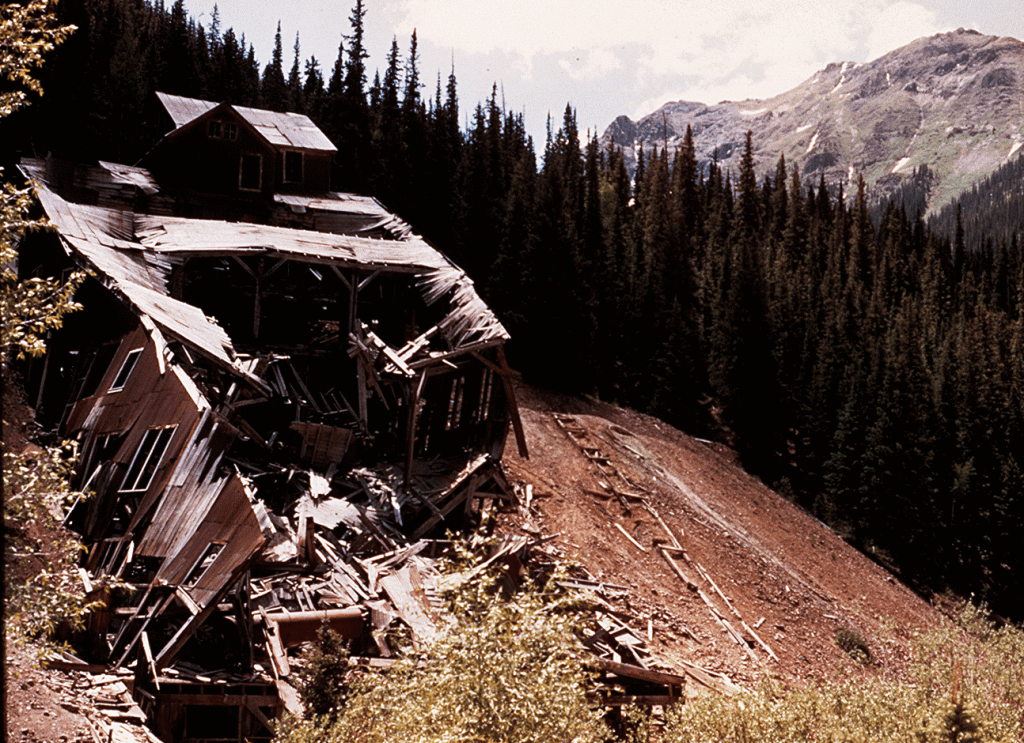
Collapsing mill at old mining town of Middleton. San Juan Mountains. San Juan County, Colorado. June 30, 1972. (Photo courtesy USGS)
4. ANSWER D: Over 100,000
As of May 2019, the Forest Service, BLM, the Park Service, and EPA together identified in their databases at least 140,652 abandoned hardrock mine features—of which over 60 percent are known to pose or may pose physical safety or environmental hazards. Officials from 13 western states also identified from their state databases about 246,000 abandoned hardrock mine features on federal and nonfederal lands within their states, including about 126,000 features that pose physical safety or environmental hazards.
North fork of Clear Creek 5 km down stream from Blackhawk. Reddish color in the stream bed is due to precipitation of iron oxyhydroxides as pH increases. Gilpin County, Colorado, October 1992. (Photo courtesy USGS)
While there may be some overlap between Federal and State databases, officials estimated that there likely are hundreds of thousands of additional abandoned hardrock mine features that they have not yet captured in their databases. Of the 140,652 total features, about 89,000 features are known to pose or may pose a physical safety or environmental hazard, according to information in the federal agencies’ databases. Specifically, agencies confirmed 7,802 features pose a hazard, of which 6,439 pose a physical safety hazard and 1,363 pose an environmental hazard; and identified 81,541 features with an unconfirmed hazard (whereby agency staff had not assessed current conditions in person to confirm the hazard), of which 60,279 may pose a physical safety hazard and 21,262 may pose an environmental hazard.
5. ANSWER D: As much as $583 million
According to EPA documents, sites with environmental hazards can cost hundreds of millions of dollars and take many years to address. For example, as of July 2019, the actual costs at the 25 most expensive mine and mineral processing sites ranged from $50 million to $583 million per site, and EPA had been working on some of the sites for over 20 years. Furthermore, agencies monitor remedies after completion to help ensure that they are achieving the desired results.
6. ANSWER C: 12,000 miles (40%)
The U.S. Bureau of Mines estimated that 12,000 miles of the waterways of the Western United States, or about 40 percent, are contaminated by metals from acid mine drainage, mostly by abandoned mines, while 180,000 acres of lakes and reservoirs are tainted by abandoned mine runoff.
7. ANSWER E: It depends.
Theoretically, the owner of a polluting mine is responsible for the water discharged from it. But regulatory agencies find it impractical to take legal action against the vast majority of private owners. Most unwittingly inherited the problem, and could not begin to pay for remediation. They are, by virtue of having little or no financial means, “judgment-proof ” should someone sue them for environmental violations. Under current legal circumstances these private owners are often inclined to leave their mines alone. Old mines belonging to such private individuals must simply wait for some third party to clean them up.
Agencies, especially those responsible for federal land, use some of their budgets for remediation. These include the National park Service, Office of Surface Mining Reclamation and Enforcement, Forest Surface, Bureau of Land Management and the Environment Protection Agency. (See below)
Federal Expenditures to Address Abandoned Hardrock Mines by Agency, Fiscal Years 2008 through 2017, in Nominal Dollars
8. ANSWER: False
Undisturbed nature can and does generate acidic and metal-laden water without the intervention of miners. In the Animas River watershed in Colorado, much of the metal contamination in the water has been attributed to natural oxidation, or weathering, of the metal sulfide deposits. However, this “background” weathering produces for the most part only aluminum and iron, the other metals having long since leached out over the eons of geological time.
9. ANSWER D: All of the above.
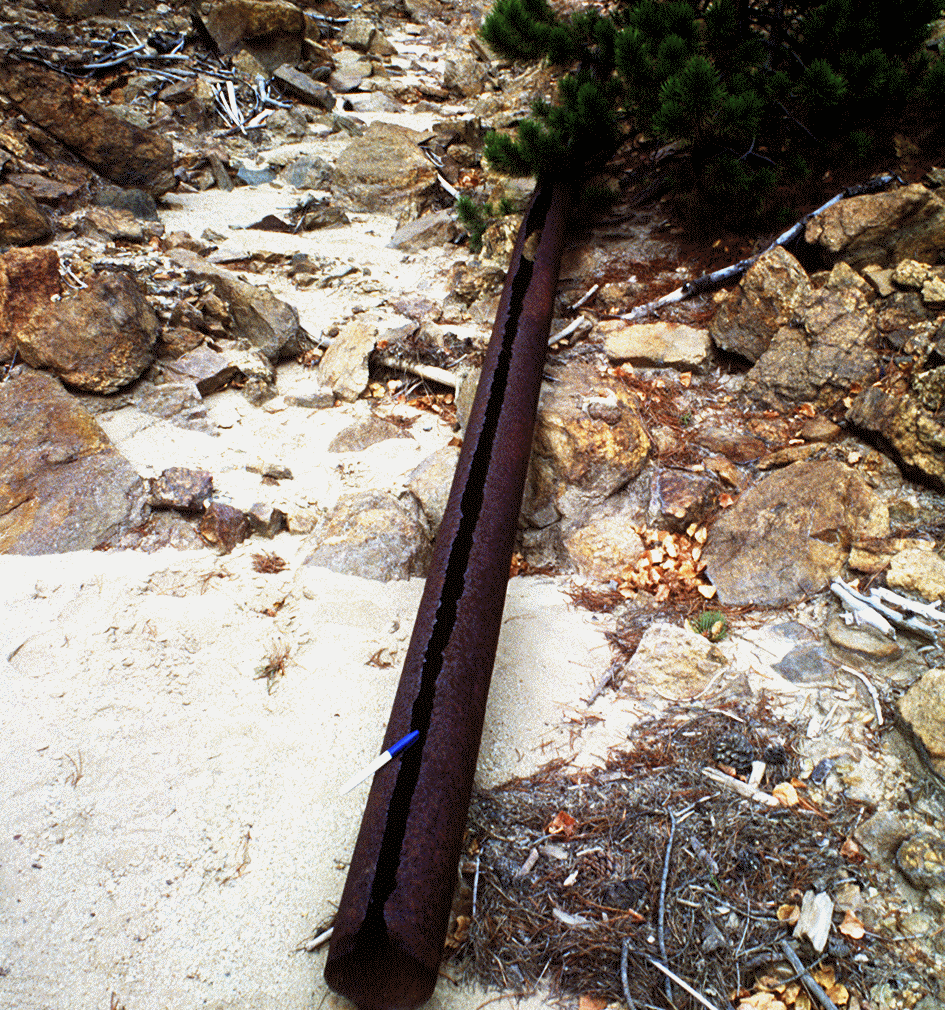
Corroded 6 inch steel pipe caused by acid mine drainage from gold/silver mine on Quartz Hill, southwest of Central City. Gilpin County, Colorado. October 1992. (Photo courtesy USGS)
10. ANSWER B: Aquatic life
While all are affected in one way or another, those damaged the most are aquatic life.
Only some of the dissolved metals in acid mine drainage—cadmium and lead, for example—are potentially harmful to humans. Fish, however, are much more susceptible to the toxicity of these metals. Fish have to live in the water; we only drink about two liters of water a day.
The soluble metals, however, continually pass through and are absorbed by fishes’ gills and gastrointestinal tracts. Add in the metals absorbed from the insects they eat, and it’s not hard to see how fish in AMD-tainted water are highly vulnerable to these lethal poisons. The EPA says that we humans can tolerate copper in our drinking water at concentrations up to 5,000 micrograms per liter of water, but the fish in an alpine stream can tolerate only 65 micrograms per liter.
Severely polluted streams affect all wildlife when it becomes an unsuitable drinking source and can eventually kill vegetation along its banks.
11. ANSWER: False
Surprisingly, the Clean Water Act of 1971 enacted by Congress presents an obstacle for the treatment of acid mine drainage. To clean up polluted water issuing from a mine, you must obtain a Clean Water Act discharge permit (a National Pollutant Discharge Elimination System permit or NPDES). The permit requires that the treatment you undertake will meet Clean Water Act water quality standards, which are very stringent, and that whoever attempts the cleanup will remain responsible for the source of pollution in perpetuity (that could be you!). When a third party—a nonprofit organization, community group, government agency, or corporation—attempts to clean up acid mine drainage coming from an abandoned mine, that third party legally assumes liability for the mine’s discharge.
Another risk to such “Good Samaritans” can come from citizen groups, especially environmentalists, who oppose any laws which allow an exception to or variance from the standards and provisions of the Clean Water Act. Under the law, citizens are allowed to bring a suit to force a mine operator to meet the strict water quality standards laid down by the Clean Water Act. Clearly, the high cost of penalties, remediation of the site, and long-term maintenance are formidable obstacles to any party interested in acid mine remediation.
SOURCES:
1. “Cleaning Up Abandoned Hardrock Mines in the West: Prospecting for a Better Future,” by Patricia Nelson Limerick, Joseph N. Ryan, Timothy R. Brown, and T. Allan Comp; Report from the Center #7, published by the Center of the American West, University of Colorado at Boulder; 2006. http://www.centerwest.org
2. GAO-20-238, Report to the Ranking Member, Subcommittee on Interior, Environment, and Related Agencies, Committee on Appropriations, U.S. Senate; “Abandoned Hard Rock Mines: Information on Number of Mines, Expenditures, and Factors That Limit Efforts to Address Hazards;” March 2020.
Most people know little to nothing about the First Americans. If you cannot answer at least three of the following questions maybe it’s time you learned more.
1. How many Indigenous tribes are there in the United States?
A. 15 – 30
B. 30 – 50
C. 50 – 75
D. Over 100
2. Native Americans have their own religion.
(True/False)
3. How many unique Native American languages are there?
A. 4 – 6
B. 7 – 10
C. 20 – 50
D. 50 – 100
4. How many people are enrolled members of recognized tribes in the United States?
A. 100,000 – 250,000
B. 250,000 – 500,000
C. 1,000,000 – 3,000,000
D. 4,000,000 – 5,000,000
5. Which tribe has the most enrolled members?
A. Cherokee
B. Navajo
C. Apache
D. Cheyenne
6. How many places have names that originated with a Native American tribe, chief, or word?
A. 10 – 25
B. 35 – 50
C. Over 100
D. Over 1000
7. Which of the following references do Native Americans prefer the least?
A. American Indians
B. First Nation People
C. Indigenous People
D. Native Americans
——————————————————————————————————————————-
ANSWER KEY
1. ANSWER: D
There are literally hundreds of Native American tribes in the USA! How many can you name? Some of the ones that are most familiar include the Apache, Algonquin, Blackfoot, Cherokee, Cheyenne, Chickasaw, Comanche, Cree, Crow, Iroquois, Mohecan, Navajo, Paiute, Seminole, Seneca, Shoshone, and Sioux.
2. ANSWER: Neither or Both, depending on how you look at it.
Native North Americans consider spirituality a way of life, not a specific religion. In many of their languages, a word does not exist for “religion.” Their spiritual beliefs incorporate all of life, whether animal, vegetable or mineral–even the Earth herself. It includes their treatment of the land, gathering of food, crafting of objects, etc. Rituals, sacred lands, sacred objects, ancestral remains, and all of life are one.
Ceremonies include prayer, fasting, and the sweat lodge, among others. Morality, kindness, generosity, honor, and bravery are all important principles.
The “Lakota (Sioux) Instructions for Living” passed down from White Buffalo Calf Woman states:
Friend do it this way–that is, whatever you do in life, do the very best you can with both your heart and mind.
And if you do it that way, the Power of The Universe will come to your assistance, if your heart and mind are in Unity.
When one sits in the Hoop Of The People, one must be responsible because All of Creation is related. And the hurt of one is the hurt of all. And the honor of one is the honor of all. And whatever we do affects everything in the universe.
If you do it that way–that is if you truly join your heart and mind as One–whatever you ask for, that’s the Way It’s Going To Be.
3. ANSWER: C
There are 32 different language “families” as well as several more considered “isolates.” Language families, which are spoken by many tribes, include: Algonquian, Athapascan, Caddoan, Chimakuan, Chinookian, Chumashan, Eskimaleut, Iroquoian, Kiowa-Tanoan, Kalapuyan, Kusan, Maidu, Miwok-Costanoan, Muskogean, Palaihnihan, Pomo, Sahaptian, Salinan, Salishan, Shastan, Siouan, Timucuan, Tunican, Uto-Aztecan, Wakashan, Washoe, Wintun, Yanan, Yokutsan, Yukian, Yuman, Yakonan.
4. ANSWER: D
In 2000 there were over four million American Indian and Alaska Natives.
5. ANSWER: A
In 2000 there were 729,533 Cherokee; 298,197 Navajo; 96,833 Apaches; and 18,204 Cheyenne
6. ANSWER: D
Here are a few examples, the list far more lengthy than you can imagine.
Native Word
Tribe
Meaning
Alaska
Aleut
mainland
Alabama
Muskogean
“I clear the thicket” or to camp
Chinook
Chinook
Tribal Name
Connecticut
Mohegan
“the long river”
Dakota
Tribal name
“allies” or people also known as Sioux
Erie
Iroquoian
“long tail” in reference to wild cat
Kentucky
Wyandot
“land of tomorrow”
Manhattan
Tribal name
“island mountain”
Massachusetts
Tribal name
“at the range of hills”
Minnesota
Sioux
“reflection of sky on water”
Mississippi
Algonquin
“big river”
Montauk
Algonquin
“at the fort”
Niagara
Iroquois
“thunder of waters resounding with a great noise”
Ohio
Iroquois
beautiful
Oklahoma
Muskogean
“red people”
Pontiac
Ottawa
Ottawa chief
Seattle
Duwamish
Chief Seatl
Tacoma
Algonquin
“mountain” or “gods”
Tahoe
Washoe
“big water”
Winnebago
Tribal name
from Algonquian “people of the dirty waters”
7. ANSWER: A
Preferences vary from tribe to tribe, but most dislike being called “Indians.”
ANSWERS SOURCE FOR QUESTIONS 1 – 6: “Atlas of the North American Indian” by Carl Waldman
The list of websites I accessed researching “The Curse of Dead Horse Canyon: Cheyenne Spirits” is far too long to list. It included such subjects as where to report water contamination issues in Colorado, seasonal wild flowers, fracking risks, and drilling for oil. But by far, the most extensive research related to Native American history.
Quite frankly, I hadn’t given it much thought before. My experience with Native Americans had been limited, but positive. I was aware that reservations harbored numerous issues, but hadn’t considered why. The indoctrination I’d received in public schools as a child had never addressed their side of the story. I didn’t think of it as right or wrong, simply historical fact.
I grew up in the glory days of westerns and tales of cowboys and Indians. I never thought of the latter as bad, only different. Of course in history class they were portrayed as uneducated savages. Medicine men were somewhere on par with witches and sorcerers.
Then a few years ago I read a book that sensitized me to the harsh realities associated with colonization. It at least made me think. Then, as I was writing this book, Charlie Littlewolf came on the scene. That’s how it works in my novels. I get an idea and start writing, then the characters show up. I immediately knew there was a lot to learn about who he was and where
Want to know what really happened? Read this first.
he came from, both genetically and geographically.
So I started reading. I ordered several books, most of which I read cover to cover. The quotes at the beginning of each chapter mostly come from “Great Speeches of Native Americans.” That book literally made me cry as the reality of how Indigenous Americans were treated began to register.
It was nothing short of shameful how many treaties were broken, largely because they weren’t ratified by Congress. The U.S. side of the agreement, which often promised food and other supplies, was never fulfilled, but what the Indigenous people brought to the table was long gone. One Native American noted how he couldn’t understand how there were so many “chiefs,” none of whom were authorized to sign such an agreement on behalf of the government.
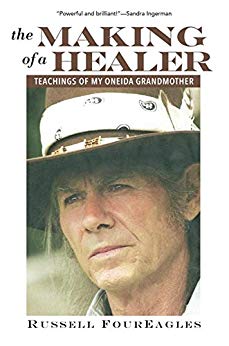
A beautiful glimpse of Native American spirituality.
The first book I read on spirit medicine was “The Making of a Healer: Teachings of my Oneida Grandmother” by Russell FourEagles. It was one of the amazingly beautiful books I’ve ever read. For the first time I realized the spiritual nature of Native American beliefs. I knew they believed in a “Great Spirit” but had no idea how that related to how they honored the Earth. If you happened to see the movie “Avatar” a few years back, then you got a taste of their view of life as well as the brutality of colonization, whether on this planet or a distant one.
By the time I’d finished writing the first version of the book I wanted a Native American to read it and tell me if anything was incorrect or culturally insensitive. That goal ultimately led me to my co-author, Pete Risingsun, a Northern Cheyenne who’s well-versed in his culture. He pointed out the many things I had wrong and not only helped me correct it but brought it to life.
Which begs the question, was all my reading prior to finding Pete a waste of time?
Hardly.
Without that background I don’t think we could have communicated as well as we did.
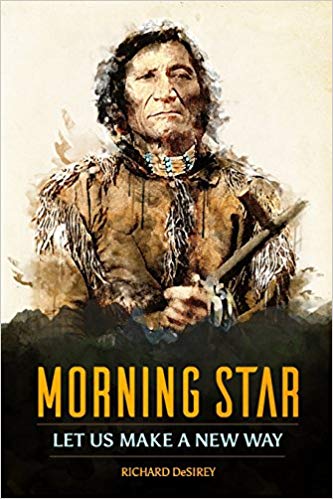
The heartbreaking story of the Northern Cheyenne’s journey.
Knowing the history was essential to us being on the same page. The first thing Pete did was send me the book “Morning Star: Let Us Make a New Way” by Richard DeSirey, which told the story of the Northern Cheyenne. Northern Cheyenne traditions, rituals, and ceremonies are very specific and often differ from those associated with the Southern Cheyenne. His knowledge was worth his weight in gold.
Nonetheless, for anyone who wants to learn more about Native Americans, here are the books that I acquired and read to a greater or lesser degree before Pete came onboard.
Those with asterisks (*) are those I dub essential reads, plus the DVD course “Native Peoples of North America” from The Great Courses if you really want to know the part of American history you weren’t told in school.
BIBLIOGRAPHY
Bennett, Hal Zina: Zuni Fetishes: Using Native American Objects for Meditation, Reflection, and Insight. ISBN 0-06-250069-4
Blaisdell, Bob, Editor; Great Speeches by Native Americans; Dover Thrift Editions; 2000. ISBN 978-0-486-41122-4*
Brinkerhoff, Val W.; The Remnant Awakens; Digital Legend Press; 2016. ISBN 978-1-7295451-9-5
DeSirey, Richard D.; Morning Star: Let Us Make A New Way; 2017; ISBN 978-1-976355-4-7*
FourEagles, Russell: The Making of a Healer: Teachings of my Oneida Grandmother; Copyright 2014, Quest Books. ISBN 978-0-8356-0927-2*
Lake-Thom, Bobby; Spirits of the Earth: A Guide to Native American Nature Symbols, Stories, and Ceremonies. ISBN 0-452-27650-0
Maryboy, Nancy C. and Begay, David; Sharing the Skies: Navajo Astronomy; Rio Nuevo Publishers, Tucson, Arizona; 2010. ISBN 978-1-933855-40-0
Mose, Don Jr.: The Legend of the Navajo Hero Twins: Illustrated by Charles Yanito: Copyright 2013, San Juan School District, Blanding, Utah. ISBN 1-931489-59-9
Parnwell, E.C.; Translated by Marvin Yellowhair; The New Oxford Picture Dictionary English/Navajo; Oxford University Press; 1989. ISBN 0-19-434362-6
Sun Bear and Wabun; The Medicine Wheel Earth Astrology; Simon & Schuster; 1980. ISBN 978-0-671-76420-3*
Sun Bear, Wabun Wind, and Crysalis Mulligan; Dancing with the Wheel; Simon & Schuster; 1991. ISBN 978-0-671-76732-7
Waldman, Carl; Atlas of The North American Indian 3rd Edition; Checkmark Books; 2009. ISBN 978-0-8160-6859-3
Waldman, Carl; Encyclopedia of Native American Tribes 3rd Edition; Checkmark Books; 2006. ISBN 0-8160-6274-9
Native Peoples of North America; The Great Courses No. 8131 (c) The Teaching Company; presented by Daniel M. Cobb.*











 The Curse of Dead Horse Canyon